On the Dash:
- Stellantis’ partnership signals a faster rollout of connected-vehicle features and software-driven services across brands
- AI integration is expected to improve development speed, validation, and vehicle performance throughout the lifecycle
- Cloud modernization and cybersecurity investment will increasingly shape long-term digital operations and vehicle data security
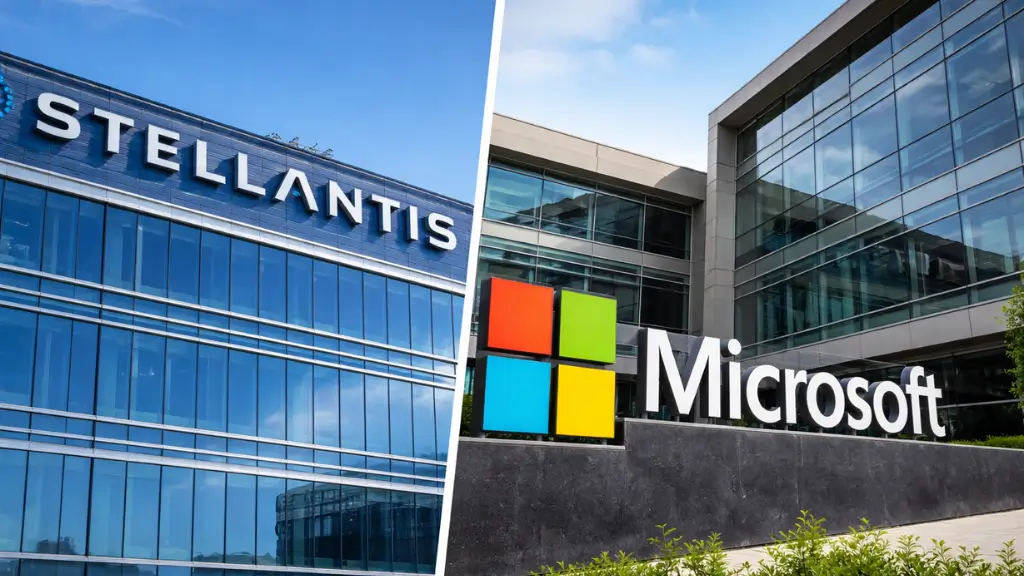
On April 16, Stellantis and Microsoft announced a five-year strategic partnership to co-develop AI, cybersecurity, and engineering capabilities. The collaboration is designed to help Stellantis accelerate its software-driven transformation as competition in automotive technology intensifies.
The agreement builds on an existing relationship between Stellantis and Microsoft across connected vehicle platforms and digital services. Both companies will work jointly on more than 100 AI initiatives spanning engineering, product development and testing.
As Chinese automakers continue to accelerate the development of features, enticing consumers domestically and internationally, software- and data-driven services have become a greater focal point in automotive companies’ long-term strategies.
Under the new deal, the pair will focus on product development, validation, predictive maintenance, testing, and the faster rollout of digital features and services. Stellantis alluded that its goal is to accelerate AI momentum across the enterprise and improve the speed and efficiency of software development.
Cybersecurity is also a central pillar of the partnership, as Stellantis will strengthen its global cyber defense center using AI-driven analytics to detect and prevent threats across vehicles, customer data, and global operations. The system will span IT infrastructure, manufacturing sites, connected vehicles, and digital products, embedding security across both internal systems and consumer-facing services.
As part of the agreement, Stellantis will modernize its IT infrastructure using Microsoft Azure and aims to reduce its data center footprint by 60% by 2029. The shift is intended to improve scalability and simplify global digital operations as the company expands its connected vehicle ecosystem.
The partnership reflects a broader industry trend in which legacy automakers are increasingly relying on technology companies to accelerate software capabilities, as in-house development has often lagged behind tech-focused rivals.