TSLA348.9503.33%
GM76.420-0.31%
F12.123-0.1175%
RIVN15.4300.19%
CYD42.780-0.06%
HMC24.040-0.33%
TM210.640-0.5%
CVNA336.2439.313%
PAG156.1200.97%
LAD273.1006.56%
AN200.5200.1%
GPI338.1400.03%
ABG204.0001.95%
SAH68.0600.235%
TSLA348.9503.33%
GM76.420-0.31%
F12.123-0.1175%
RIVN15.4300.19%
CYD42.780-0.06%
HMC24.040-0.33%
TM210.640-0.5%
CVNA336.2439.313%
PAG156.1200.97%
LAD273.1006.56%
AN200.5200.1%
GPI338.1400.03%
ABG204.0001.95%
SAH68.0600.235%
TSLA348.9503.33%
GM76.420-0.31%
F12.123-0.1175%
RIVN15.4300.19%
CYD42.780-0.06%
HMC24.040-0.33%
TM210.640-0.5%
CVNA336.2439.313%
PAG156.1200.97%
LAD273.1006.56%
AN200.5200.1%
GPI338.1400.03%
ABG204.0001.95%
SAH68.0600.235%

Stellantis deploys autonomous robots to streamline assembly plant inventory

Autonomous scanning technology at Sterling Heights Assembly Plant improves real-time inventory visibility and manufacturing efficiency.

Stellantis Uses Warehouse Robot

Stellantis

On the Dash:

  • Stellantis is using autonomous robots to gain real-time visibility into parts and inventory at its Michigan assembly plant.
  • The AI system helps prevent production disruptions and improves efficiency without replacing human workers.
  • Early success is driving expansion to other Stellantis plants across North America.

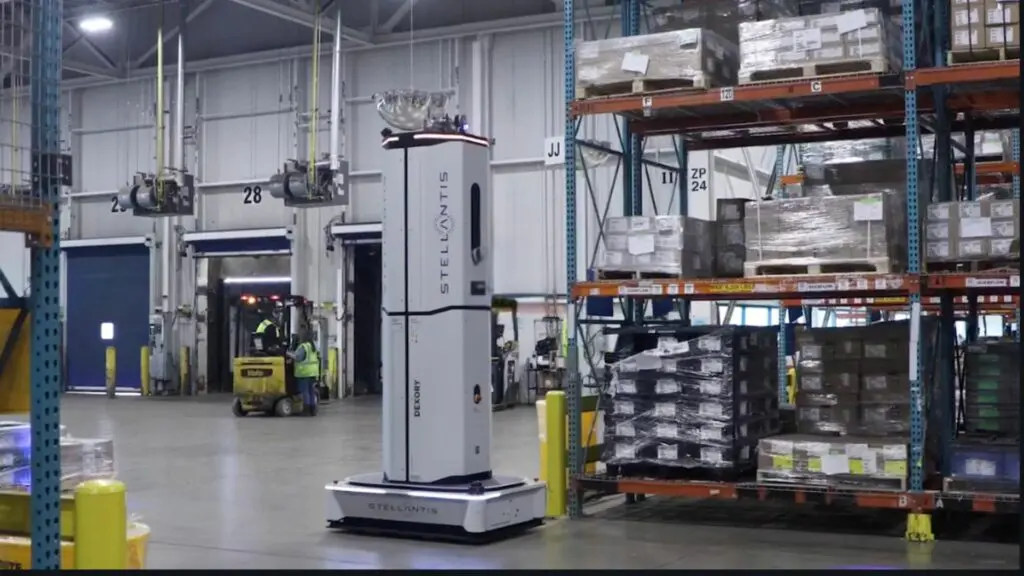
Stellantis has deployed an autonomous, AI-powered robot at its Sterling Heights Assembly Plant in Michigan to improve material handling, inventory accuracy, and manufacturing efficiency, the company said.

The robot, developed by warehouse technology firm Dexory, operates inside the plant’s warehouse, scanning shelves multiple times each day and creating a live digital map of parts and components used in vehicle production. Each scan covers more than 36,000 square feet in under an hour, giving plant managers and production teams real-time visibility into inventory levels and part locations.

The system supports Stellantis’ broader strategy to integrate AI into manufacturing operations, thereby strengthening productivity and reducing disruptions on the assembly line. Sterling Heights assembles the Ram 1500 pickup, one of the automaker’s highest-volume vehicles.

Sign up for CBT News’ daily newsletter and get the latest industry stories delivered straight to your inbox

Using Dexory’s AI-driven platform, DexoryView, the robot continuously updates inventory data, identifies potential shortages, and flags parts that may require attention before they reach the production line. The platform also supports dynamic slotting, which places frequently used components in more accessible locations to improve efficiency and reduce physical strain on workers.

Chuck Padden, vice president and plant manager at Sterling Heights, said the technology helps make material handling more predictable and allows employees to focus on vehicle assembly with greater confidence that parts will be available when needed.

Stellantis said the robot works alongside the existing workforce rather than replacing jobs, adding that the combination of automation and human expertise improves both process accuracy and product quality.


More from EVs & Technology
Kia accelerates U.S. automation push while scaling back EV targets

Kia accelerates U.S. automation push while scaling back EV targets

- April 9, 2026
On the Dash: Kia will introduce humanoid robots at a U.S. plant to improve efficiency and reduce labor strain. The company is lowering its 2030 EV sales target by more...
Toyota bets on EV rebound with seven-model U.S. lineup

Toyota bets on EV rebound with seven-model U.S. lineup

- April 3, 2026
On the Dash: Toyota plans to introduce seven EV models in the U.S. by 2027, demonstrating a long-term commitment to the segment.t Toyota's EV sales remain volatile, with market share...
Tesla pivots to robotaxis as Q1 deliveries rise 6.3%

Tesla pivots to robotaxis as Q1 deliveries rise 6.3%

- April 2, 2026
On the Dash: Tesla’s first-quarter deliveries rose 6.3% to 358,023 but missed analyst expectations, indicating stabilized yet cautious sales trends. The company is phasing out luxury vehicles and focusing on...
Your autonomous fleet has a revenue problem it can't code away

Your autonomous fleet has a revenue problem it can’t code away

- April 2, 2026
The autonomous vehicle industry has spent the last decade racing to solve one problem: replacing the human behind the wheel. Billions of dollars have gone into sensors, simulations, and AI...
CBT News
Privacy Overview

This website uses cookies so that we can provide you with the best user experience possible. Cookie information is stored in your browser and performs functions such as recognising you when you return to our website and helping our team to understand which sections of the website you find most interesting and useful.