TSLA406.4307.28%
GM81.5000.65%
F14.8400.13%
RIVN16.7601.22%
CYD50.0302.11%
HMC26.440-0.63%
TM174.9500%
CVNA64.100-3.72%
PAG180.960-0.06%
LAD313.3800.72%
AN191.530-2.54%
GPI325.3300.42%
ABG199.5300.05%
SAH84.6100.36%
TSLA406.4307.28%
GM81.5000.65%
F14.8400.13%
RIVN16.7601.22%
CYD50.0302.11%
HMC26.440-0.63%
TM174.9500%
CVNA64.100-3.72%
PAG180.960-0.06%
LAD313.3800.72%
AN191.530-2.54%
GPI325.3300.42%
ABG199.5300.05%
SAH84.6100.36%
TSLA406.4307.28%
GM81.5000.65%
F14.8400.13%
RIVN16.7601.22%
CYD50.0302.11%
HMC26.440-0.63%
TM174.9500%
CVNA64.100-3.72%
PAG180.960-0.06%
LAD313.3800.72%
AN191.530-2.54%
GPI325.3300.42%
ABG199.5300.05%
SAH84.6100.36%

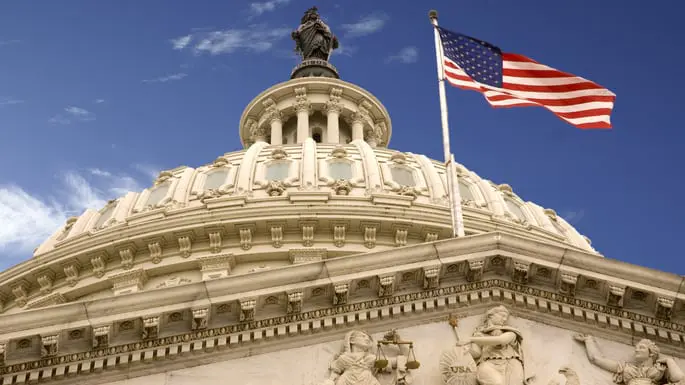
Senate Vote Imminent on Critical S.J. Res. 57 Regarding Indirect Lending

Senate

We recently ran an article about resolutions that have been proposed in both the House and the Senate opposing Obama-era rules enacted by the Consumer Financial Protection Bureau (CFPB). The Rules were meant to regulate indirect lending by dealers and are thought to be a covert way to control dealer practices.

The final vote on S.J. Res. 57 is expected in the next few days in the Senate. There was a vote taken on 4/17/18 to proceed with the vote and it passed 50-47. Now the final vote in the Senate is imminent.

To recap the situation: resolutions have been introduced in both the House and the Senate to repeal Obama-era rules that were put into place by the CFPB in 2013. The CFPB auto finance guidelines sought to regulate indirect auto lending and leveraged lending, and were enacted to safeguard against lending discrimination, but have been controversial since the beginning. 

In March 2013, the CFPB limited loan markups and compensation for dealers on auto loans – specifically on the basis of race, national origin, or credit score. CFPB sought to enforce compliance of these rules with the Equal Credit Opportunity Act (ECOA).

NADA is urging dealers to contact their Senators and urge them to vote “YES” on this resolution. Regardless of which side of the argument you fall, this is a pivotal struggle between civil rights and the rights of dealers to control their own lending practices.
While there is always middle ground in arguments such as this, many will argue that the CFPB has far overstepped its bounds, infringing unfairly on the rights of dealers.
If the vote in the U.S. Senate succeeds, the U.S. House is expected to consider this legislation next week. After that, President Trump is expected to sign this pro-dealer, pro-consumer legislation into law.

For more information on what you can do or how to contact your local senators visit here.
More from Daily Automotive News
America's savage yards are burning. Drivers are the ones paying the price

America’s salvage yards are burning. Drivers are the ones paying the price

- June 12, 2026
While most Americans see scrapyard fires as local news, the real story may be unfolding in repair shops, insurance offices, and family budgets across the country. Americans don't need another reason...
Stellantis' China gamble could reshape America's auto industry forever

Stellantis’ China gamble could reshape America’s auto industry forever

- June 10, 2026
Americans were told Chinese cars were being kept out of the United States for security reasons. Washington has imposed massive tariffs, politicians promised tougher restrictions, and consumers were reassured that...
Ken Garff Volkswagen

Ken Garff expands Utah footprint with Volkswagen purchase

- June 8, 2026
Ken Garff Automotive Group has acquired Volkswagen SouthTowne in South Jordan, Utah, from Susan Watkins. Announced on June 8, 2026, the transaction marks the group's first acquisition of 2026 and...
China's auto treat: America draws the red line

China’s auto treat: America draws the red line

- June 5, 2026
If you think the debate over Chinese vehicles is about cheaper cars showing up at American dealerships, you’re missing the bigger story—and it’s one policymakers in Washington are no longer...