If the automotive retail industry fails to correct its compliance and pricing practices, automakers could eventually take their case to Washington and push for a federal franchise law that reshapes the dealer model entirely.
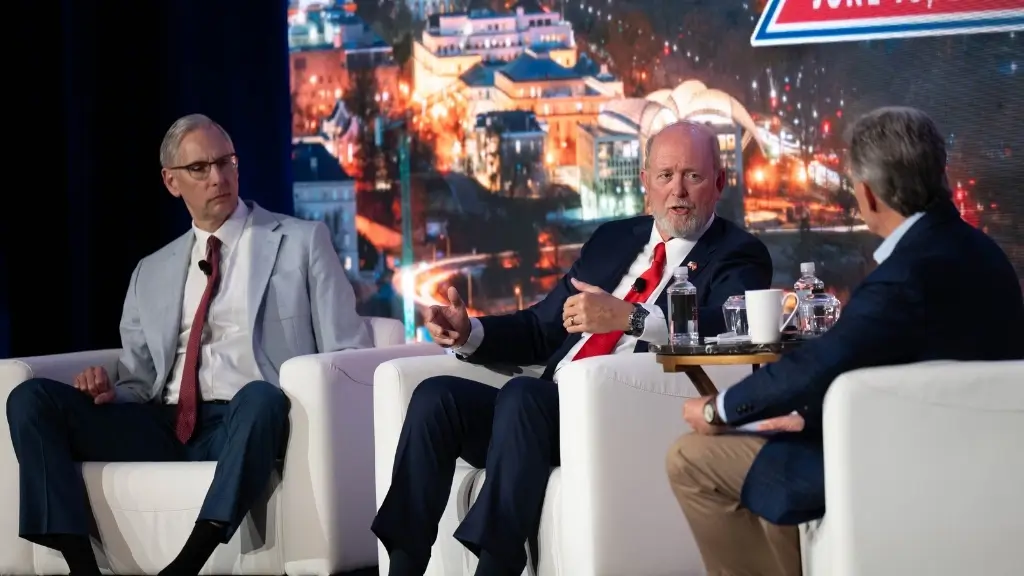
That warning came from Don Hall, President and CEO of the Virginia Automobile Dealers Association (VADA), during a panel discussion with Paul Metrey, Executive Vice President of Public Policy at the National Automobile Dealers Association (NADA), at the CBT News Auto Leadership Summit on June 16, in Washington, D.C.
According to Hall, the stakes go beyond regulatory pressure, pointing to a future where manufacturers could determine where and how they sell vehicles if dealers do not address internal industry challenges.
“If we don’t get our act together, OEMs will go to Washington, D.C., and lobby for a federal franchise law…They will sell cars in markets where they choose to sell. And you will not.”– Don Hall
The industry’s biggest obstacle
Starting the discussion, Hall addressed the dealers in the room, confirming that “You’re here because you’re smart and want to make a difference.” He then argued that the industry’s “30-day cycle” mindset continues to block long-term progress.
“We fight in the dealerships with, ‘just leave me alone, I’ve got a tough month to get through,’” Hall said. “Right now we have things to do. We’ve got to change that.”
He said real change requires dealers to step beyond monthly sales pressure and engage more deeply with regulatory and structural shifts shaping the industry.
FTC enforcement creates new pressure
Metrey said FTC enforcement in the automotive sector has historically focused on advertising, with roughly 85% of actions since 2011 tied to marketing practices.
He noted that what makes the current environment different is not the enforcement itself, but the alignment across the industry.
“You’ve got state and national dealer associations, NADA, vendors, media outlets, and educators all focused on the same issue… That level of collective attention has not happened before.”– Paul Metrey
He added that this convergence could either help resolve long-standing issues or intensify regulatory friction if not managed properly.
Moreover, Metrey alluded to the FTC’s customer experience initiative as part of a broader regulatory evolution that predates recent warning letters. He argues that past efforts, such as the CARS Rule, reflected deeper structural concerns in the industry rather than isolated compliance failures.
“These rules are often symptoms of an underlying concern about problems in the industry,” Metrey said. He added, “Until we address the root cause, we can expect more of the same.” He expressed that the current FTC focus could become a turning point if the industry treats it as an opportunity to improve customer experience and transparency.
Conversely, Hall believes that dealer practice cannot be separated from long-term margin pressure across the retail industry. He pointed to declining front-end gross and negative warranty profitability as structural forces that have pushed dealers to find alternative revenue streams.
“We are compelled, because of the costs we take on, to find other ways to make money,” Hall said. Adding that manufacturers also share responsibility for conditions that have led to current industry practices.
Shifting liability exposure
Throughout the panel, Metrey outlined the legal standard regulators use to assess advertising compliance, noting that “effective control” is a key factor in determining responsibility. He also contends that FTC investigators have indicated they will focus on who effectively controls advertising content, not just who publishes it. That standard, he asserts, means OEMs and other ecosystem partners may also face scrutiny depending on their role in shaping dealer messaging.
Meanwhile, Hall traced behavioral issues in dealerships back to compensation models that rely heavily on commission-based income. He said the structure creates pressure that can influence decision-making in ways that conflict with compliance expectations. “If you pay a salary, then you have to manage the people and manage the process,” Hall said. “They’ll have a livable wage. They can go to their kids’ games.”
He then argued that stronger management and clearer expectations would improve both compliance and customer experience outcomes.
NADA pushes education & clarity
Metrey said NADA is focused on both advocacy and education as the FTC develops new compliance expectations. He remarked that early regulatory messaging suggested a simplified “all-in pricing” approach, but real-world application is more complex. One example he cited involved the 97 warning letters issued by the FTC, which primarily addressed sales and credit transactions and did not account for leasing structures.
“In high-lease markets, which can exceed 50% penetration, there are still unresolved questions. “That is why FAQs and technical clarification are critical,” he said.
Call to action
Wrapping up the panel, Metrey urged dealers to prioritize regulatory compliance across all communication channels, including advertising, digital platforms, and in-store interactions. He warned that inconsistency between advertised pricing and final transaction remains the FTC’s top frustration. “When a consumer expects X and walks out paying X plus $2,000, that has to stop,” he said.
Additionally, he alluded to past regulatory frameworks, such as the Safeguards Rule and Red Flag Rule, as examples of initiatives that lose effectiveness when not consistently maintained.
Moreover, Hall reaffirmed his point that leadership, accountability, and long-term thinking within the retail automotive industry remain critical. Therefore, he urged dealers to focus on people first, arguing that strong teams create stronger customer experiences and long-term profitability. “This industry is a viable industry that can last another 100-plus years, but it’s going to require change.” He encouraged dealers to take ownership of their state associations and NADA, and to treat industry participation as a responsibility rather than an obligation.
“Take ownership,” Hall asserted. “This is our business!”