TSLA376.3002.58%
GM78.050-0.47%
F12.385-0.095%
RIVN16.520-0.43%
CYD42.2400.37%
HMC24.340-0.14%
TM192.320-3.76%
CVNA409.0506.03%
PAG160.4200.42%
LAD274.920-1.47%
AN203.0700.1%
GPI341.3901.61%
ABG203.0601.05%
SAH71.8400.62%
TSLA376.3002.58%
GM78.050-0.47%
F12.385-0.095%
RIVN16.520-0.43%
CYD42.2400.37%
HMC24.340-0.14%
TM192.320-3.76%
CVNA409.0506.03%
PAG160.4200.42%
LAD274.920-1.47%
AN203.0700.1%
GPI341.3901.61%
ABG203.0601.05%
SAH71.8400.62%
TSLA376.3002.58%
GM78.050-0.47%
F12.385-0.095%
RIVN16.520-0.43%
CYD42.2400.37%
HMC24.340-0.14%
TM192.320-3.76%
CVNA409.0506.03%
PAG160.4200.42%
LAD274.920-1.47%
AN203.0700.1%
GPI341.3901.61%
ABG203.0601.05%
SAH71.8400.62%


Why strong leaders prioritize actions over external conditions

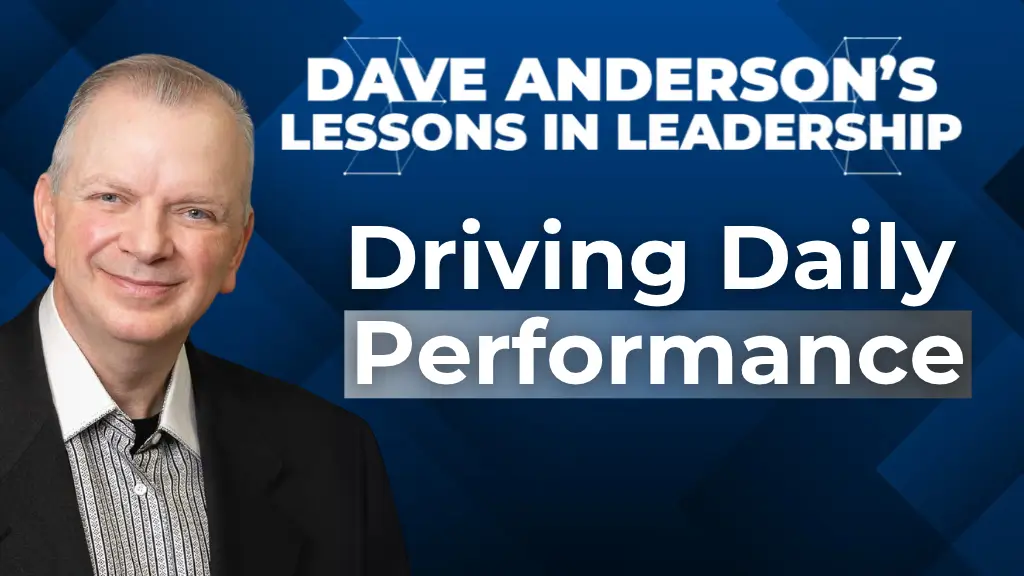
Welcome to Lessons in Leadership with host Dave Anderson. Today, we’re exploring the 11th trait of highly effective cultures: leaders’ capacity to remain intensely focused on internal decisions and actions, rather than getting sidetracked by external circumstances.

According to Anderson, strong leaders understand that outside factors will always influence business operations. Market conditions, competition, and economic shifts can pose challenges, but overemphasizing them can undermine leadership effectiveness.

“There’s a lot of power in focusing everyday on what we can do. There will always be external conditions thay we can’t control.”

Instead, high-performance leaders center their attention on what they do have and what they can control. That includes the decisions they make, the disciplines they implement, and the daily actions that shape organizational performance.

Sign up for CBT News’ daily newsletter and get the latest industry stories delivered straight to your inbox

Anderson explains that when leaders concentrate on external obstacles, they risk falling into what he describes as the “blame game.” By attributing results primarily to outside forces, leaders can lose their sense of ownership and influence over outcomes. That mindset can also weaken accountability throughout the organization.

Conversely, effective leaders prioritize a daily commitment to improving execution and results. By consistently reinforcing behaviors and decisions within their control, these leaders help minimize the influence of external pressures on the business.

This mindset becomes a defining element of strong organizational cultures. Teams often mirror the focus of their leaders, and when leadership emphasizes solutions, discipline, and ownership, employees are more likely to adopt the same perspective.

Anderson’s insight is part of his ongoing series examining the 21 traits of high-performance cultures featured on CBT News. He expands on these leadership strategies in his book, Elevate Your Excellence, available through Amazon and other leadership development platforms.


More from Lessons in Leadership
Resilient

How resilient is your dealership team, really?

- April 22, 2026
According to Dave Anderson, founder of LearnToLead and leadership expert, resiliency is not just a personal trait, it’s a cultural one. On the latest installment of Lessons in Leadership's 21-traits of building...
peer pressure

Utilizing peer pressure to define high-performing cultures

- April 15, 2026
  Dave Anderson, President of LearnToLead, says the most effective business cultures are defined by peer pressure to perform rather than management-driven oversight. During today’s episode of Lessons in Leadership, Anderson...
Are your employees growing—or stagnating?

Are your employees growing—or stagnating?

- April 8, 2026
According to leadership expert Dave Anderson, high-performance cultures insist on continuous growth, creating an environment in which employees understand that their development directly impacts both personal value and organizational success.  In...
Building a culture where input from all levels matters

Building a culture where input from all levels matters

- April 1, 2026
By fostering open dialogue across all levels, leaders can build high-performing cultures that encourage innovation and engagement, says leadership expert Dave Anderson. On the latest episode of Lessons in Leadership, Anderson...
CBT News
Privacy Overview

This website uses cookies so that we can provide you with the best user experience possible. Cookie information is stored in your browser and performs functions such as recognising you when you return to our website and helping our team to understand which sections of the website you find most interesting and useful.