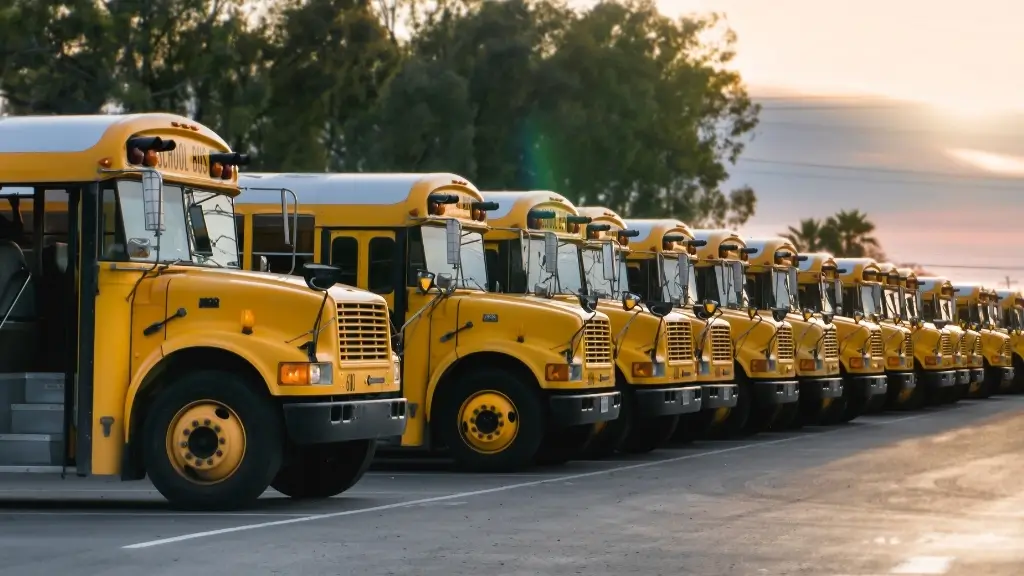
When communities agreed to install cameras on school buses, the purpose seemed straightforward. The cameras would identify drivers who illegally passed a stopped school bus, putting children at risk, and provide evidence for law enforcement. Few objected because the goal was clear, limited, and centered on protecting students.
According to leaked internal documents, however, that mission may be expanding far beyond what taxpayers and parents were originally told. BusPatrol, the nation’s largest provider of school bus stop-arm camera systems, reportedly plans to transform those same buses into a nationwide network of Automatic License Plate Readers, or ALPRs. Rather than activating only when a traffic violation occurs, the cameras would continuously record the license plates, locations, dates, and times of every vehicle they encounter before sharing that information with law enforcement databases.
If fully deployed, the system would operate on more than 40,000 school buses across 24 states, creating what could become the largest mobile license plate reader network in the United States. That represents a significant change in purpose. Americans supported cameras designed to protect children boarding school buses. They were never asked whether those same cameras should document the daily movements of millions of law-abiding drivers.
The choice of school buses is no accident. They already travel nearly every neighborhood in America twice a day, five days a week. Building that kind of street-level surveillance network from scratch would require enormous public investment and almost certainly generate significant public opposition. School buses already have the routes, the cameras, and the infrastructure. The only thing changing is what the technology is being asked to collect.
The leaked documents also reveal a data-sharing partnership between BusPatrol and Axon, the law enforcement technology company known for body cameras and digital evidence systems. The proposal would allow information collected by school buses to become part of a broader investigative network used by police agencies. Privacy advocates argue that this transforms a child safety initiative into a system capable of tracking the routine movements of ordinary Americans who are not suspected of any crime.
Concerns over license plate reader technology are not theoretical. The Institute for Justice has documented multiple cases in which law enforcement officers allegedly misused ALPR databases for personal reasons. In one case, a Milwaukee police officer reportedly searched the movements of a woman he was dating and her former partner nearly 180 times while describing the searches as official investigations. In Idaho, a sheriff searched his wife’s vehicle more than 700 times over a three-month period, claiming the searches were simply tests. In Georgia, a police chief was arrested after allegedly using ALPR systems to stalk private citizens who were not part of any criminal investigation. None of those incidents were automatically flagged by the systems themselves.
School buses also appear to be only one part of a much larger trend. Cities around the country have explored mounting AI-powered cameras on garbage trucks to identify property code violations because sanitation vehicles, like school buses, travel every neighborhood on a regular schedule. Cape Coral, Florida abandoned its proposal after public opposition, but similar concepts have surfaced elsewhere, raising broader questions about whether existing municipal vehicles are gradually becoming platforms for data collection rather than simply performing the jobs taxpayers expect them to do.
The expansion extends well beyond local governments. Flock Safety has built a nationwide network of AI-powered cameras capable of identifying license plates as well as vehicle characteristics such as make, model, color, decals, and bumper stickers. According to Forbes, private companies including FedEx, Lowe’s, Simon Property Group, and Kaiser Permanente have participated in information-sharing arrangements involving Flock’s surveillance network. Civil liberties advocates warn that these partnerships expand vehicle tracking while operating outside many of the transparency requirements that apply to government agencies.
Viewed separately, each of these programs can be justified as improving safety, reducing crime, or increasing efficiency. Viewed together, they reveal a different pattern. Existing infrastructure is being equipped with increasingly sophisticated technology that collects more information, retains it longer, and shares it more broadly than originally promised. School buses, garbage trucks, commercial delivery fleets, and private security cameras all become pieces of a surveillance network that continues to grow, often without meaningful public debate.
Protecting children should never be controversial. Neither should giving law enforcement the tools needed to investigate legitimate crimes. But expanding those tools beyond their original purpose deserves public scrutiny, especially when millions of Americans who have done nothing wrong become part of the database. Before 40,000 school buses begin recording the daily travels of ordinary citizens, the public deserves an honest debate about where the line between public safety and personal privacy should be drawn.
Check out my full commentary on this story: https://youtu.be/3j-kXQ57hcQ
Looking for more automotive news? https://www.CarCoachReports.com
Listen to The Drive Car Show – https://www.youtube.com/@thedrivecarshow