The sixth annual Automated Vehicles Symposium was held last week in Orlando, Florida from July 15th to 18th. It’s a hotbed for discussion among industry leaders, researchers, and policymakers revolving around autonomous tech. Whether the general public sees driverless cars on roads currently or not, there are advances being made in autonomous technology.
The general consensus among industry professionals is that implementation for full level-5 self-driving cars is probably a decade away or more. Tech companies alongside carmakers are working hard to develop the technology though major investments.
Where Advances are Being Made
LiDAR
Light detection and ranging sensors, better known as LiDAR, have been around for years. Their an integral part of many AV tech features and are foundational for true level-5 autonomy. However, the cost of LiDARs have dropped to about 10 percent of what they cost five years ago while the technology is becoming more refined and reliable.
Level 4 Parking
Carmakers have been introducing parking-assist technologies already such as Ford’s Parallel and Perpendicular Park Assist. That tech is going much deeper now. As an example, Bosch and Daimler have partnered to develop automated valet parking that has been tested for the first time in Stuttgart, Germany. The car doesn’t need a driver in the vehicle to be parked or retrieved – it’s all controlled through a smartphone app.
ADAS Systems
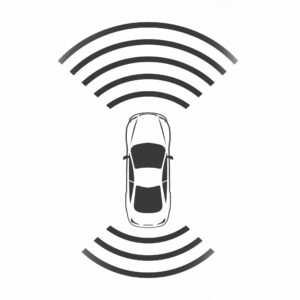
Advanced Driver-Assistive Systems (ADAS) are ever expanding and being refined. From Adaptive Cruise Control and Blind Spot Information Systems to Lane Keeping Assist and Road Departure Mitigation, a car equipped with ADAS systems helps protect the driver from unintentional consequences. Carmakers are working to incorporate these systems into a wider range of vehicles to make motoring safer for everyone at any price point.
V2I
Vehicle-to-Infrastructure Tech is a debated area of development. It revolves around designing roadways and infrastructure to specifically incorporate autonomous vehicles, potentially allowing closed-course style operation like freeway travel at 120mph. Other carmakers reject V2I technology, insisting on developing their vehicles to seamlessly work on normal roads. Nonetheless, V2I is an area of AV tech that’s being explored.
AI
Autonomous vehicles need to make decisions without driver input. That requires rock-solid artificial intelligence, and the industry is a long way from perfect AI. Major players in AI tech have set their crosshairs on developing software, middleware, and operating systems that can perform the necessary tasks in real time.
What’s the Purpose?
One question that’s posed often is, “What’s the point?” The answer varies depending on who you ask. For some, driving is a passion and a pastime, and relinquishing control of the steering wheel is of no interest. For others, it’s about productivity – turning hours spent in the car into time that can be make profitable instead.
In the 2019 Autonomous Vehicles Survey by Perkins Coie, it’s noted that “AV technology is making powerful strides and that it provides clear opportunities to increase convenience and reduce traffic accidents.”
The survey, performed in conjunction with the Association for Unmanned Vehicle Systems International (AUSVI), ranked these ten benefits to consumers in using autonomous vehicles:
- Reduced traffic accidents
- Decreased vehicle servicing costs
- Decreased expenditure on fuel
- Reduced energy consumption
- Greater access to healthcare with improved patient mobility
- Increased work productivity
- Increased free time for family and entertainment
- Reduced pollution
- Higher vehicle flow rates on existing roads
- More efficient parking
Top Challenges
Developing this type of technology doesn’t come without its obstacles. Two stand out above all others – liability and consumer perception.
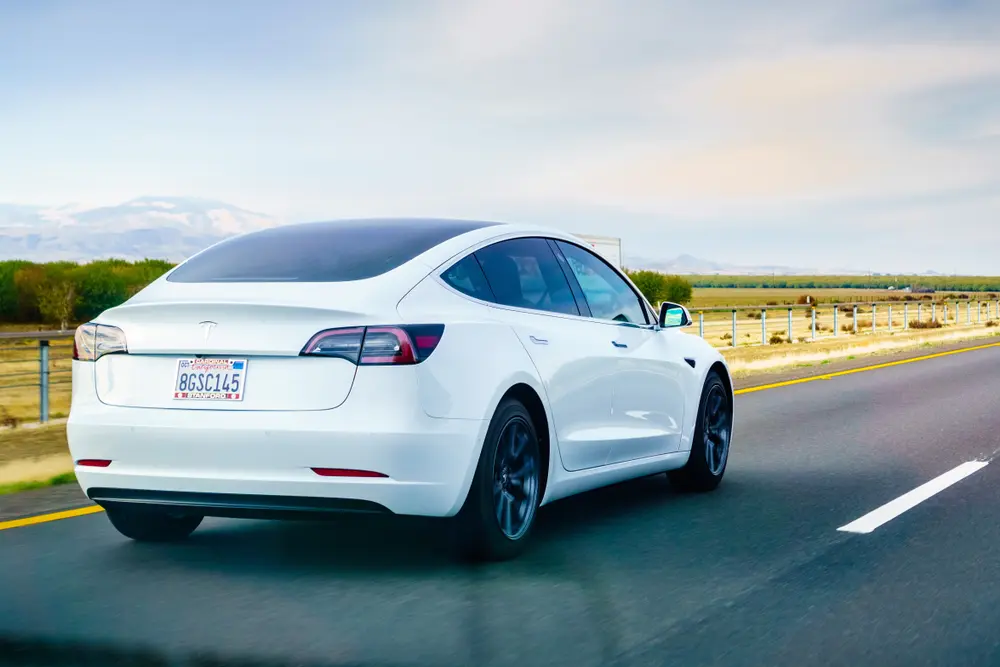
If an AV is involved in a collision, who is the responsible party? Tesla has seen its fair share of court cases already due to collision while self-driving systems were reportedly engaged. But if a level-5 AV has no driver, who is liable?
Consumer perception is a hurdle that will always be present as well. The public is inquisitive about AV technology but is largely hesitant to trust that ADAS features like adaptive cruise control will work properly, let alone a self-driving vehicle. I will take marketing prowess to win over the masses.
Who Is Involved in AV Development?
Most carmakers have at least some investment in AV tech. Vocal proponents and active participants include Tesla, Toyota, Volvo, and Daimler.
Other companies that are contributing resources and expertise in the ongoing AV development. Lyft and Google’s Waymo are approaching it from a ridesharing aspect while Bosch, Continental Automotive Systems, Perkins Coie, Stantec, Velodyne Lidar, and many other companies are working on hardware and software solutions.