On the Dash:
- Retired Honda executives pushed CEO Toshihiro Mibe to resign. He refused.
- Honda posted nearly $10 billion in EV losses, its worst financial result in decades.
- U.S. EV sales dropped 27% in Q1 2026 after the federal tax credit expired.
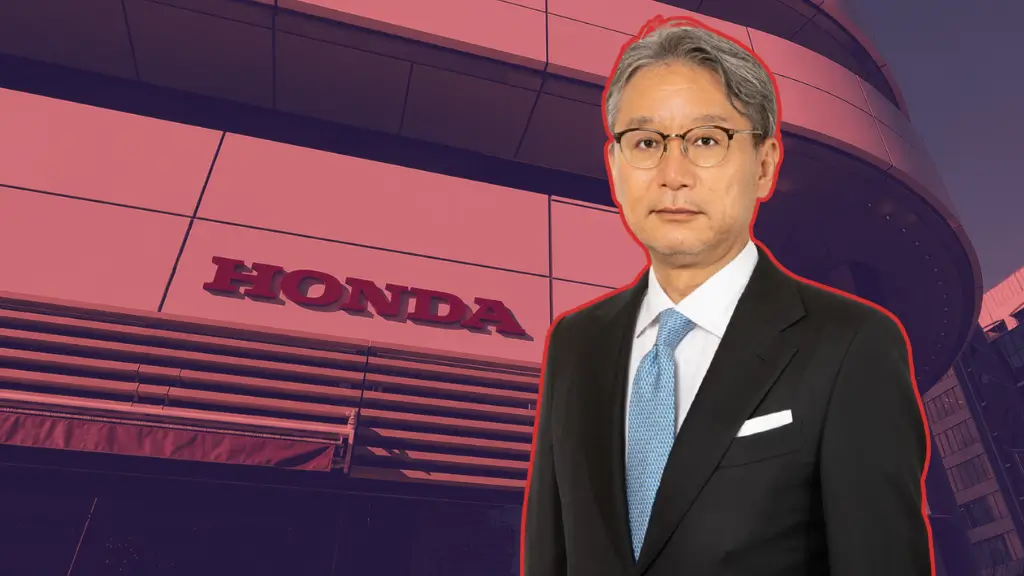
Honda CEO Toshihiro Mibe is facing growing calls to resign as the automaker posts its worst financial results in decades.
Honda’s former CEO Nobuhiko Kawamoto visited the company headquarters in Tokyo in April and told Mibe directly to step down, according to Reuters. Although Mibe refused, Honda’s board had already decided to keep him in place before the meeting.
Kawamoto had support from a group of former Honda executives in calling for Mibe’s resignation. The group of retired executives spent months building a case against Mibe, according to Reuters. They blamed him for losing ground in China, mishandling the company’s EV strategy, and failing to stay close to day-to-day operations.
Mibe faces growing criticism following serious financial trouble at Honda. The Japanese automaker canceled three EV models planned for North America in March:
- Honda 0 SUV
- Honda 0 Saloon
- Acura RSX.
Notably, the total EV-related losses reached nearly $10 billion for the year. It was the company’s first annual loss since going public in the 1950s.
China was a particular sore point. Honda’s market share there fell from 8% in 2020 to less than 3% last year. The company has acknowledged that Chinese competitors gained an edge through faster development cycles and stronger software. Toyota and Nissan had already adapted their EV strategies in China. However, Honda only announced a similar pivot this year.
The U.S. market added to the pressure, with EV sales falling 27% year over year in Q1 2026 after the $7,500 federal tax credit expired, according to Kelley Blue Book data. EV sales had already dropped 46.7% month-over-month in October 2025 when the credits first ended, according to NADA.
Mibe has outlined a turnaround plan that includes cutting costs by 30% for new hybrid powertrains. But two suppliers told Reuters they had not been consulted on those plans.