On the Dash:
- A Honda executive said Canada auto tariffs doubling to 50% on Jan. 1 would be “catastrophic.”
- Honda wants the trilateral USMCA to stay in place to keep U.S. industry competitive.
- The U.S. and Canada are working on a deal to ease steel and auto tariffs.
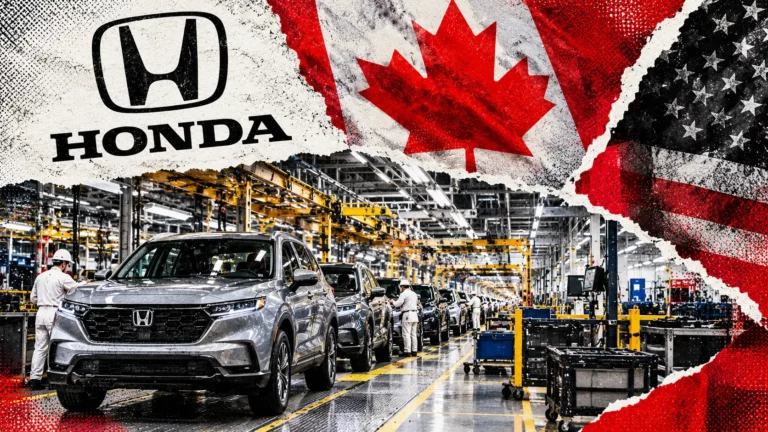
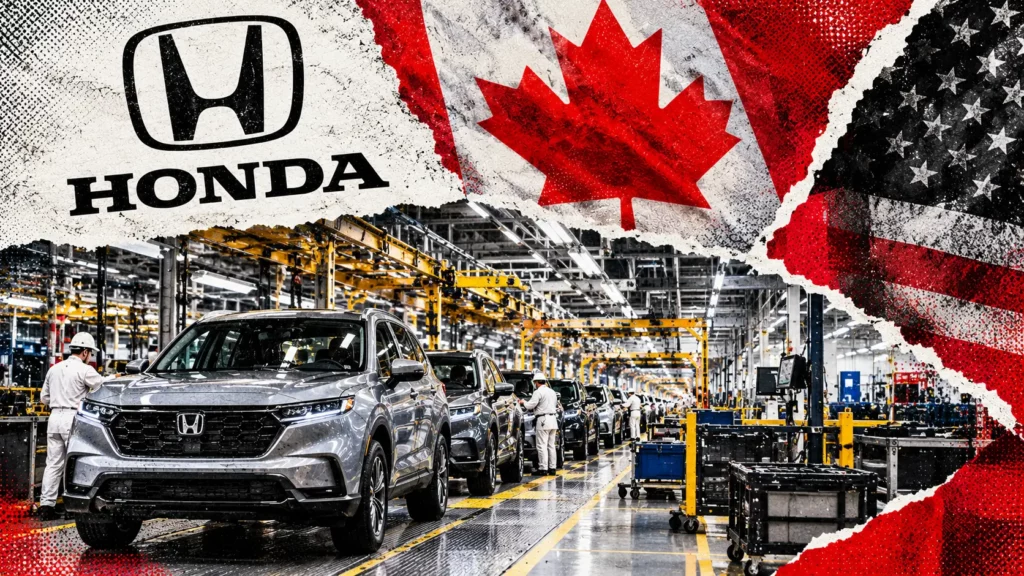
A Honda executive said Tuesday that a planned Jan. 1 increase in U.S. tariffs on Canadian steel and auto imports would be “catastrophic,” for the auto industry.
Jennifer Thomas, Senior Vice President of Corporate Affairs at American Honda Motor Co., made the comments at the Reuters Automotive USA conference in Detroit. Automakers are watching talks between the U.S., Mexico and Canada, hoping the three countries extend their long-standing trade deal.
Honda says three-country trade deal must stay in place
While Honda wants the trilateral U.S.-Mexico-Canada agreement (USMCA) to remain in place so the U.S. industry stays competitive, Thomas called the agreement integral to Honda’s success.
The three countries’ auto industries are tightly intertwined. Higher tariffs could raise costs and affect where companies such as Honda build new plants, Reuters reported. In August, Honda said it may not build an eighth North American assembly plant unless the trade deal is extended. Thomas said Honda is at capacity, is exploring all options and will keep investing in the U.S.
U.S. Trade Representative Jamieson Greer announced earlier this year that the U.S. would not automatically extend the USMCA. The pact moved into an annual review process in place of a 16-year extension, according to CNBC.
U.S. and Canada working on deal to ease tariffs
The two countries are working on a deal to ease U.S. tariffs on Canadian steel and autos, Reuters reported Monday. The talks cover tariffs imposed under Section 232 of U.S. trade law, including a tariff of up to 50% on Canadian steel and 25% on autos. Negotiators are discussing relief from those duties.
Thomas said she is cautiously optimistic that the Jan. 1 doubling will be avoided. Greer has said vehicles assembled in Mexico and Canada would likely still face some level of tariffs.
Toyota and Honda build most of the vehicles made in Canada and face the biggest exposure to the higher tariff. Honda reports that more than 60% of the vehicles it sells in the U.S. are built domestically.
Content rules leave North America at a disadvantage
North America is at an unfair disadvantage under current trade rules, Thomas said. The USMCA has specific North American content requirements, known as rules of origin, that the trade deals with the EU, Japan and South Korea do not. Thomas and other auto executives said those requirements are not in place in other deals.
In talks with Mexico, the U.S. has demanded that all North American-built vehicles contain 50% U.S.-specific content. That would raise the required regional content to 82% to qualify for U.S. benefits, according to sources familiar with the talks cited by Reuters.