On the Dash:
- A finalized EU-U.S. trade deal could stabilize vehicle import costs and reduce tariff uncertainty for global automakers.
- The threatened 25% tariffs on European vehicles remain a major risk to pricing and inventory planning.
- Ongoing trade negotiations continue to reshape global sourcing and production strategies across the auto industry.
European Union leaders reached a provisional agreement to eliminate tariffs on U.S. industrial goods, moving closer to finalizing a trade deal with the Trump administration before a July 4 deadline that could trigger higher tariffs on European imports.
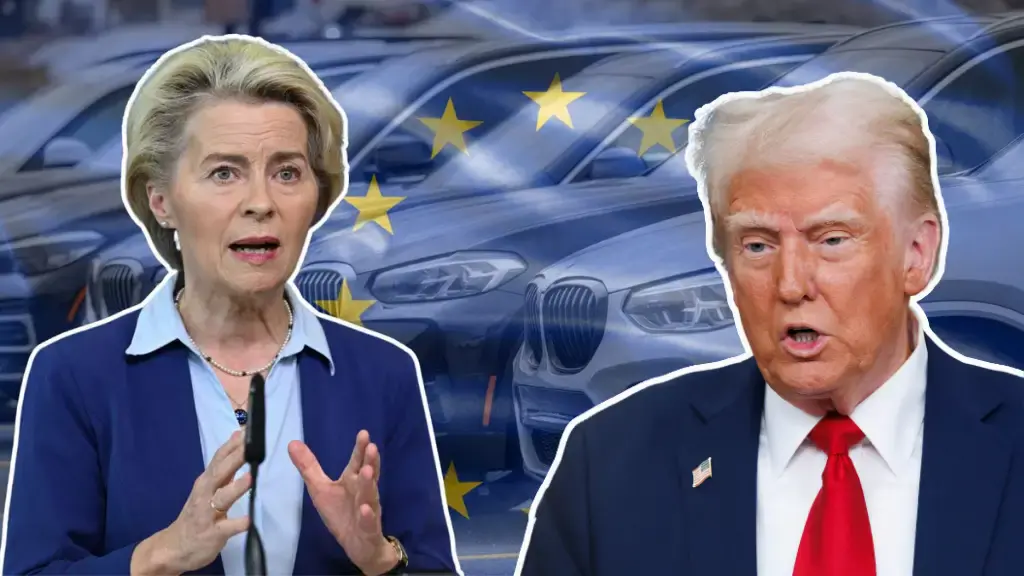
European Commission President Ursula von der Leyen welcomed the provisional agreement after EU lawmakers reached a breakthrough following more than five hours of negotiations.
The agreement is expected to help the European Union avoid higher tariffs threatened by President Donald Trump if the bloc failed to ratify the trade deal by a July 4 deadline.
The legislation includes safeguards that would allow Brussels to suspend tariff reductions if U.S. imports harm European industries. It also permits the European Commission to halt tariff preferences if U.S. tariffs on EU steel and aluminum derivatives remain above 15% after 2026.
The deal builds on a trade agreement first reached last year at Trump’s Turnberry golf resort in Scotland. Under that framework, the EU agreed to eliminate tariffs on U.S. industrial goods, while the Trump administration agreed to cap tariffs on most European goods at 15%.
“A deal is a deal, and the EU honors its commitments,” von der Leyen said on X. “Together, we can ensure stable, predictable, balanced, and mutually beneficial transatlantic trade.”
EU lawmakers previously delayed deliberations after Trump threatened Greenland, a self-governing Danish territory, and again after the Supreme Court struck down portions of his tariff agenda.
Earlier this month, Trump gave the EU until July 4 to finalize the agreement, warning that failure to do so would result in “much higher” tariffs. He also threatened to raise tariffs on imported European vehicles to 25%, accusing the bloc of failing to comply with the so-called “Turnberry Agreement.”
EU officials now expect to meet the July 4 deadline, with a final approval vote anticipated in mid-June.
European lawmakers said the agreement would help avoid an escalation of trade tensions while protecting investment and jobs tied to transatlantic commerce.
Bernd Lange, the European Parliament’s chief trade negotiator, described the process as a “rocky journey” but said codifying the agreement strengthens EU-U.S. trade relations.