On the Dash:
- Dealers may need to manage tighter synthetic oil inventories and prepare customers for temporary lubricant substitutions.
- Hybrid-heavy service departments could face increased maintenance delays if ultra-thin oil supplies tighten further.
- Rising lubricant costs and allocation limits may create new challenges for fixed-operations profitability and customer communication.
Toyota and Nissan are reportedly preparing dealers for potential shortages of low-viscosity synthetic motor oils as supply chain disruptions and petrochemical constraints tighten lubricant inventories across the automotive industry.
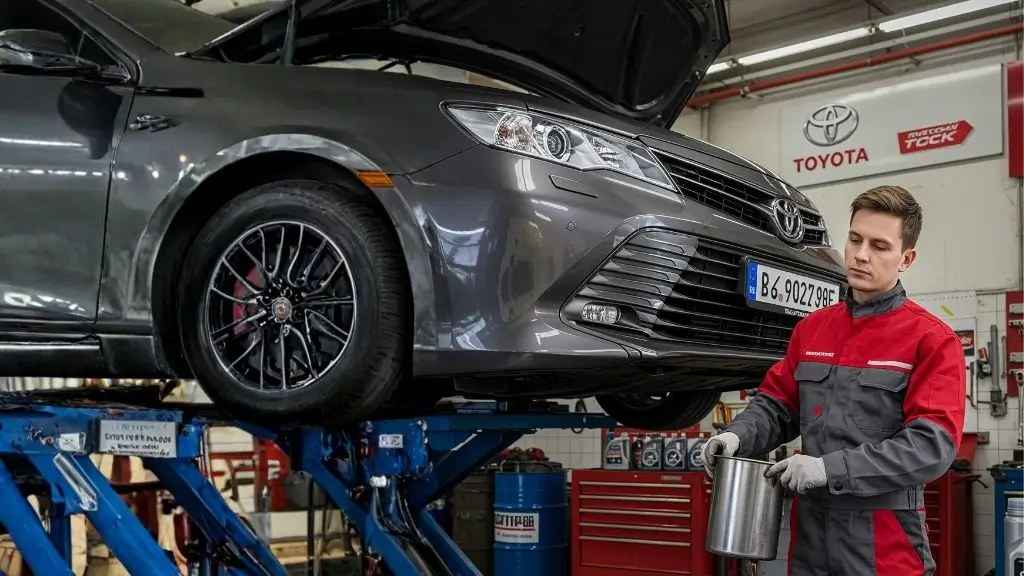
Internal service bulletins issued by the automakers reportedly warn of tightening supplies of low-viscosity synthetic oils such as 0W-8 and 0W-16. Automakers commonly use these lightweight oils in modern hybrids and fuel-efficient gasoline engines to meet stricter emissions standards and fuel-economy targets.
Toyota reportedly warned dealers that its supplier, ExxonMobil, could face production challenges tied to broader disruptions in the petrochemical supply chain. Nissan also acknowledged concerns surrounding lubricant availability through Mobil and Mobil 1 supply partnerships.
While there is no indication of a full retail shortage, automakers are reportedly discussing temporary workarounds with dealers to preserve inventories. Those measures include the short-term use of slightly heavier oil grades in some vehicles until production stabilizes.
Toyota’s guidance emphasized that substitute oils would serve only as temporary measures, not as permanent maintenance changes. Automakers noted that modern engines can typically tolerate a limited range of oil viscosities without immediate reliability concerns.
However, heavier oils can slightly reduce fuel economy and increase engine drag compared with thinner synthetic lubricants optimized for efficiency.
Supply constraints reportedly stem from shortages of specialized petroleum-based base-stock materials used in synthetic oil production. Nissan’s reported internal memo linked the issue to refining disruptions and geopolitical instability affecting petrochemical supply chains.
Nissan reportedly warned dealers to expect oil allocations at roughly 55% of prior-year supply levels. The automaker later confirmed the document’s authenticity to The Drive, though it said the bulletin had not yet been formally distributed across the dealer network.
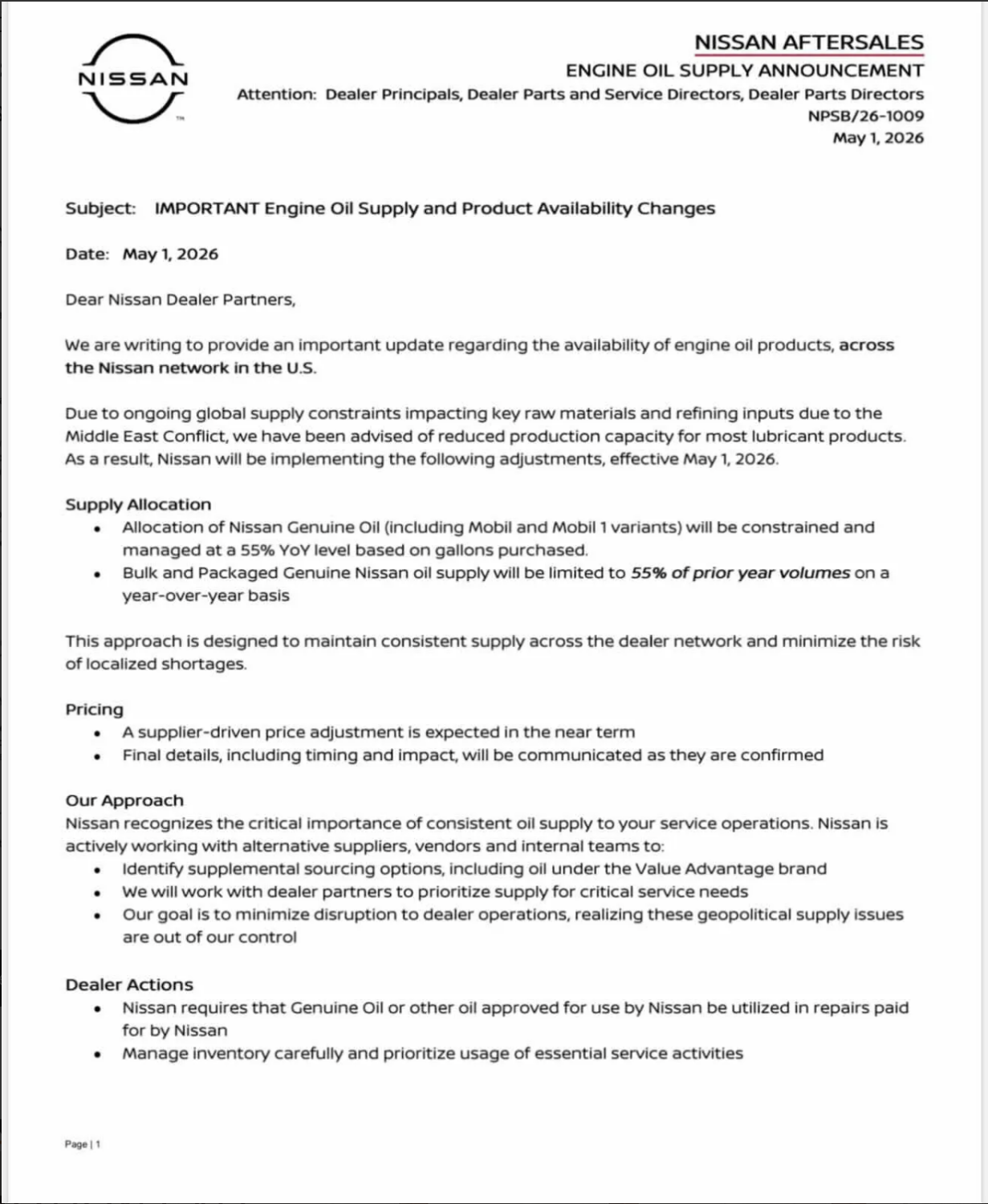
Nissan’s draft communication stated that the lubricant supply issue affects the broader automotive industry rather than only Nissan dealerships.
Hybrid vehicles using ultra-thin oils such as 0W-8 are expected to feel the greatest impact if shortages worsen. Dealers and consumers could eventually face longer maintenance wait times, tighter inventories, and higher synthetic oil prices as supplies tighten.