TSLA400.62011.72%
GM81.3203.27%
F12.8700.43%
RIVN17.2300.34%
CYD43.2600.9381%
HMC25.0000.64%
TM217.2004.34%
CVNA387.50025.26%
PAG161.3205.3%
LAD283.0408.17%
AN207.9909.7%
GPI349.94014.46%
ABG211.4407.35%
SAH70.7003.33%
TSLA400.62011.72%
GM81.3203.27%
F12.8700.43%
RIVN17.2300.34%
CYD43.2600.9381%
HMC25.0000.64%
TM217.2004.34%
CVNA387.50025.26%
PAG161.3205.3%
LAD283.0408.17%
AN207.9909.7%
GPI349.94014.46%
ABG211.4407.35%
SAH70.7003.33%
TSLA400.62011.72%
GM81.3203.27%
F12.8700.43%
RIVN17.2300.34%
CYD43.2600.9381%
HMC25.0000.64%
TM217.2004.34%
CVNA387.50025.26%
PAG161.3205.3%
LAD283.0408.17%
AN207.9909.7%
GPI349.94014.46%
ABG211.4407.35%
SAH70.7003.33%

Dept. of Energy grants University of Michigan $11 million to fund EV battery research

research

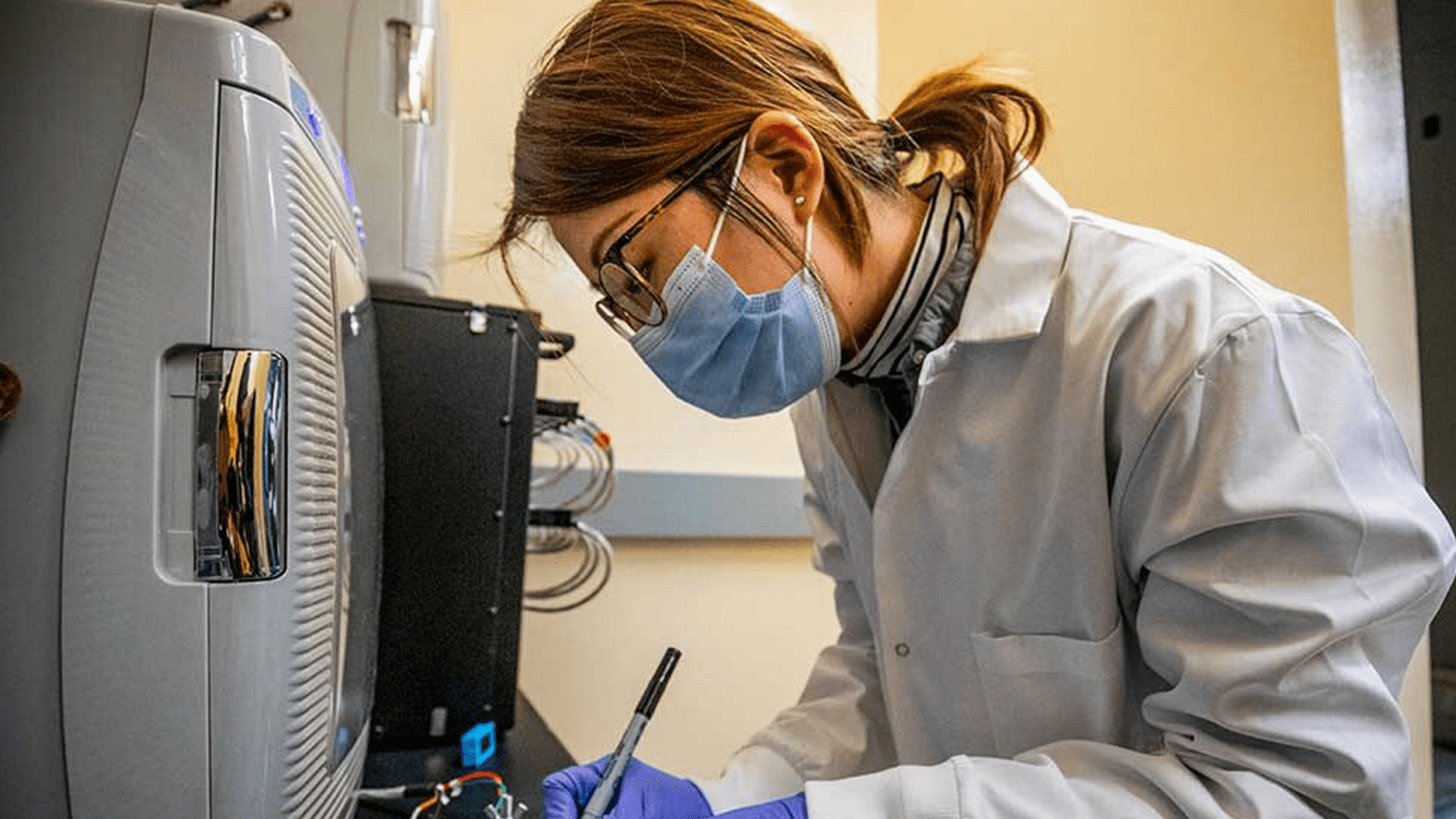
The US Department of Energy has awarded the University of Michigan an $11 million federal grant to fund research for ceramic, solid-state batteries for use in electric vehicles.

The grant will help establish an Energy Frontier Research Center at the Ann Arbor university. According to Jeff Sakamoto, a team of six professors and ten faculty members from around the country will lead the research. Sakamoto is the Director of the Center and a professor of mechanical engineering.

The research will focus on developing solutions for solid-state batteries, which are safer and more efficient than the lithium-ion batteries used by automakers today. The ceramic ion conductors in solid-state batteries are not combustible and perform more efficiently the hotter they become. That means they have the potential to double the range without risk of fire. The challenges come from the expense needed to mass produce them and the fact that they are very brittle.

“In terms of the mechanical processes, they’re no different than a coffee cup,” said Sakamoto. “You know what happens when you drop a coffee cup: It shatters.”

The grant will be distributed over four years. The newly developed center will work with the state-funded EV training center at UM, which was unveiled in July. Research partners include Northwestern University, Massachusetts Institute of Technology; University of Illinois Urbana-Champaign; University of Texas, Austin; Georgia Institute of Technology; Princeton University, Oak Ridge National Laboratory, and Purdue University.

Sakamoto said he expects automakers to be interested in the outcome of the research, even if they’re not directly involved. “I can’t think of a single OEM right now that’s not interested or heavily invested in solid-state batteries,” he said. “The reason these OEMs are interested in this technology is not just because it has a lot of promise but because it is maturing quite quickly.”


dealersDid you enjoy this article? Please share your thoughts, comments, or questions regarding this topic by connecting with us at newsroom@cbtnews.com.

Be sure to follow us on Facebook, LinkedIn, and TikTok to stay up to date.

While you’re here, don’t forget to subscribe to our email newsletter for all the latest auto industry news from CBT News.
More from Articles
STL launches ‘Neuralis’ in the US: A high-performance Data Center portfolio engineered for the AI era

STL launches ‘Neuralis’ in the US: A high-performance Data Center portfolio engineered for the AI era

- April 17, 2026
Washington, United States, 17/April/2026: STL Optical Connectivity NA, LLC,  (STLOC),  a U.S. subsidiary of STL [NSE: STLTECH], a leading connectivity solutions provider for AI-ready digital infrastructure, today announced the U.S. launch of Neuralis, its flagship...
GM leans on global production to supply U.S. market amid cost pressures

GM leans on global production to supply U.S. market amid cost pressures

- April 17, 2026
On the Dash: Imported inventory may create variability in delivery timing and supply consistency. Trade policy shifts could impact the pricing and availability of certain models. Global production strategies may...
Volkswagen ends U.S. EV output, triggering $600 million financial hit 

Volkswagen ends U.S. EV output, triggering $600 million financial hit 

- April 17, 2026
On the Dash: Slower EV demand may impact inventory planning and turn rates for electric models. Production pullbacks could tighten EV supply or shift sourcing toward imports. Ongoing cost pressures...
March sales surge tightens inventory, affordability gaps persist

March sales surge tightens inventory, affordability gaps persist

- April 17, 2026
On the Dash: Faster March sales improved inventory flow, but demand remains uneven heading into Q2. Limited sub-$40K inventory continues to constrain volume opportunities. Rising incentives indicate growing pressure to...
CBT News
Privacy Overview

This website uses cookies so that we can provide you with the best user experience possible. Cookie information is stored in your browser and performs functions such as recognising you when you return to our website and helping our team to understand which sections of the website you find most interesting and useful.