The Biden Administration wants more taxpayer spending to go toward American-made products and has issued a proposed rule change to that end. If it’s passed, it will require any government spending to include at least 60% US-made components immediately. The proposal also stipulates future increases to that threshold: 65% by 2024 and 75% by 2029.
While some policy changes are virtue signaling, this proposed rule change appears to have teeth. Federal contract spending checks in at around $600 billion per year, and increasing the rule from its current 55% requirement to 60% will have immediate impacts on which suppliers and products are chosen. Affected industries are a broad spectrum from defense and construction to vehicles and related parts.
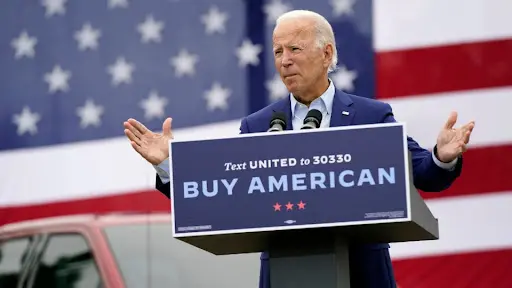
At an event on Wednesday in Macungie, PA, President Biden said, “In recent years, ‘Buy American’ has become a hollow promise. But my administration is going to make ‘Buy American’ a reality. I’m putting the weight of the federal government behind that commitment.”
Shoring up American supply chains
Biden pointed to shortages that became excruciatingly clear during the pandemic, both early stages and further into it. “We saw during the early days of the pandemic that the supply chain disruptions can put Americans’ lives and livelihoods at risk. When we needed them most, we were short of protective equipment, we were short on ventilators and other essential health equipment,” he said.
“We need to have a resilient supply chain of our own so that we’re never again at the mercy of other countries for critical goods ever again.”
The list of products that were understocked during the pandemic is mind-blowing. It ranges from bathroom tissue and dumbbells to WFH equipment like home desks, computers, tablets, and web cameras. In the auto industry, foam products and microchips are the most notable products that companies struggled to import in enough volume.
Automakers affected by American content requirement
In addition to simply stating whether their products meet the proposed rule change requirements, the law will mandate that the percentage of American-made components is listed with it. That will go for vehicles as well, and the federal government spends around $4.4 billion on motor vehicles annually.
The NHTSA provides a list of vehicles, broken down by year, that displays the Part 583 AALA (American Automobile Labeling Act) information on passenger vehicles but does not represent all of the fleet vehicles the US might procure. The list shows American AND Canadian content combined as a single percentage. Of all the vehicles and trim levels listed, only one-half of one of its six pages would currently qualify under the 60% threshold.
Certain carmakers are well represented in the American-made content especially Honda, Acura, Chrysler, Jeep, and Tesla. Aside from the Jeep Gladiator, the Toyota Tundra and Ram 1500 Classic are the only full-size pickup trucks within the 60% and higher requirement. Popular government fleet choices, the Ford F-150 and Chevrolet Silverado are at 55% and 58% respectively.
The rule update could cause carmakers to scramble to source locally manufactured components to fit their fleet-focused models into the proposed 60% American-made content rule, and will certainly affect procurement for the proposed higher future levels.
The public will be able to submit comments on the proposed rule change for 60 days once it is published in the Federal Register before lawmakers move to finalize it.
Did you enjoy this article from Jason Unrau? Please share your thoughts, comments, or questions regarding this topic by submitting a letter to the editor here, or connect with us at newsroom@cbtnews.com.
Be sure to follow us on Facebook and Twitter to stay up to date or catch-up on all of our podcasts on demand.
While you’re here, don’t forget to subscribe to our email newsletter for all the latest auto industry news from CBT News.