TSLA451.13017.68%
GM76.020-0.42%
F13.6701.6799%
RIVN14.5250.575%
CYD50.6802.16%
HMC24.4150.305%
TM187.1755.505%
CVNA70.120-3.6%
PAG166.480-2.55%
LAD272.730-2.57%
AN192.145-3.215%
GPI330.900-5.24%
ABG194.2000.52%
SAH77.065-1.515%
TSLA451.13017.68%
GM76.020-0.42%
F13.6701.6799%
RIVN14.5250.575%
CYD50.6802.16%
HMC24.4150.305%
TM187.1755.505%
CVNA70.120-3.6%
PAG166.480-2.55%
LAD272.730-2.57%
AN192.145-3.215%
GPI330.900-5.24%
ABG194.2000.52%
SAH77.065-1.515%
TSLA451.13017.68%
GM76.020-0.42%
F13.6701.6799%
RIVN14.5250.575%
CYD50.6802.16%
HMC24.4150.305%
TM187.1755.505%
CVNA70.120-3.6%
PAG166.480-2.55%
LAD272.730-2.57%
AN192.145-3.215%
GPI330.900-5.24%
ABG194.2000.52%
SAH77.065-1.515%

Automakers face production threat as China’s rare-earth magnet exports trigger industry panic

China’s rare-earth magnet export restrictions threaten global automakers with production delays, forcing urgent supply chain scramble and accelerating efforts to find alternatives.
Automakers and parts suppliers worldwide are scrambling to secure rare-earth magnets after China tightened its export controls.

Automakers and parts suppliers worldwide are scrambling to secure rare-earth magnets after China tightened its export controls, sparking fears of widespread factory shutdowns. Frank Eckard, CEO of German magnet maker Magnosphere, said automakers have warned that their plants could be idled by mid-July without alternative magnet supplies. 

China dominates the global rare-earth magnet market, controlling up to 70% of mining, 85% of refining capacity, and roughly 90% of magnet production. These magnets are essential for both electric vehicles (EVs) and internal combustion engine cars, used in components such as motors for side mirrors, oil pumps, windshield wipers, and various sensors. The average EV requires about one pound of rare-earth elements, double that of a fossil-fuel vehicle.

Sign up for CBT News’ daily newsletter and get the latest industry stories delivered straight to your inbox.

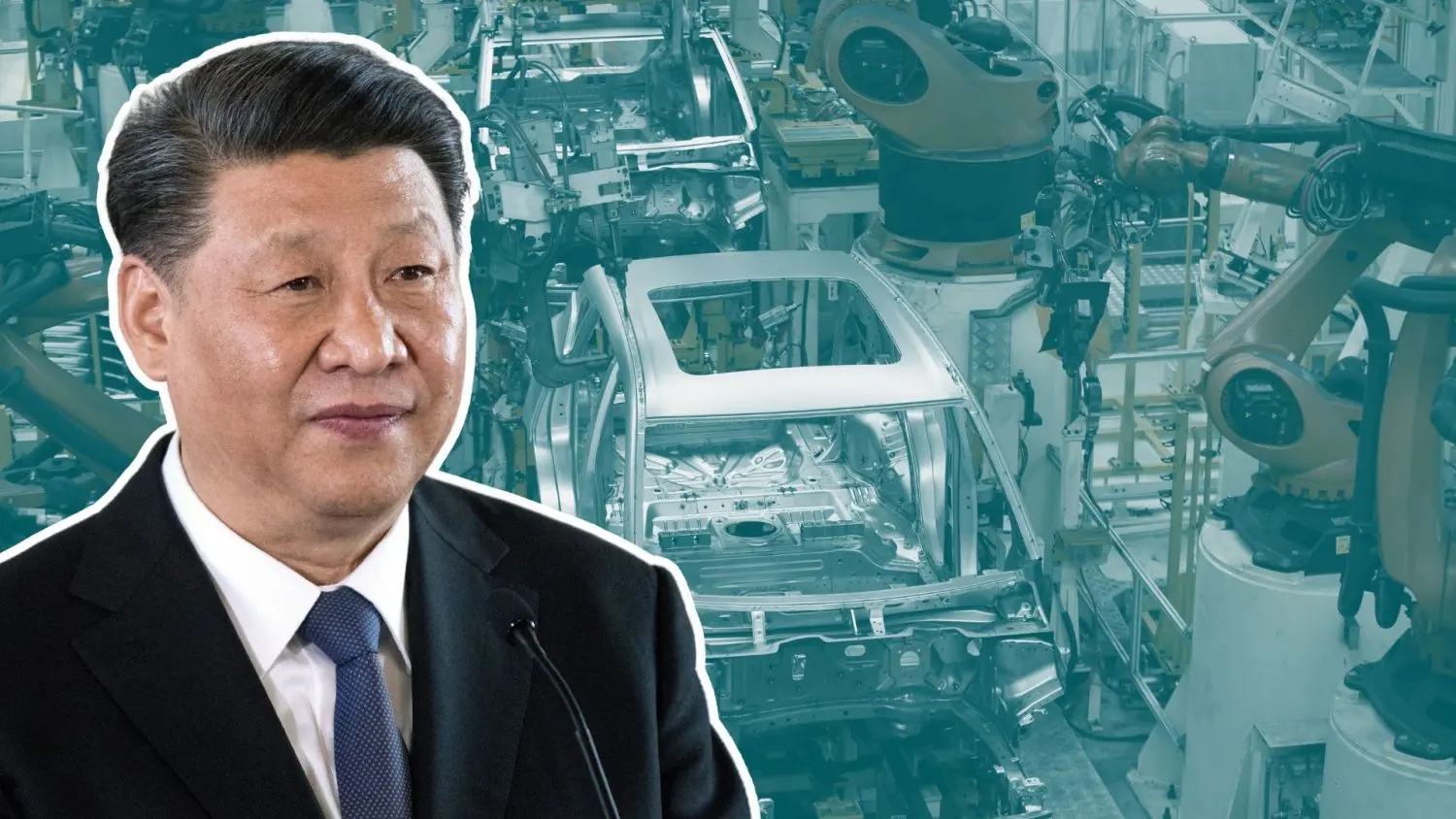
The export restrictions come amid rising geopolitical tensions and have prompted emergency talks. U.S. President Donald Trump recently announced that Chinese President Xi Jinping has agreed to ease exports of rare-earth minerals to the U.S., with trade negotiations scheduled to take place in London.

Industry experts warn this crisis could become the third major automotive supply shock in five years, following semiconductor shortages and COVID-19-related factory closures. Despite prior disruptions, many automakers have yet to fully secure backup supplies or reduce reliance on just-in-time inventory models.

Several European auto supplier plants have already shut down due to shortages, with more closures expected, according to the European Association CLEPA.

Moreover, automakers and suppliers such as General Motors, BMW, ZF, and BorgWarner are racing to develop motors using low-to-zero rare-earth materials. However, these technologies remain years from large-scale deployment and cost competitiveness.

In response, the European Union has launched the Critical Raw Materials Act to boost domestic sourcing, but critics argue that progress is too slow to alleviate current shortages. Recycling initiatives and the development of rare-earth-free magnets are also underway, with companies such as Minneapolis-based Niron and UK-based Warwick Acoustics advancing alternative technologies; however, a commercial-scale impact is still years away.

Meanwhile, automakers are urgently assessing their supply chains and stockpiling magnets to maintain assembly line operations. Analysts warn that manufacturers may face parts shortages, forcing them to assemble vehicles incompletely and store them until the necessary components arrive. This scenario echoes the recent semiconductor crisis.

This rare-earth bottleneck is a warning of broader supply chain vulnerabilities. China also dominates supplies of other critical raw materials, including manganese, graphite, and aluminum, which could be leveraged in future export controls.

As the industry grapples with immediate disruptions and long-term strategic shifts, the reliance on China remains a critical vulnerability in the global automotive supply chain.

Read More
More from Articles
The simple 'paperwork' mistake that could cost dealers $10,000

The simple ‘paperwork’ mistake that could cost dealers $10,000

- May 13, 2026
On the Dash: CDK Global says a paperwork problem cost a dealer $10,000 during a manufacturer audit. NADA calls federal record-keeping requirements among the most burdensome rules dealers face today. ...
GM-LG battery venture recalls small group of Ohio workers as EV demand slows

GM-LG battery venture recalls small group of Ohio workers as EV demand slows

- May 13, 2026
On the Dash: EV production volatility is directly affecting supply chain employment and factory output decisions. Incentive-driven demand shifts are forcing automakers to adjust production more quickly than long-term EV...
Nissan projects return to profit after seventh straight quarterly loss

Nissan projects return to profit after seventh straight quarterly loss

- May 13, 2026
On the Dash: Nissan’s projected return to profit could improve dealer confidence after multiple quarters of financial instability. Ongoing model cuts and production restructuring may impact future inventory mix and...
New-vehicle prices rose in April, but the gains fell short of the historical average, with wide variation across brands and segments, according to Kelley Blue Book.

New-vehicle prices rise in April, but the pace is cooling

- May 13, 2026
On the Dash: New-vehicle ATP rose 1.8% year over year in April, below the 3.6% long-term average. Ford and GM posted strong gains while several luxury brands saw transaction prices...
CBT News
Privacy Overview

This website uses cookies so that we can provide you with the best user experience possible. Cookie information is stored in your browser and performs functions such as recognising you when you return to our website and helping our team to understand which sections of the website you find most interesting and useful.