In an ever-changing economy, the automotive industry faces a constant stream of challenges. Yet, one thing continues to surprise me: how consistently customers behave during difficult economic times. Even more surprising is how quickly employees in dealership Service departments seem to believe they have customers figured out.
Ask why customers aren’t coming in for service or why they aren’t purchasing additional recommended maintenance, and you’ll get plenty of answers:
- “They can’t afford gas for their vehicle, so they certainly don’t have money for maintenance.”
- “We’ve priced ourselves out of the market.”
- “Customers just aren’t buying anything right now.”
And the list goes on.
In fact, some of the most confident opinions about why a dealership is struggling to grow often come from its most senior Technicians and veteran Service Advisors. Just ask them. What can be even more surprising, however, is how these opinions influence the team’s behavior and undermine the very processes designed to generate additional service sales.
Consider what happens when experienced employees decide certain customer engagement activities aren’t worth the effort. When senior Technicians decide that video multipoint inspections (VMPI) aren’t important to customers, younger Technicians often adopt that same mindset. When veteran Advisors skip vehicle walk-arounds or stop recommending mileage-based services during the write-up process because they already know a particular customer “doesn’t buy anything,” the consistency of the entire sales process begins to break down.
The problem isn’t necessarily the customer. It’s the assumptions employees make before they’ve even presented the opportunity.
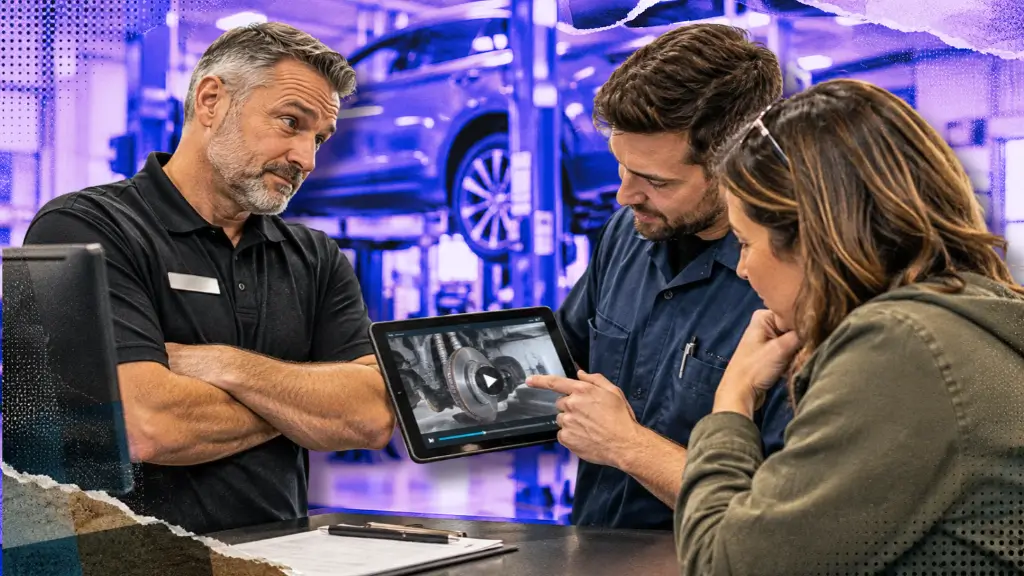
Now, consider what happens when a new Technician joins the team and wants to prove himself to his new employer. He performs a thorough, high-quality video MPI, clearly communicates the vehicle’s needs, and the customer approves the recommended work.
Or consider a new Service Advisor who simply follows the training: explaining why a service is needed rather than just asking the customer if they want it. By consistently following the process with every customer, that Advisor sells three times as much.
What changed?
The customers didn’t change. The approach did.
In both situations, new employees demonstrated that customers were willing and able to purchase additional services when those services were properly identified, presented, and explained. Meanwhile, some of the dealership’s most experienced employees had allowed their assumptions to determine their level of effort and performance.
Customers have always faced financial challenges, and they will continue to make decisions about how they spend their money. But when a recommended service is presented as a worthwhile investment in the safety, reliability, and longevity of their vehicle, customers deserve the opportunity to make that decision for themselves.
So, perhaps customers aren’t the ones who continue to surprise us. Perhaps the real surprise is how easily management can buy into employee excuses instead of holding the team accountable for consistent customer engagement.
Customer engagement is the true driver of additional service sales. The more consistently your team identifies, presents, and explains needed services, the greater the opportunity for customers to approve that work.
For management, this means focusing on four critical customer engagement events:
- Appointment Preparation: Are scheduled appointments being properly reviewed so the team knows what needs to be discussed with the customer during the write-up process?
- The Write-Up Process: Are managers observing the customer interaction, including vehicle walk-arounds and the consistent presentation of mileage-based services?
- Video Multipoint Inspections: Are Technicians completing quality VMPI videos, and are managers monitoring whether customers are actually viewing them?
- Active Vehicle Delivery: Are Service Advisors actively reviewing the inspection results, explaining recommendations, and offering to schedule the declined work before the customer leaves?
These four activities directly influence the customer’s experience and the dealership’s ability to generate additional needed service work.
Of course, the many other responsibilities performed by Technicians and Service Advisors are essential to keeping the service department operating efficiently. They make the machine work. But simply working harder at those operational duties will not necessarily create growth.
Growth comes from engaging customers, consistently following the process, and giving customers the opportunity to say yes.
Before accepting another explanation about why customers aren’t buying, management should take a closer look at what the team is doing to earn their business.