For many dealers, F&I profitability doesn’t end when a vehicle leaves the showroom. Behind the scenes, participation programs can create another revenue stream by allowing retailers to share in the profits generated through service contracts and other protection products. But as the automotive retail landscape evolves, so have the strategies dealers use to maximize those opportunities.
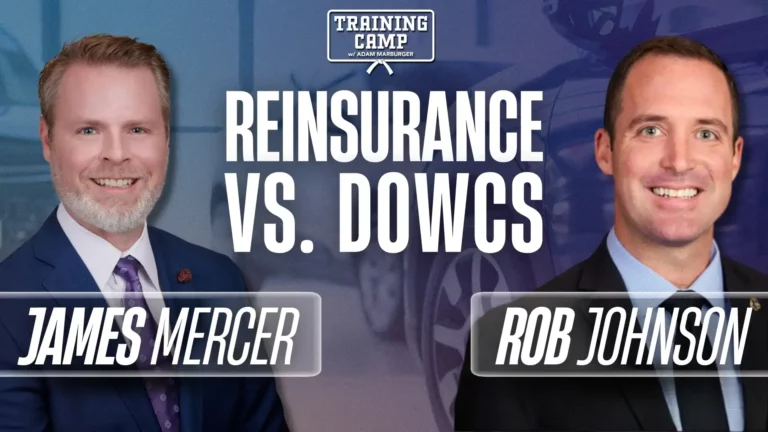
During today’s episode of Training Camp, Ascent Dealer Services Executives Rob Johnson and James Mercer break down the fundamentals of profit participation, how these programs have changed over time and what dealers should consider when evaluating their current structure.
According to the pair, profit participation can be a complex topic for dealers unfamiliar with the insurance and F&I space. Johnson said the easiest way to understand it is by looking at how insurance companies generate revenue.
“Profit participation at its core is allowing dealers to participate in the underwriting profit and the investment income of their service contracts or products that they’re selling in the F&I office.” – Rob Johnson
Insurance companies generally profit from two main sources:
- Underwriting
- Investment income.
While underwriting profit represents the money left after claims are paid and contractual obligations are fulfilled, investment income comes from the funds set aside to cover future claims and how those assets perform over time.
Participation programs
Meanwhile, Mercer said dealer participation has gone through several stages over the past 30 to 40 years as providers looked for new ways to help retailers increase their income potential.
The earliest model, known as a retro program, allowed dealers to receive a portion of unused underwriting profits. For example, if a dealer sold a $1,000 service contract and only $500 went toward claims, the remaining amount could be returned to the dealer at the end of the year. While retros represented a major shift at the time, Mercer said the industry continued evolving as dealers looked for additional flexibility and tax advantages. That evolution, he contends, eventually led to reinsurance programs.
Moreover, reinsurance allowed dealers to move beyond simply receiving annual refunds and instead create structures designed for long-term growth.
Johnson explained that many reinsurance programs use a controlled foreign corporation (CFC) structure, which allows dealers to elect tax treatment as a small insurance company. Rather than taking profits as ordinary income each year, dealers can allow funds to grow in a more tax-efficient environment.
However, the terminology surrounding offshore structures can create confusion for dealers considering the strategy. Both Johnson and Mercer emphasized the importance of working with trusted advisors, including CPAs and attorneys, to understand how each structure works.
Dealer-owned warranty companies
While reinsurance remains a common strategy, Mercer said dealer-owned warranty companies (DOWCs) have gained significant attention in recent years. He compared the shift to the evolution of other financial products that initially faced skepticism before becoming widely adopted.
“It’s lean and mean, and you’re going to have a tax deferral for 10 years.” – James Mercer
Mercer said DOWCs provide dealers with another option to build wealth through a streamlined structure designed around tax efficiency and investment growth. As more dealers become familiar with the model, Mercer said those DOWCs have become an increasingly popular option for retailers looking to maximize their participation opportunities.
Managing risk
One of the primary concerns that dealers have regarding participation programs is the associated risk. Johnson said that risk can be minimized by working with strong providers that offer contractual liability insurance policies, commonly referred to as a “clip.” That coverage, he said, protects dealers by ensuring claims obligations are backed by a larger provider.
Beyond protection, Mercer said many dealers are using accumulated participation funds as a tool for growth, including acquiring additional dealerships. Instead of taking distributions and paying taxes immediately, some dealers are leveraging their positions to access capital for expansion. A dealer could take a loan against their participation position to acquire another store, then use future F&I profits from that acquisition to help repay the loan.
Moreover, Mercer said dealers should not wait decades before reviewing their current participation structure. While reviewing performance every month may be unnecessary, he recommended dealers take a closer look every five to seven years to ensure their program still aligns with their goals. He said, “Insurance is the law of numbers…It’s not moving that quick.”
As dealership groups grow and market conditions change, participation strategies should evolve as well. Nonetheless, Mercer encouraged dealers to work with independent advisors who can evaluate their existing program and determine whether adjustments could improve performance.
Ultimately, profit participation has become a key component of dealership wealth-building strategies, but Johnson and Mercer said success depends on choosing the right structure and having the right guidance.