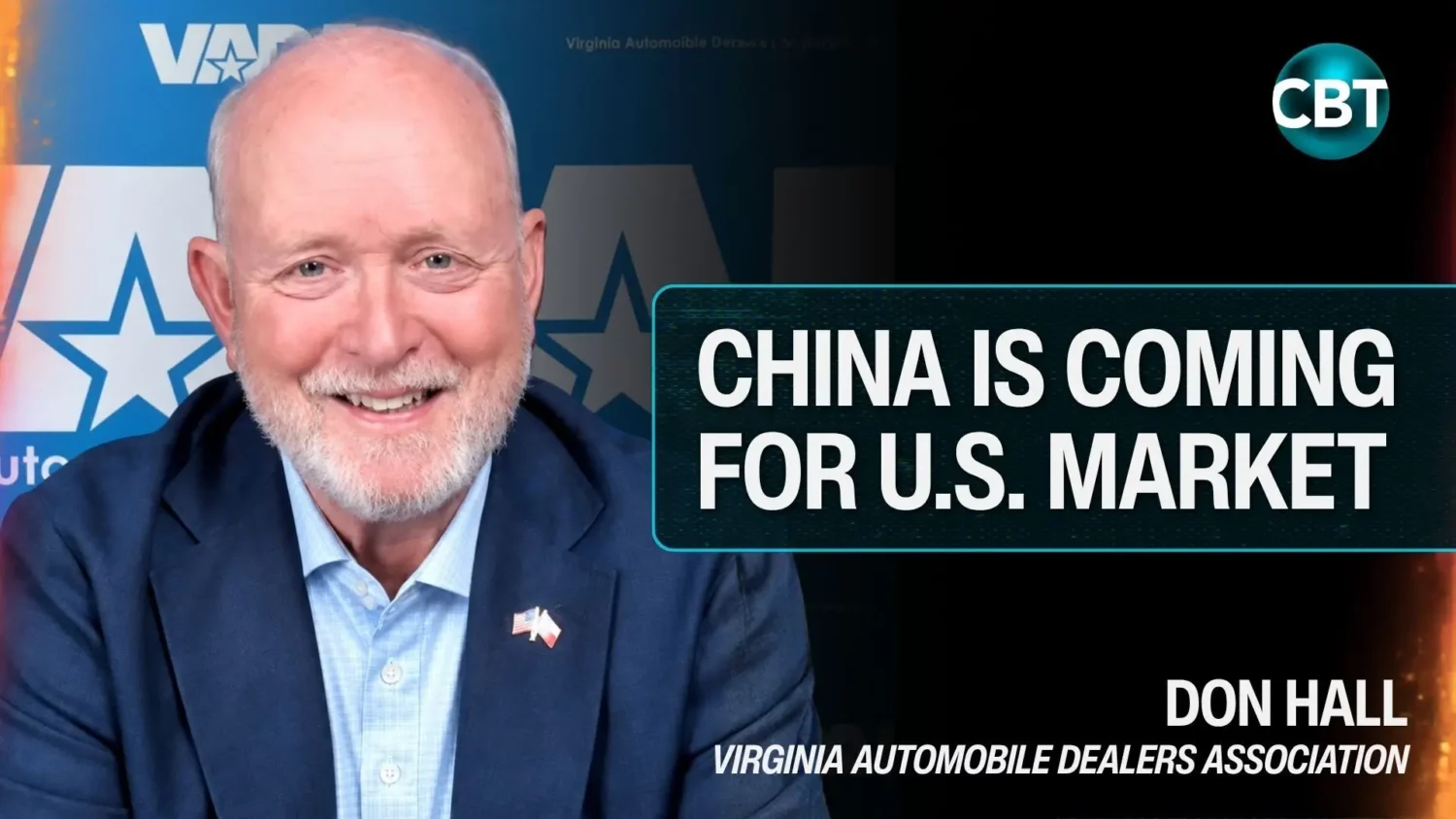
As federal lawmakers advance legislation to shield the domestic automotive market from foreign adversaries, industry advocates are rallying behind the push. On today’s episode of Inside Automotive, we’re joined by the President of the Virginia Automobile Dealership Association (VADA), Don Hall.
“The Chinese are real, they’re for real, and they’re playing a tough game.”
Hall starts the conversation by addressing the unanimous Senate Committee advancement of the Connected Vehicle Security Act (S. 4429) and why dealer engagement is imperative, now more than ever.
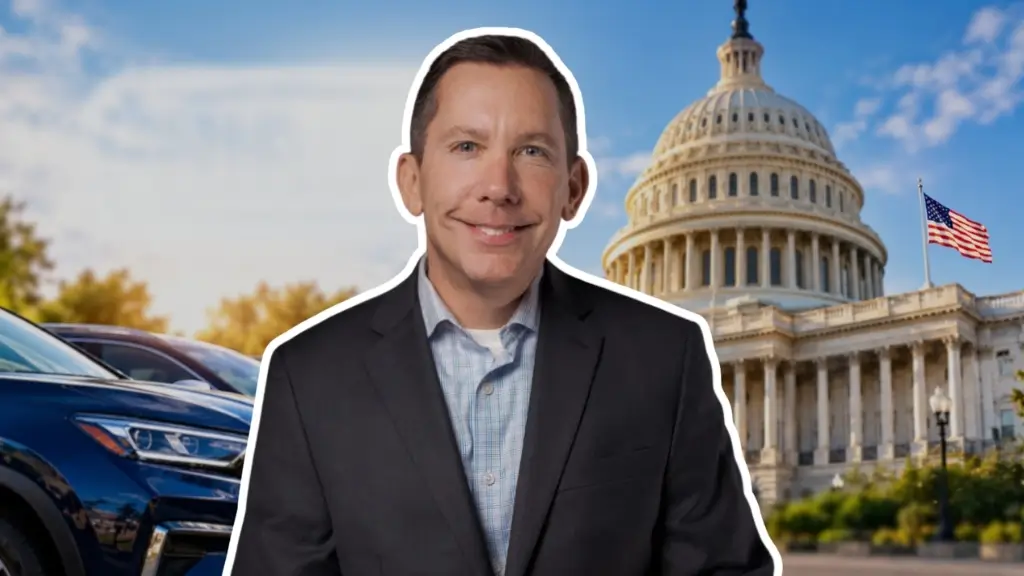
The bipartisan bill, introduced by Senators Bernie Moreno (R-OH) and Elisa Slotkin (D-MI), aims to prohibit the import, sale, and operation of Chinese-manufactured vehicles and connected components. Hall praised the legislation as a vital safeguard for American manufacturing, national security, and retail automotive jobs.
“I do not trust [Chinese automakers]. The bill is good. Senator Moreno did an excellent job explaining it.”
Despite the bill clearing the committee unanimously, Hall also warns that the legislative process is still in its early stages. Comparing the milestone to finding a vehicle on the showroom floor, he claims that a long road remains before final passage and implementation. Additionally, Hall emphasizes that dealer involvement will be critical as the legislation moves forward, urging retailers to stay engaged with their state associations and the National Automobile Dealer Association (NADA) as advocacy efforts develop.
Representation matters
Beyond the legislation itself, Hall highlighted the importance of having more automotive retailers represented in government. He pointed to Sen. Moreno, a former automotive dealer, as an example of how industry experience can shape policy discussions. He asserts that dealers bring a unique perspective to public service because they understand how to work with people from different backgrounds and find common ground, a skill developed through years of serving customers and employees. He says, “It is a car dealer who is able to reach across the divide.”
He also encourages dealers to become more active in advocacy efforts, whether through supporting industry initiatives, engaging with lawmakers, or pursuing leadership roles within their state associations.
Protecting the franchise
Hall addressed the other challenges facing franchised dealers, including regulatory pressures, direct-to-consumer sales models, and the ongoing debate over the future of the franchise system.
“We are Americans. The Chinese are not our friends. They’re not here to do us good or make us better in the transportation business.”
According to Hall, protecting the franchise model requires dealers to remain focused on delivering strong customer experiences, warning that manufacturers could use dissatisfaction with the retail experience as an argument for expanding direct sales. Hall contends that, “If we don’t learn how to take care of customers and give them this great buying experience, then at the end of the day, the manufacturers will make that argument to Congress.”
Further, Hall urges dealers to focus their attention on manufacturers pursuing direct sales strategies, pointing specifically to Volkswagen’s Scout brand. He argues that franchised dealers should remain the primary channel for selling and servicing vehicles produced by automakers.
Dealer action is needed
While acknowledging the challenges ahead, Hall said the industry has the talent and leadership necessary to adapt. He encourages dealers to listen to younger employees entering the business and embrace new ideas around improving the customer experience. He said, “The things we’re talking about are not unsolvable problems… These are opportunities.”
Hall concluded by encouraging dealers to become active members of their state associations and industry organizations, emphasizing that advocacy requires participation from retailers across the country.