On the Dash:
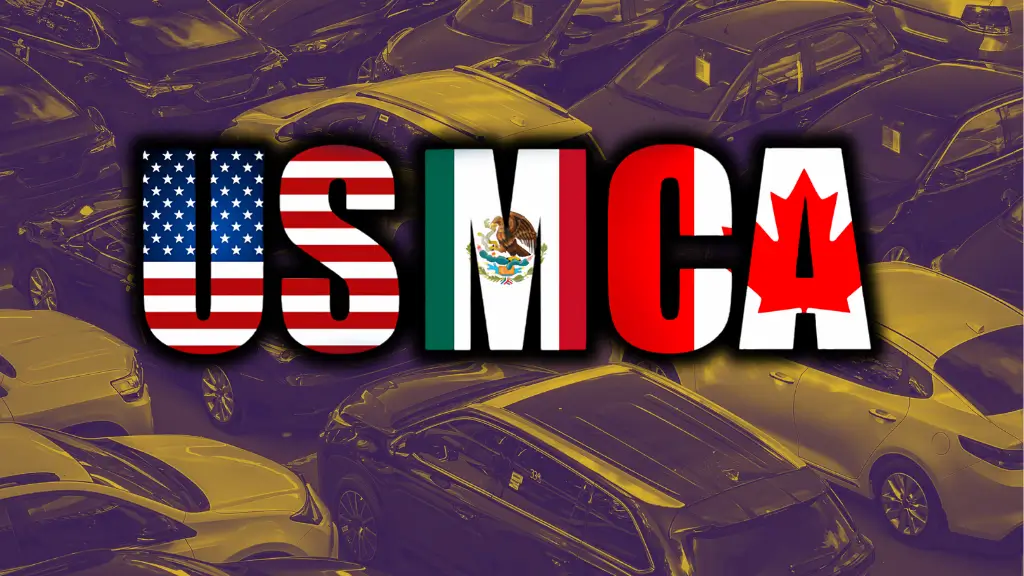
- The U.S. rejected a 16-year USMCA renewal, but the pact stays in force until 2036.
- Trump plans separate bilateral deals with Canada and Mexico, each lasting up to 10 years.
- U.S. and Mexican officials meet again the week of July 20 to continue negotiations.
The United States, Mexico and Canada held a virtual meeting Wednesday for the first mandatory review of the U.S.-Mexico-Canada Agreement. The U.S. did not agree to extend the pact for another 16 years. U.S. Trade Representative Jamieson Greer confirmed the outcome in a statement.
“The United States did not agree to renew the USMCA in its current form,” Greer said. “As a result, the USMCA is not renewed.”
The agreement stays in force while the countries work through unresolved issues. It remains active until 2036 unless a country withdraws or the parties agree to end it sooner. Greer said the U.S. will keep pressing Mexico and Canada on trade deficits and what he called shortcomings in the deal. He confirmed a third round of bilateral talks with Mexico for the week of July 20.
Fox Business reported Wednesday that the Trump administration plans to pursue separate trade deals with Canada and Mexico rather than a single trilateral pact. Those deals could run up to 10 years. CNBC reported the decision opens the door to annual reviews that could reshape major parts of the agreement over time.
The move follows months of warnings from the auto industry. Seven trade groups representing automakers, dealers and parts suppliers wrote Greer in May, urging him to extend USMCA as written. They said splitting the deal into separate agreements would add complexity and weaken supply chains built around the current rules. Major automakers including GM, Toyota, Hyundai and Ford made a similar push last fall, with Hyundai tying $20 billion in new U.S. investment to getting clarity on the deal.
Current USMCA rules require 75% of a vehicle’s content to come from North America. U.S. importers already pay a 25% duty on the non-U.S. content of compliant vehicles.
Dealers and OEMs now face an extended period of uncertainty over sourcing and pricing rules. The next checkpoint comes during the week of July 20, when U.S. and Mexican officials return to the table in Mexico City. No date has been set for the U.S. to begin formal talks with Canada.