New Jersey needs over 12,500 new technicians by 2026 to replace retiring workers. To address this urgent issue, the New Jersey Coalition of Automotive Retailers (NJ CAR) has launched a new technician training program. In today’s episode of Service Drive, NJ CAR President Laura Perrotta shares how the initiative works and its potential long-term impact on the state’s auto retail sector.
The shortage of automotive technicians has been a persistent issue industry-wide for several years. Recognizing this challenge, NJ CAR surveyed its dealer body to identify the root causes and learn how best to support them. The most prominent challenges reported were: the inability to locate potential technicians; a shortage of applicants; and, of those applicants, a lack of mechanical experience.
To address these challenges, NJ CAR launched the Technician Advancement Program (TAP), supported by the New Jersey Department of Labor & Workforce Development. This free, 18-week program aims to give candidates the knowledge and skills needed to become a qualified, entry-level auto technician.
"The sky's the limit. If you want to go up to be a master tech, you can make a lot of money. There are great benefits offered at the dealership, the flexibility... there's just so much to offer."
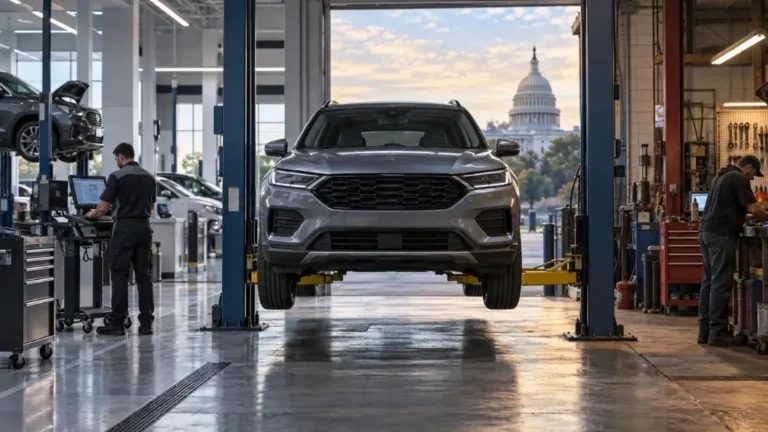
The training is completed at local dealerships, allowing a small group of trainees to experience the dealership environment, gain hands-on experience working with vehicles and work alongside seasoned technicians. Students attend a four-hour shift, Monday through Thursday, where they receive one hour of formal classroom education followed by practical application in the service bay.
During the program, students receive a $200 weekly stipend. Upon graduation, each student is gifted $3,000 worth of tools and is placed directly into a paid apprenticeship position at a local dealership.
Unlike traditional training programs, which often leave students with $30,000 to $40,000 in debt, TAP participants walk away debt-free, with a job and with the skills and tools needed to succeed.
Most students who attend traditional training programs or technical schools walk away with $30,000 to $40,000 of debt.
Prospective students are recruited through a variety of avenues; however, the most impactful recruitment tool has been through social media posts on LinkedIn and Instagram. In addition, NJ CAR also partners with local technical community college programs and high schools.
Beyond recruitment, NJ CAR also sees the need to raise broader awareness of the career opportunities available within retail automotive. While the auto community recognizes that a career as an automotive technician offers competitive pay, excellent benefits and opportunities for advancement, this information is less well-known to the general public. It’s crucial to increase awareness by engaging with the community and encouraging local schools to discuss these opportunities with parents and students.