On the Dash:
- Volkswagen is launching the ID.2all and 30 new EV models this year to boost global sales under CEO Oliver Blume.
- The company is cutting costs, downsizing staff, and partnering with Rivian and Xpeng to strengthen EV technology and software.
- VW must navigate regional challenges, including slow European EV uptake, U.S. subsidy changes, and growing plug-in hybrid demand in China.
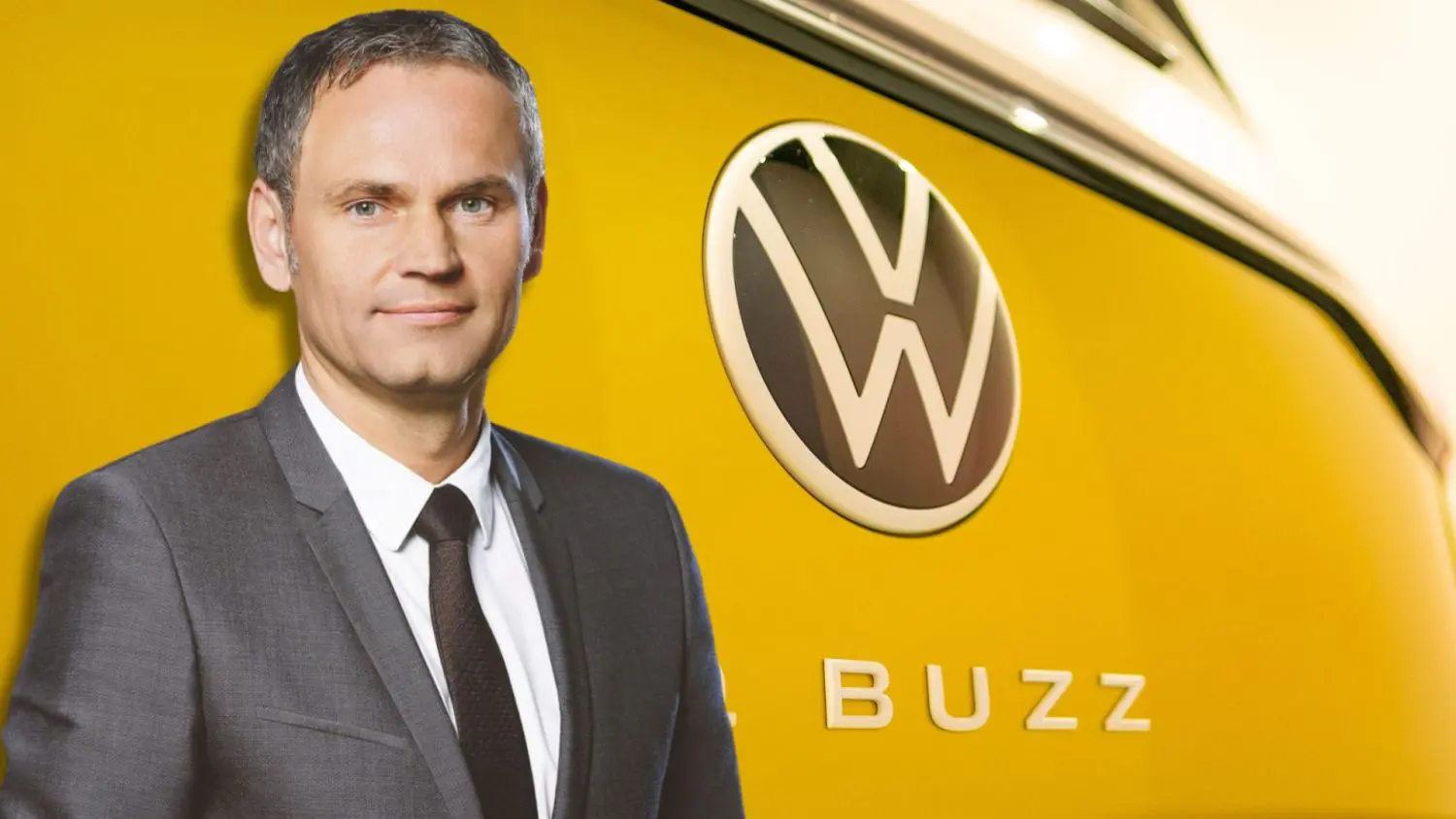
Volkswagen is making another push to reclaim its place in the global automotive market after years of setbacks from the Dieselgate scandal and a rocky EV rollout. Under CEO Oliver Blume, Volkswagen is unveiling new EVs, cutting costs, and forming strategic partnerships to strengthen its product lineup.
The company plans to debut its compact ID.2all EV in September, a €25,000 ($29,110) hatchback aimed at attracting younger, price-conscious buyers. Blume describes the effort as a “model offensive,” with 30 new vehicles launched in 2024 and another 30 planned this year. Bloomberg reports recent EV deliveries rose 38% globally in the second quarter, and Volkswagen’s updated ID models have earned praise for improved interiors and software, helping the brand surpass Tesla in European sales in recent months. China-focused EV models, developed with a local partner, are set to reach showrooms next year.
Volkswagen’s pivot follows a series of challenges that began in September 2015, when the company admitted to using software to cheat emissions tests on millions of “clean diesel” cars. The scandal cost Volkswagen €32 billion ($37.2 billion) in fines, recalls, and legal fees, and damaged its reputation worldwide. Early EV efforts under former CEO Herbert Diess also stumbled, with software glitches and slow product rollouts in China, allowing local brands such as BYD and Nio to overtake Volkswagen.
Blume, a VW veteran and former Porsche executive, has sought to stabilize the company. He downsized the troubled software unit Cariad, reduced battery ambitions, and forged $8 billion in partnerships with Rivian and Xpeng to develop EV technology. Cost-cutting measures include reducing VW brand headcount by 35,000 in Germany and streamlining Audi and Porsche operations.
Further, the automaker also faces ongoing challenges. Luxury brands Porsche and Audi are losing ground in China amid the country’s real estate downturn, while U.S. plans for the Scout EV truck line face uncertainty after the removal of federal EV tax credits. Blume emphasizes that Volkswagen must adapt to changing market conditions, including slower EV adoption in Europe, shifting U.S. policy, and growing interest in plug-in hybrids in China.