TSLA401.96013.06%
GM81.8353.785%
F12.8800.44%
RIVN17.3150.425%
CYD43.3401.0181%
HMC25.0450.685%
TM217.8705.01%
CVNA387.35025.11001%
PAG161.6505.63%
LAD283.6908.82%
AN208.0009.71%
GPI348.58013.1%
ABG211.7007.61%
SAH70.5203.15%
TSLA401.96013.06%
GM81.8353.785%
F12.8800.44%
RIVN17.3150.425%
CYD43.3401.0181%
HMC25.0450.685%
TM217.8705.01%
CVNA387.35025.11001%
PAG161.6505.63%
LAD283.6908.82%
AN208.0009.71%
GPI348.58013.1%
ABG211.7007.61%
SAH70.5203.15%
TSLA401.96013.06%
GM81.8353.785%
F12.8800.44%
RIVN17.3150.425%
CYD43.3401.0181%
HMC25.0450.685%
TM217.8705.01%
CVNA387.35025.11001%
PAG161.6505.63%
LAD283.6908.82%
AN208.0009.71%
GPI348.58013.1%
ABG211.7007.61%
SAH70.5203.15%

3,000 vehicles lost at sea as cargo ship sinks weeks after fire

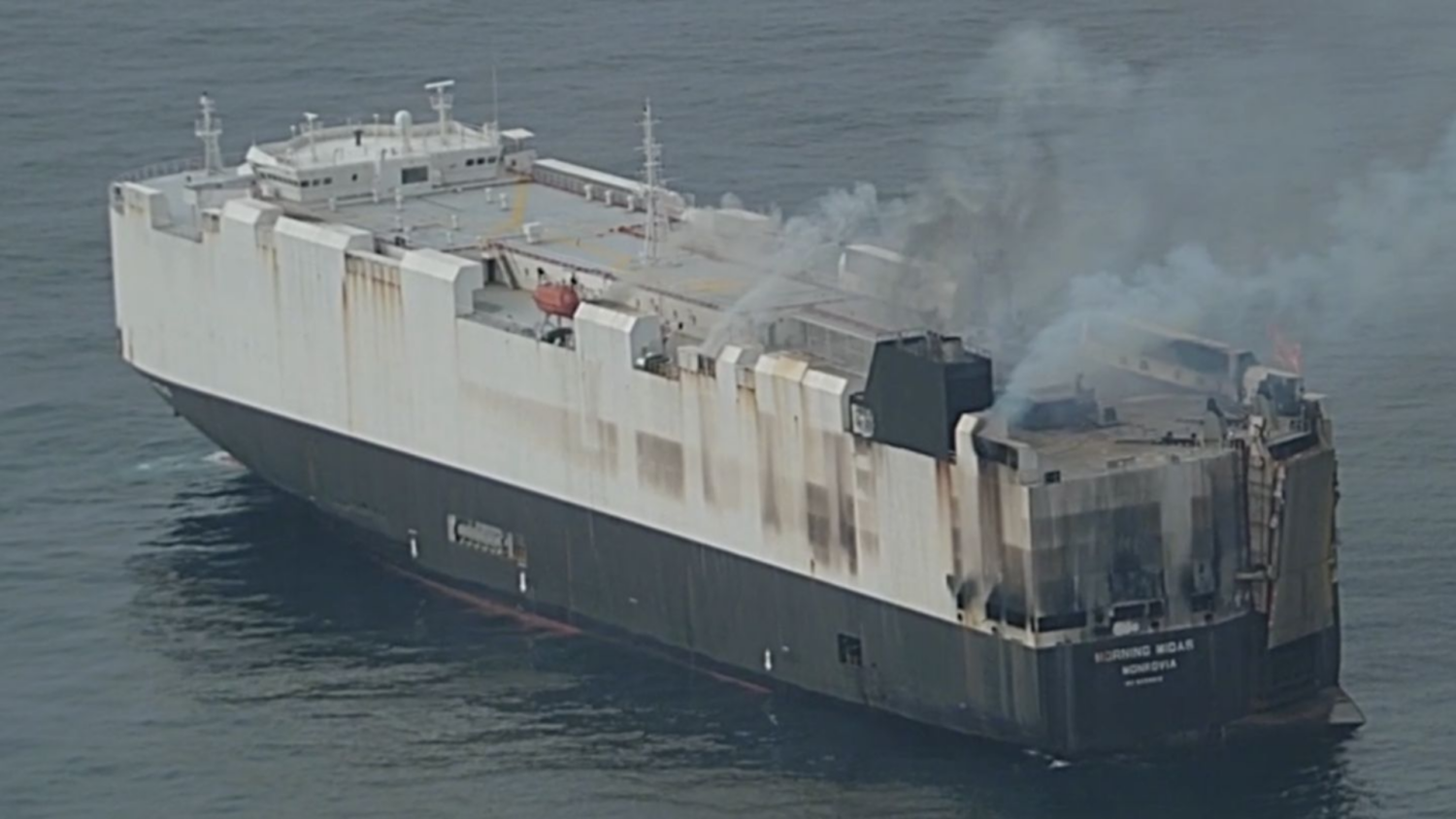
The vessel burned for three weeks after a fire broke out on deck.
Photo By: US Coast Guard

The Morning Midas, a cargo ship carrying more than 3,000 vehicles to Mexico, sank in the North Pacific on Monday, nearly three weeks after a fiery blaze broke out on board. A combination of fire damage and rough weather caused the vessel to take on water, ultimately leading to its sinking. It remains unclear whether any vehicles were salvaged before the ship went down, despite efforts by Zodiac Maritime, the ship’s management company, which has dispatched a salvage crew.

The U.S. Coast Guard is monitoring the incident and has deployed several vessels to manage potential pollution. Zodiac Maritime will also send specialized pollution response vessels to assist.

Sign up for CBT News’ daily newsletter and get the latest industry stories delivered straight to your inbox.

The Morning Midas departed Yantai, China, in late May and was en route to the port of Lazaro Cardenas, Mexico, when a fire broke out on June 3. After failing to extinguish the flames, the 22-member crew abandoned the vessel approximately 300 miles southwest of Alaska’s Adak Island. The ship was carrying 3,000 new vehicles, including 800 electric variants.

While the exact cause of the fire remains under investigation, smoke was first observed near the stern of the ship, where the EVs were stored.

The incident has heightened concerns about fire risks linked to transporting electric vehicles at sea. Lithium-ion batteries, widely used in EVs, are known to be highly flammable and difficult to extinguish once ignited, especially in open water. With over 80% of global trade volume relying on maritime shipping, industry experts say improving fire safety protocols and prevention measures is becoming increasingly critical.

Read More
More from Articles
STL launches ‘Neuralis’ in the US: A high-performance Data Center portfolio engineered for the AI era

STL launches ‘Neuralis’ in the US: A high-performance Data Center portfolio engineered for the AI era

- April 17, 2026
Washington, United States, 17/April/2026: STL Optical Connectivity NA, LLC,  (STLOC),  a U.S. subsidiary of STL [NSE: STLTECH], a leading connectivity solutions provider for AI-ready digital infrastructure, today announced the U.S. launch of Neuralis, its flagship...
GM leans on global production to supply U.S. market amid cost pressures

GM leans on global production to supply U.S. market amid cost pressures

- April 17, 2026
On the Dash: Imported inventory may create variability in delivery timing and supply consistency. Trade policy shifts could impact the pricing and availability of certain models. Global production strategies may...
Volkswagen ends U.S. EV output, triggering $600 million financial hit 

Volkswagen ends U.S. EV output, triggering $600 million financial hit 

- April 17, 2026
On the Dash: Slower EV demand may impact inventory planning and turn rates for electric models. Production pullbacks could tighten EV supply or shift sourcing toward imports. Ongoing cost pressures...
March sales surge tightens inventory, affordability gaps persist

March sales surge tightens inventory, affordability gaps persist

- April 17, 2026
On the Dash: Faster March sales improved inventory flow, but demand remains uneven heading into Q2. Limited sub-$40K inventory continues to constrain volume opportunities. Rising incentives indicate growing pressure to...
CBT News
Privacy Overview

This website uses cookies so that we can provide you with the best user experience possible. Cookie information is stored in your browser and performs functions such as recognising you when you return to our website and helping our team to understand which sections of the website you find most interesting and useful.