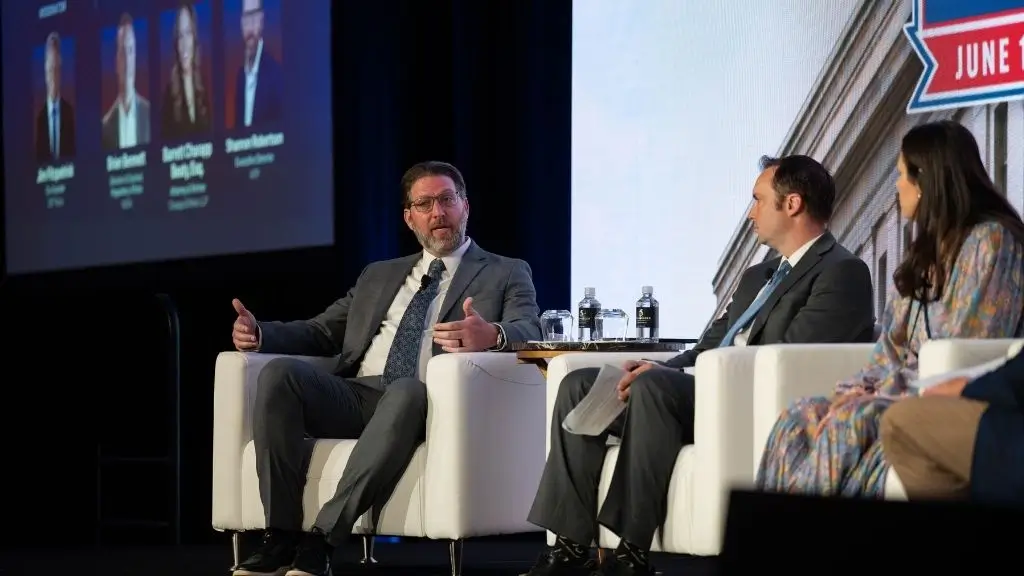
CBT News brought dealers, attorneys and policy experts to Washington, D.C., on June 16 for the Auto Leadership Summit: Fair Pricing & Compliance at the Salamander Hotel. The one-day event arrived as the Federal Trade Commission (FTC) intensifies its scrutiny of dealership pricing, following warning letters sent to 97 dealership groups in March and a multimillion-dollar settlement with a Washington-area dealer group. The sessions gave dealers a direct look at how compliance officers, attorneys and trade groups are responding to the shift.
The first panel of the day, “The FTC’s Enforcement Playbook: What dealers need to know right now,” focused on what the FTC is looking for, settlements and what dealers should be doing now to help avoid future scrutiny and possible fines from the FTC.
CBT News co-founder Jim Fitzpatrick moderated the panel, which included Brian Bennett, Director and Counsel for Regulatory Affairs at NADA, Barrie Beaty, an Attorney and Partner at Charapp & Weiss, and Shannon Robertson, Executive Director of the Association of Finance and Insurance Professionals (AFIP).
An industry-wide wake-up call
Robertson said that as soon as the FTC letters started landing on dealership desks, his phone started ringing off the hook. He said most of the calls AFIP compliance officers took were from dealers trying to interpret the FTC’s warning letters while staying competitive.
"Consumer complaints brought us to this point. We need to make sure we have a process in place that checks the list that we do with the FTC's asking." - Shannon Robertson
“I think a lot of conversation we’re having with dealers is what brought us to this point and how do we stay off the radar? Consumer complaints brought us to this point. We need to make sure we have a process in place that checks the list that we do with the FTC’s asking. But most importantly, we don’t have consumer complaints. We’re very direct with our consumers,” Robertson said.
Bennett described NADA’s posture as cooperative rather than adversarial, and said the association used the warning letters as an opening to push the FTC for more clarity.
“I think our role at NADA is to advocate and educate. I think this process kind of blends together those two roles,” said Bennet. He added that, “We made very clear early on with the FTC when we met with them that these are practices that I think are not on the line, so to speak, They are clearly bad practices.”
Social media mistakes could cost you
Social media marketing adds another layer of compliance to a dealership’s marketing plan. In addition to the marketing team, other employees are often encouraged to post on social media. But without proper training, social media can open up a pitfall when it comes to FTC pricing violations.
"There has to be some type of training. I want to say quarterly at least for staff." - Barrie Beaty
Beaty said it’s vitally important that everyone who touches social media or marketing for the dealership is aware of the rules.
“Everyone’s got a TikTok and an Instagram and Facebook and everything else. They want to be a TikTok star. And there’s a lot of people that have done that in the industry. However, not everyone can, and not everyone is following advertising goals.” Beaty said. “They can’t be talking about price because they’re not advertising it correctly.”
Beaty added that frequent, consistent training for everyone is the best way to avoid mistakes on social media.
A paper trail is your best defense
In addition to training, all the panelists agreed that maintaining clear documentation of the deal, from the advertised price to all steps leading up to the final sale, is your best defense against FTC inquiries.
“If you can have documentation of, here’s what the car is advertised for, here’s what the consumer will walk out, excluding government fees, and there’s conversation about optional products, and, you know, things like that, the whole other conversation, but marry out what the car was advertised for and what the consumer bought their vehicle for. That is what the FTC said in the letter,” Bennett said.
In order to help alleviate these challenges, Beaty suggests sticking the build and price page (BPP) from your website into the deal table. That way, she says, you can clearly show why a customer’s final price differs from the advertised one after all options are added.
Robertson shared how AFIP would respond to dealerships expecting a visit from the FTC. Noting that, “We’ll bring in legal counsel if there’s a letter … Don’t respond to the state without legal representation. But here’s what you can do: Put somebody in charge of policies and procedures, and train on that. You have to document how you’re doing things, why you’re doing things, and that everybody’s been trained on the process that you have in place.”
The Lindsay settlement as a cautionary tale
The panelists pointed to the FTC and Maryland Attorney General’s settlement with Lindsay Automotive Group, which operates Lindsay Chevrolet, Lindsay Chrysler-Dodge-Jeep-Ram and Lindsay Ford in the Washington area. The agencies alleged the group misrepresented advertised prices, tied them to dealer financing, and charged customers for add-ons many never agreed to. The deal requires more than $75 million in potential refunds and a $3.1 million civil penalty.
But Beaty says that $75 million dollar figure isn’t in the actual consent order.
“The Wall Street Journal came out yesterday, and I think the quote was, you know, the last most recent consent order, they agreed to restitution up to $75 million. That is nowhere in the consent order,” she said.
However, Bennett pointed to a key phrase in the order that hadn’t appeared in FTC settlements before: most prominent price.
“For the first time in a consent order, what we saw was this principle that we’ve heard a lot about the past three months, most prominent price, right? That has never been in a consent order before,” Bennett said.
Opportunity for transparency
Bennett said the FTC’s posture reflects a broader administration priority on pricing transparency that extends well beyond the auto retail industry.
“I think this administration has made very clear that price transparency is a priority, right? I mean, not just in our sector, but in a variety of sectors. They actually have issued rulemakings for rental housing, and to include delivery services,” Bennett said.
"Let's use this opportunity to kind of raise the bar and give that guidance." - Brian Bennett
The panelists admitted that bad actors and deceptive pricing practices have long been among the top complaints about the auto retail industry. Instead of looking at the FTC’s scrutiny as a threat, it can be viewed as an opportunity to change and win customers’ trust. The FTC’s involvement could help level the playing field for dealers who are compliant and those who want to play games.