
On the Dash:
- Ford is accelerating development of affordable EVs to compete with Chinese automakers.
- Chinese brands continue expanding globally, increasing competitive pressure in Europe and North America.
- Current U.S. tariffs and connected-vehicle restrictions remain significant barriers to Chinese vehicle imports.
Ford CEO Jim Farley informed employees Thursday that the company is preparing for the entry of Chinese automakers into the U.S. market within the next five to ten years, despite existing trade restrictions. He stated that Ford is developing a new generation of affordable EVs to compete on cost and efficiency with Chinese rivals, according to Reuters.
Farley mentioned that Chinese automakers are more likely to enter the U.S. market toward the latter part of that five- to ten-year window. Although the automaker declined to comment on this private town hall meeting, it mentioned the timeline is more specific than previous public statements from Ford’s leadership.
The company is developing a line of more affordable EVs to boost its competitiveness with Chinese automakers. Farley has regularly highlighted the competitive strengths of Chinese automakers, especially in terms of cost and manufacturing efficiency.
Trade restrictions remain
Meanwhile, Executive Chair Bill Ford has separately said the company must eventually “go toe-to-toe” with China instead of depending solely on trade barriers. He made that comment earlier this month at a Washington, D.C. event, not during Thursday’s town hall, though it echoes the same message from Ford’s leadership.
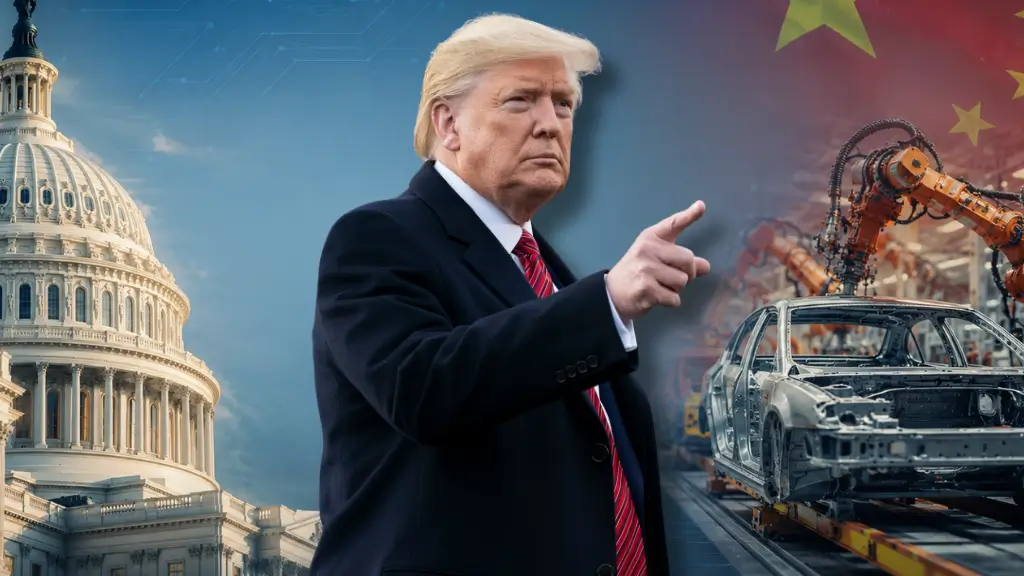
Currently, U.S. trade restrictions significantly limit Chinese imports, as the U.S. imposes roughly 100% tariffs on Chinese EVs. Federal regulations will prohibit Chinese-connected vehicle software beginning with the 2027 model year and hardware with the 2030 model year.
Congress is actively considering additional restrictions on Chinese vehicle sales, with Senators Bernie Moreno and Elissa getting the bipartisan Connected Vehicle Security Act bill passed in the Senate. Simultaneously, Chinese automakers continue to gain market share in Europe and Mexico. Recently, Ford revealed a partnership with Geely in Europe aimed at boosting its competitiveness in the region. Meanwhile, industry analysts see Canada as a possible testing ground for Chinese companies’ future expansion into North America.