TSLA408.90017.9%
GM83.7701.66%
F15.0000.1%
RIVN16.8400.49%
CYD56.560-0.2%
HMC26.9700.27%
TM178.4501.29%
CVNA69.4402.93%
PAG172.4901.47%
LAD291.9503.11%
AN185.830-1.89%
GPI316.6505.65%
ABG193.4602.48%
SAH82.6900.53%
TSLA408.90017.9%
GM83.7701.66%
F15.0000.1%
RIVN16.8400.49%
CYD56.560-0.2%
HMC26.9700.27%
TM178.4501.29%
CVNA69.4402.93%
PAG172.4901.47%
LAD291.9503.11%
AN185.830-1.89%
GPI316.6505.65%
ABG193.4602.48%
SAH82.6900.53%
TSLA408.90017.9%
GM83.7701.66%
F15.0000.1%
RIVN16.8400.49%
CYD56.560-0.2%
HMC26.9700.27%
TM178.4501.29%
CVNA69.4402.93%
PAG172.4901.47%
LAD291.9503.11%
AN185.830-1.89%
GPI316.6505.65%
ABG193.4602.48%
SAH82.6900.53%

Volkswagen expands battery focus to energy storage amid slower EV growth

VW is leveraging its Salzgitter facility to supply homes, trade energy, and create a closed-loop battery ecosystem as EV demand falls short of projections.

battery

Volkswagen Group

On the Dash:

  • Slower EV demand is prompting automakers like VW to diversify into energy storage and trading.
  • Battery facilities such as Salzgitter may offer new business and grid service opportunities in Europe.
  • Dealers should monitor shifts in VW’s EV production strategy and market-dependent adjustments to battery capacity.

Volkswagen is broadening its battery ambitions beyond EVs to include large-scale energy storage and energy trading, as global EV demand underperforms expectations.

The automaker began operations Monday at its first major storage facility in Salzgitter, Germany, part of its Elli energy subsidiary. The site can supply roughly 20,000 homes for two hours and is directly connected to the grid. It will also participate in energy trading on the European power exchange EPEX SPOT. The facility uses cells from Volkswagen’s in-house PowerCo division, which had previously targeted as many as seven EV battery plants but has scaled back ambitions for the Salzgitter factory.

Sign up for CBT News’ daily newsletter and get the latest industry stories delivered straight to your inbox

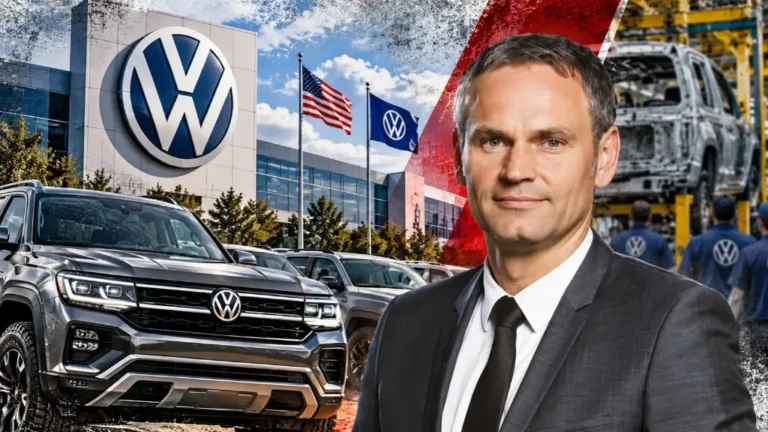
VW initially aimed to produce enough EVs to supply about 3 million annually by 2030, reflecting more optimistic growth forecasts. CEO Oliver Blume said energy storage and energy trading represent a strategic business area with strong growth potential.

Since launching PowerCo in 2022, Volkswagen has reduced the ramp-up at the Salzgitter plant to 20 gigawatt-hours annually, half of its original plan. Long-term capacity targets of up to 200 gigawatt-hours across factories in Germany, Spain, and Canada remain, though executives noted expansion will depend on market conditions. VW has also cut overall investment plans for the group, and PowerCo may seek external funding to support mid-term operations.

By linking cell manufacturing, stationary storage, and digital energy trading at a single site, VW aims to create a closed-loop battery ecosystem in Salzgitter. Leveraging battery technology for grid services and energy trading could help cushion PowerCo’s losses while supporting Germany’s transition to renewable energy.

More from EVs & Technology
Ford-backed group urges EU to delay EV import tariffs

Ford-backed group urges EU to delay EV import tariffs

- June 8, 2026
On the Dash: A Ford-backed group is urging the EU to delay EV import tariffs, citing battery supply chains that aren't ready. EU and UK battery production is far...
JPMorgan boosts Tesla price target to $475

JPMorgan boosts Tesla price target to $475, citing autonomous tech and software growth

- June 5, 2026
On the Dash: JPMorgan sees Tesla's future growth extending beyond vehicle sales and increasingly tied to software, AI and autonomous driving. The firm's $475 price target reflects growing Wall Street...
World's largest battery maker shifting away from EVs to energy storage

World’s largest battery maker shifts away from EVs to energy storage

- June 5, 2026
On the Dash: CATL wants energy storage to account for half of its global sales by 2030, up from 25% today. Automakers and dealers could face tighter EV battery supply...
Auto industry warns AI chip demand could disrupt manufacturing

Auto industry warns AI chip demand could disrupt manufacturing

- June 4, 2026
On the Dash: AI-driven demand for memory chips could increase vehicle production costs and create new supply chain disruptions. Industry groups warn that rising chip prices may eventually translate into...