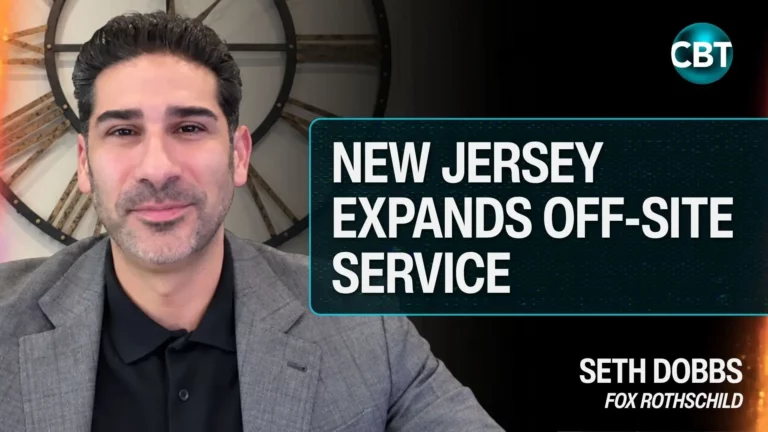
For dealers trying to navigate the Federal Trade Commission’s (FTC) latest pricing and advertising guidance, waiting for enforcement to clarify the rules could create unnecessary exposure. Seth Dobbs, Chair of Fox Rothschild’s Automotive Practice, joins us on today’s CBT Live to explain where dealers stand, what the latest FAQs clarify and why internal compliance remains imperative.
To start today’s discussion, Dobbs notes that New Jersey’s new law (P.L.2026,c. 63) gives franchise dealers more flexibility to expand their service footprint beyond the traditional dealership facility. He highlights that the change allows dealers to establish an off-site service facility within their relevant market area, provided the location doesn’t impinge on neighboring dealers and complies with other franchise and zoning requirements. The law could give dealers additional capacity in markets where existing facilities no longer provide enough room to meet service demand. Dobbs also cautioned that neighboring dealers could challenge or delay proposed facilities, so dealers will need to navigate the new statute carefully as it develops.
On the FTC front, Dobbs said dealers should not take a wait-and-see approach. He said the agency’s FAQs provide some additional information, but questions remain about what dealers should do and who is responsible for advertising-related issues. He also pointed to activity at the state and local level, where attorneys general and plaintiffs’ attorneys may pursue claims even when the FTC is not directly involved. His message to dealers is to use the information available now to review their practices rather than wait for enforcement to establish the consequences.
Consistency throughout the dealership is a crucial aspect of compliance. Dobbs highlighted that dealers should establish policies that guarantee customers are treated fairly and consistently, regardless of shifts in federal enforcement priorities. He also stressed the need to oversee how managers and third-party vendors implement these policies. Compliance issues often arise when individual stores, departments, or employees interpret advertising and pricing guidelines differently, leading to inconsistencies that can escalate to the dealer group as a whole.