TSLA370.875-5.425%
GM77.625-0.425%
F12.4800.1%
RIVN16.6950.175%
CYD41.780-0.46%
HMC24.315-0.025%
TM192.7100.39%
CVNA406.300-2.78001%
PAG162.5402.12%
LAD276.5201.6%
AN206.0202.95%
GPI343.0301.64%
ABG202.480-0.58%
SAH72.3700.53%
TSLA370.875-5.425%
GM77.625-0.425%
F12.4800.1%
RIVN16.6950.175%
CYD41.780-0.46%
HMC24.315-0.025%
TM192.7100.39%
CVNA406.300-2.78001%
PAG162.5402.12%
LAD276.5201.6%
AN206.0202.95%
GPI343.0301.64%
ABG202.480-0.58%
SAH72.3700.53%
TSLA370.875-5.425%
GM77.625-0.425%
F12.4800.1%
RIVN16.6950.175%
CYD41.780-0.46%
HMC24.315-0.025%
TM192.7100.39%
CVNA406.300-2.78001%
PAG162.5402.12%
LAD276.5201.6%
AN206.0202.95%
GPI343.0301.64%
ABG202.480-0.58%
SAH72.3700.53%

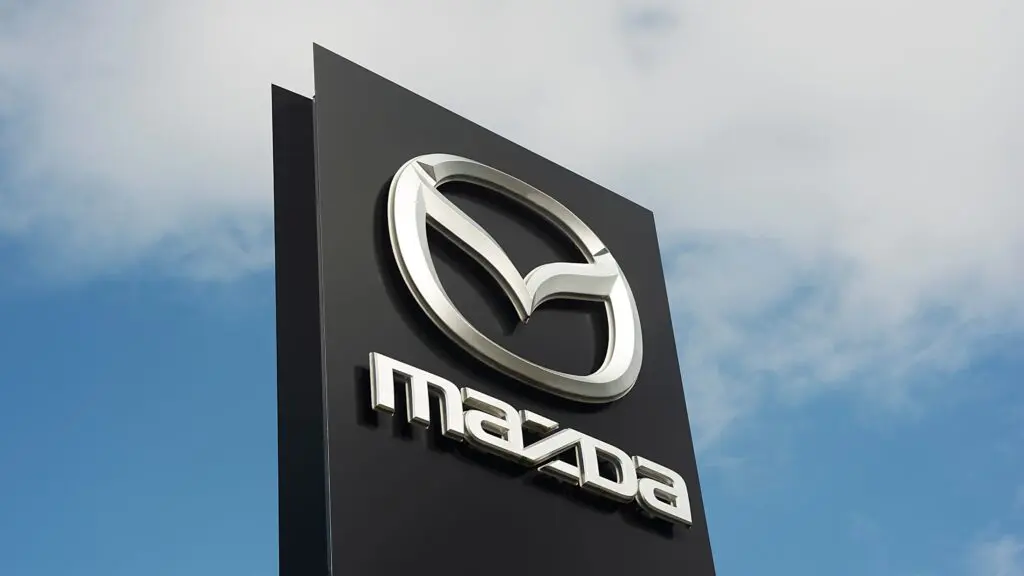
Mazda delays first dedicated EV launch amid cooling demand

Reports from Japan indicate Mazda has pushed its first proprietary battery-electric vehicle to at least 2029 as the automaker reassesses timing, regulations, and consumer demand.

Mazda

On the Dash:

  • Mazda has quietly pushed its first dedicated EV launch to 2029 or later as demand and policy conditions evolve.
  • The automaker is prioritizing hybrids and affordability while reassessing the timing of long-term EV investments.
  • Despite delays, Mazda continues EV development through partnerships and platform testing, signaling a slower, more cautious transition.

Mazda appears to be joining a growing list of automakers slowing their EV plans as demand falls short of earlier expectations. 

According to reports from Japan, the automaker has delayed the launch of its first dedicated battery-electric vehicle until at least 2029, marking a shift toward hybrids and more affordable offerings in the near term.

Japanese outlets Nikkei and Nikkan Jidosha reported that production of Mazda’s first proprietary EV has been pushed back by at least two years. While Mazda has not formally confirmed the delay, the company acknowledged that the timing of its EV rollout remains under review. In a statement to Automotive News, a Mazda spokesperson said the automaker continues to develop its battery-electric technology under a “multi-solution strategy” and will determine launch timing based on regulatory conditions and changing customer demand across global markets.

Sign up for CBT News’ daily newsletter and get the latest industry stories delivered straight to your inbox

The reported delay reflects broader industry pressures, including elevated new-vehicle prices in the U.S., a cooling of EV demand, and policy shifts that have reshaped the market. Under President Donald Trump’s administration, the elimination of the federal clean-vehicle tax credit and the introduction of new tariffs have weighed on EV adoption, prompting several automakers to reassess investment timelines.

Mazda originally planned to introduce multiple EVs using its Skyactiv EV Scalable Architecture, a platform announced in 2021 and intended to support a range of body styles between 2025 and 2030. That rollout has yet to begin, and the latest reports suggest those plans could face further delays.

Despite the uncertainty, development work appears to be ongoing. Test vehicles believed to be Mazda EV prototypes were spotted in California late last year, wearing heavily modified CX-70 or CX-90 bodywork with design cues such as a closed grille and blocked air intakes. The mule was believed to be closer in size to the CX-50, suggesting Mazda may be targeting the compact-to-midsize crossover segment.

While its proprietary EV timeline remains unclear, Mazda has not entirely stepped away from electrification. The automaker recently introduced the CX-6e in Europe through its joint venture with China’s Changan Automobile. The model shares components with the Deepal S07 and allows Mazda to maintain a presence in the EV market while taking a more cautious approach elsewhere.

For now, Mazda appears focused on hybrids as a bridge strategy, aligning its product mix with current consumer demand while keeping longer-term EV ambitions intact.


Read More
More from Global Industry News
Geely

Ford and Geely explore U.S. technology collaboration as talks shift focus to Europe

- April 27, 2026
On the Dash: Ford and Geely explored a U.S. technology partnership, but talks have stalled. Both companies are prioritizing a European deal focused on shared production and technology. Regulatory barriers...
Chinese automakers eye U.S. market as global dominance grows 

Chinese automakers eye U.S. market as global dominance grows 

- April 27, 2026
While Chinese automakers are quickly entering global markets, the U.S. remains the only major country without direct sales. Despite existing regulatory and political hurdles, Michael Dunne, CEO of Dunne Insights, predicts...
Stellantis to prioritize four core brands in turnaround strategy, sources say The automaker plans to shift funding toward Jeep, Ram, Peugeot, and Fiat while maintaining its broader portfolio. On the Dash: Expect increased product investment and marketing support for Jeep, Ram, Peugeot and Fiat. Regional and niche brands may see reduced volume but more targeted positioning and shared platforms. Platform-sharing and rebadging strategies could affect inventory mix and model differentiation. Stellantis will concentrate most of its investment on four core brands as CEO Antonio Filosa pushes a turnaround strategy set for release May 21, according to a Reuters exclusive. The automaker has identified Jeep, Ram, Peugeot, and Fiat as its priority brands. It will allocate a “material increase” in funding to them, driven by their stronger global sales and profitability, marking a shift away from the company’s previous approach of distributing investment more evenly across its portfolio. Sign up for CBT News’ daily newsletter and get the latest industry stories delivered straight to your inbox. Stellantis will retain its 14-brand lineup, the largest in the industry, and will not shut down underperforming marques. Instead, the company will reposition secondary brands such as Citroën, Opel and Alfa Romeo to operate in regional or niche roles. These brands will rely on shared platforms and technology developed by the core brands while maintaining distinct styling and market identity. The strategy comes as Stellantis works to regain market share in the United States and Europe while facing growing competition from Chinese EV makers. The company earlier reported a 22.2 billion-euro charge tied to scaling back its EV plans, underscoring the urgency of the strategic shift. Its market valuation has also declined significantly in recent months. To support the transition, Stellantis will expand its use of shared “multi-energy” platforms that support electric, hybrid and internal combustion (ICE) vehicles. Additionally, the company is evaluating rebadging strategies and joint development programs, including collaborations with its Chinese partner, Leapmotor. Executives and investors backing the plan expect the increased focus on core brands to improve efficiency and strengthen financial performance. Analysts say Stellantis could still consider further consolidation if results fall short of expectations. Meta description (140 characters) Stellantis to boost funding for Jeep, Ram, Peugeot and Fiat, shifting strategy while maintaining its 14-brand global portfolio.

Stellantis to prioritize four core brands in turnaround strategy, sources say

- April 24, 2026
On the Dash: Expect increased product investment and marketing support for Jeep, Ram, Peugeot and Fiat. Regional and niche brands may see reduced volume but more targeted positioning and shared...
Tariff pressure drives urgency in 2026 USMCA negotiations

Tariff pressure drives urgency in 2026 USMCA negotiations

- April 22, 2026
On the Dash: Trade negotiations could directly impact vehicle pricing, supply chains and inventory flow across North America Continued tariff pressure may drive higher costs for parts, vehicles and dealership...
CBT News
Privacy Overview

This website uses cookies so that we can provide you with the best user experience possible. Cookie information is stored in your browser and performs functions such as recognising you when you return to our website and helping our team to understand which sections of the website you find most interesting and useful.