On the Dash:
- Trump plans new tariffs on NATO allies unless they agree to a Greenland deal.
- European automakers exporting to the U.S. could face sharply higher costs.
- The move adds uncertainty to global auto trade and U.S.-EU relations.
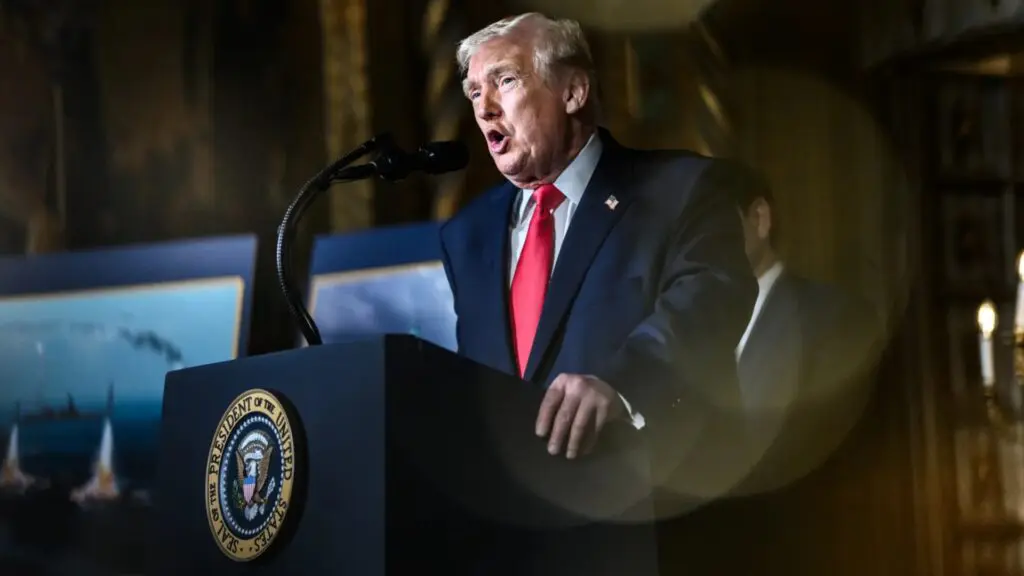
President Donald Trump said the United States is considering new tariffs on several European countries as part of broader negotiations involving Greenland and U.S. strategic interests.
Trump said the administration plans to impose a 10% tariff beginning Feb. 1 on imports from Denmark, Norway, Sweden, France, Germany, the United Kingdom, the Netherlands, and Finland. He said the tariff could increase to 25% in June if negotiations do not advance.
The countries listed are NATO allies and include major exporters of vehicles and automotive components to the U.S. market. Automakers such as Volkswagen, BMW, Mercedes-Benz, Audi, Porsche, and Jaguar Land Rover could be affected if the tariffs are implemented.
The administration framed the proposal around national security considerations, citing Greenland’s strategic location and its importance to U.S. defense and economic interests in the Arctic region. The president said the levies are intended to encourage cooperation and support broader U.S. objectives.
European officials responded by reaffirming their positions, while emphasizing the importance of continued trade and diplomatic engagement with the United States. No formal retaliatory measures have been announced.
Industry analysts said any new tariffs would likely increase costs for European automakers operating in the U.S. and could affect pricing and supply decisions. At the same time, tariffs could provide additional leverage for U.S. negotiators and support domestic manufacturing priorities.
The White House has not detailed the legal mechanism for imposing the tariffs or provided a final timeline beyond the proposed dates. The administration said discussions remain ongoing.
For the automotive industry, the announcement signals a renewed focus on trade policy as a tool to advance U.S. economic and strategic interests.