TSLA376.3002.58%
GM78.050-0.47%
F12.385-0.095%
RIVN16.520-0.43%
CYD42.2400.37%
HMC24.340-0.14%
TM192.320-3.76%
CVNA409.0506.03%
PAG160.4200.42%
LAD274.920-1.47%
AN203.0700.1%
GPI341.3901.61%
ABG203.0601.05%
SAH71.8400.62%
TSLA376.3002.58%
GM78.050-0.47%
F12.385-0.095%
RIVN16.520-0.43%
CYD42.2400.37%
HMC24.340-0.14%
TM192.320-3.76%
CVNA409.0506.03%
PAG160.4200.42%
LAD274.920-1.47%
AN203.0700.1%
GPI341.3901.61%
ABG203.0601.05%
SAH71.8400.62%
TSLA376.3002.58%
GM78.050-0.47%
F12.385-0.095%
RIVN16.520-0.43%
CYD42.2400.37%
HMC24.340-0.14%
TM192.320-3.76%
CVNA409.0506.03%
PAG160.4200.42%
LAD274.920-1.47%
AN203.0700.1%
GPI341.3901.61%
ABG203.0601.05%
SAH71.8400.62%

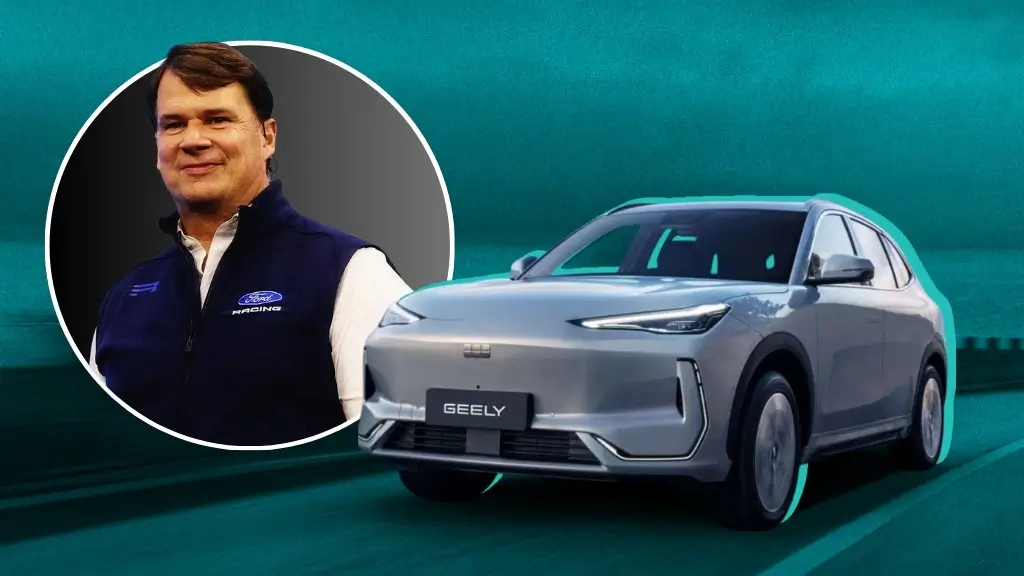
Ford and Geely explore U.S. technology collaboration as talks shift focus to Europe

Discussions around bringing Chinese automotive technology into the U.S. have stalled as Ford and Geely prioritize a European partnership amid regulatory and political challenges.

Geely

On the Dash:

  • Ford and Geely explored a U.S. technology partnership, but talks have stalled.
  • Both companies are prioritizing a European deal focused on shared production and technology.
  • Regulatory barriers and political pressure continue to limit Chinese automaker entry into the U.S. market.

    Ford Motor and Geely held talks as recently as this year to explore whether a potential European partnership could extend into the United States, including the possibility of Ford licensing Geely technology.

    Those discussions have stalled in recent months, according to people familiar with the matter, as both companies shift focus to negotiating a deal centered on sharing technology and manufacturing capacity in Europe.

    Sign up for CBT News’ daily newsletter and get the latest industry stories delivered straight to your inbox

    Geely, China’s second-largest automaker behind BYD, is seeking to expand into the U.S. market, where Chinese automakers face significant barriers. The U.S. imposes high tariffs on Chinese-made vehicles and restricts the market entry of Chinese connected-vehicle software, limiting direct market access.

    Any collaboration in the U.S. would face political scrutiny. Jim Farley said recently that Chinese-made vehicles should not be allowed into the U.S. without a plan to protect domestic jobs. Ford has said it remains focused on protecting its home market and maintaining a level competitive playing field.

    At the same time, policy signals remain mixed. Donald Trump has supported maintaining 100% tariffs on Chinese-made vehicles, but has also indicated openness to Chinese automakers building vehicles in the U.S.

    Chinese automakers have gained global momentum with lower-cost electric and hybrid vehicles supported by government subsidies, intensifying competition for U.S., European and Asian manufacturers.

    While U.S. collaboration remains uncertain, Ford and Geely continue discussions in Europe, where Chinese brands are rapidly gaining market share. The talks include potential use of Ford’s plant near Valencia, Spain, to support production and mitigate tariffs.

    A U.S. partnership involving Geely technology would mark the first such collaboration between a Detroit automaker and a Chinese manufacturer, but regulatory constraints and geopolitical tensions remain key obstacles.
More from Global Industry News
Chinese automakers eye U.S. market as global dominance grows 

Chinese automakers eye U.S. market as global dominance grows 

- April 27, 2026
While Chinese automakers are quickly entering global markets, the U.S. remains the only major country without direct sales. Despite existing regulatory and political hurdles, Michael Dunne, CEO of Dunne Insights, predicts...
Stellantis to prioritize four core brands in turnaround strategy, sources say The automaker plans to shift funding toward Jeep, Ram, Peugeot, and Fiat while maintaining its broader portfolio. On the Dash: Expect increased product investment and marketing support for Jeep, Ram, Peugeot and Fiat. Regional and niche brands may see reduced volume but more targeted positioning and shared platforms. Platform-sharing and rebadging strategies could affect inventory mix and model differentiation. Stellantis will concentrate most of its investment on four core brands as CEO Antonio Filosa pushes a turnaround strategy set for release May 21, according to a Reuters exclusive. The automaker has identified Jeep, Ram, Peugeot, and Fiat as its priority brands. It will allocate a “material increase” in funding to them, driven by their stronger global sales and profitability, marking a shift away from the company’s previous approach of distributing investment more evenly across its portfolio. Sign up for CBT News’ daily newsletter and get the latest industry stories delivered straight to your inbox. Stellantis will retain its 14-brand lineup, the largest in the industry, and will not shut down underperforming marques. Instead, the company will reposition secondary brands such as Citroën, Opel and Alfa Romeo to operate in regional or niche roles. These brands will rely on shared platforms and technology developed by the core brands while maintaining distinct styling and market identity. The strategy comes as Stellantis works to regain market share in the United States and Europe while facing growing competition from Chinese EV makers. The company earlier reported a 22.2 billion-euro charge tied to scaling back its EV plans, underscoring the urgency of the strategic shift. Its market valuation has also declined significantly in recent months. To support the transition, Stellantis will expand its use of shared “multi-energy” platforms that support electric, hybrid and internal combustion (ICE) vehicles. Additionally, the company is evaluating rebadging strategies and joint development programs, including collaborations with its Chinese partner, Leapmotor. Executives and investors backing the plan expect the increased focus on core brands to improve efficiency and strengthen financial performance. Analysts say Stellantis could still consider further consolidation if results fall short of expectations. Meta description (140 characters) Stellantis to boost funding for Jeep, Ram, Peugeot and Fiat, shifting strategy while maintaining its 14-brand global portfolio.

Stellantis to prioritize four core brands in turnaround strategy, sources say

- April 24, 2026
On the Dash: Expect increased product investment and marketing support for Jeep, Ram, Peugeot and Fiat. Regional and niche brands may see reduced volume but more targeted positioning and shared...
Tariff pressure drives urgency in 2026 USMCA negotiations

Tariff pressure drives urgency in 2026 USMCA negotiations

- April 22, 2026
On the Dash: Trade negotiations could directly impact vehicle pricing, supply chains and inventory flow across North America Continued tariff pressure may drive higher costs for parts, vehicles and dealership...
GM leans on global production to supply U.S. market amid cost pressures

GM leans on global production to supply U.S. market amid cost pressures

- April 17, 2026
On the Dash: Imported inventory may create variability in delivery timing and supply consistency. Trade policy shifts could impact the pricing and availability of certain models. Global production strategies may...
CBT News
Privacy Overview

This website uses cookies so that we can provide you with the best user experience possible. Cookie information is stored in your browser and performs functions such as recognising you when you return to our website and helping our team to understand which sections of the website you find most interesting and useful.