TSLA376.3002.58%
GM78.050-0.47%
F12.385-0.095%
RIVN16.520-0.43%
CYD42.2400.37%
HMC24.340-0.14%
TM192.320-3.76%
CVNA409.0506.03%
PAG160.4200.42%
LAD274.920-1.47%
AN203.0700.1%
GPI341.3901.61%
ABG203.0601.05%
SAH71.8400.62%
TSLA376.3002.58%
GM78.050-0.47%
F12.385-0.095%
RIVN16.520-0.43%
CYD42.2400.37%
HMC24.340-0.14%
TM192.320-3.76%
CVNA409.0506.03%
PAG160.4200.42%
LAD274.920-1.47%
AN203.0700.1%
GPI341.3901.61%
ABG203.0601.05%
SAH71.8400.62%
TSLA376.3002.58%
GM78.050-0.47%
F12.385-0.095%
RIVN16.520-0.43%
CYD42.2400.37%
HMC24.340-0.14%
TM192.320-3.76%
CVNA409.0506.03%
PAG160.4200.42%
LAD274.920-1.47%
AN203.0700.1%
GPI341.3901.61%
ABG203.0601.05%
SAH71.8400.62%


Chinese automakers eye U.S. market as global dominance grows 

While Chinese automakers are quickly entering global markets, the U.S. remains the only major country without direct sales.

Despite existing regulatory and political hurdles, Michael Dunne, CEO of Dunne Insights, predicts this will change. He joins us on today’s Inside Automotive episode to discuss his belief that Chinese auto manufacturers will likely enter the U.S. market within the next three years.

According to Dunne, Chinese automakers have grown their exports from roughly 1 million vehicles annually five years ago to about 10 million today. The country now produces more than one-third of global vehicle output, with the potential to reach 50% in the coming years. 

Global growth accelerates

Countries without domestic auto industries, Dunne notes, have embraced Chinese vehicles for their affordability and value. Conversely, regions with established manufacturing bases are beginning to push back. In Mexico, Chinese brands now account for about 20% of new vehicle sales, prompting concerns about the long-term impact on local production.

Sign up for CBT News’ daily newsletter and get the latest industry stories delivered straight to your inbox.

The U.S. market remains largely closed due to tariffs exceeding 100% and additional regulatory hurdles tied to hardware and software compliance. However, Chinese vehicles have begun entering indirectly through cross-border activity in states such as California, Texas and Arizona. Dunne says automakers are actively pursuing U.S. entry through lobbying efforts and could accelerate that timeline by committing to domestic manufacturing investments.

Dunne suggests that Chinese vehicles integrate advanced technology, strong design, and competitive pricing. New entrants, including technology companies, are driving disruption by reducing development cycles and introducing high-performance vehicles at lower price points. These factors have increased pressure on global automakers.

U.S. entry pressure builds 

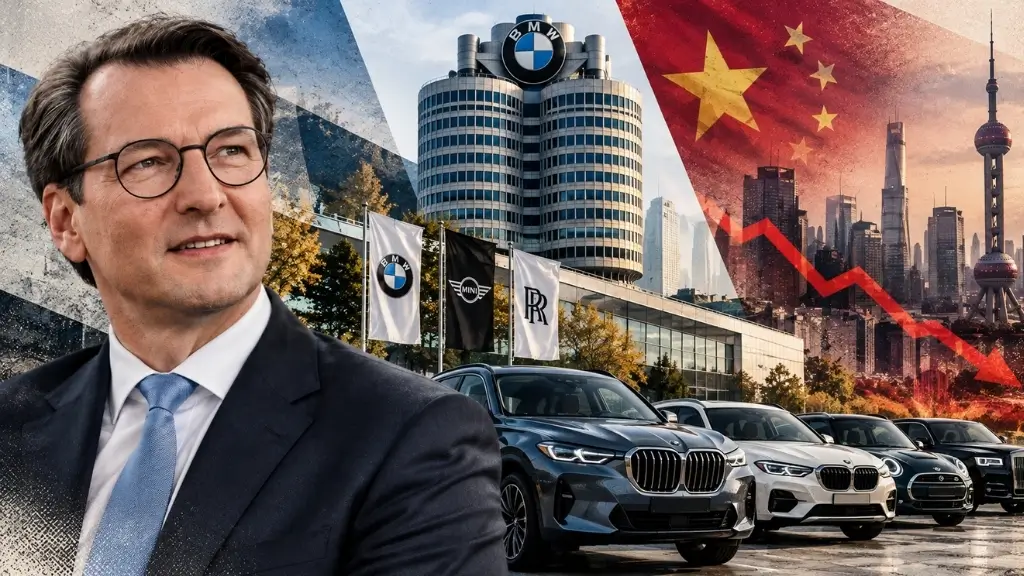
Recent data from China illustrates the potential impact, with several global brands facing substantial declines in that market. Some are reporting sales losses ranging from 30% to 80%.

Notably, only a limited number of automakers have maintained stable performance.

If similar trends emerge in the United States, multiple brands could face sustained pressure, particularly in passenger vehicle segments, says Dunne.

Meanwhile, political opposition to Chinese vehicle imports remains strong across party lines, driven by concerns about domestic manufacturing and employment. However, that stance could shift if automakers offer to build production facilities in the U.S. and create jobs. State-level competition for new manufacturing investments could also influence how quickly Chinese brands gain market access, a possibility dealers are already preparing for.

“In order to survive, it’s like oxygen for [Chinese automakers]. They need access to global markets to continue growing, and right now there’s no more lucrative or attractive place in the world than the United States market.”

According to Dunne, several express interest in representing Chinese brands if they enter the U.S., citing strong consumer demand for affordable, high-quality vehicles. At the same time, Dunne alludes that dealers must weigh the potential impact on their existing franchises and long-term business models.

EV outlook

The adoption of EVs in the U.S. presents an added layer of complexity. Although EV sales have slowed down, global demand for these vehicles continues to rise. In many markets, consumers tend to see EVs as a practical option for specific needs rather than a complete replacement for traditional internal combustion engine vehicles. According to Dunne, the U.S. market could maintain an EV penetration rate of 15% to 20% if consumers adopt a more neutral stance.

Yet, Chinese automakers are not limiting their strategy to EVs.

Rather, they are developing a full range of offerings, including internal combustion engines (ICE), hybrids and plug-in hybrids, allowing them to compete across multiple segments.

Their global expansion strategy combines scale, pricing flexibility and control over key supply chains.

While the timing and structure of their entry remain uncertain, Dunne alludes that the potential impact on automakers, dealers, and consumers will be significant.

More from Global Industry News
Stellantis to prioritize four core brands in turnaround strategy, sources say The automaker plans to shift funding toward Jeep, Ram, Peugeot, and Fiat while maintaining its broader portfolio. On the Dash: Expect increased product investment and marketing support for Jeep, Ram, Peugeot and Fiat. Regional and niche brands may see reduced volume but more targeted positioning and shared platforms. Platform-sharing and rebadging strategies could affect inventory mix and model differentiation. Stellantis will concentrate most of its investment on four core brands as CEO Antonio Filosa pushes a turnaround strategy set for release May 21, according to a Reuters exclusive. The automaker has identified Jeep, Ram, Peugeot, and Fiat as its priority brands. It will allocate a “material increase” in funding to them, driven by their stronger global sales and profitability, marking a shift away from the company’s previous approach of distributing investment more evenly across its portfolio. Sign up for CBT News’ daily newsletter and get the latest industry stories delivered straight to your inbox. Stellantis will retain its 14-brand lineup, the largest in the industry, and will not shut down underperforming marques. Instead, the company will reposition secondary brands such as Citroën, Opel and Alfa Romeo to operate in regional or niche roles. These brands will rely on shared platforms and technology developed by the core brands while maintaining distinct styling and market identity. The strategy comes as Stellantis works to regain market share in the United States and Europe while facing growing competition from Chinese EV makers. The company earlier reported a 22.2 billion-euro charge tied to scaling back its EV plans, underscoring the urgency of the strategic shift. Its market valuation has also declined significantly in recent months. To support the transition, Stellantis will expand its use of shared “multi-energy” platforms that support electric, hybrid and internal combustion (ICE) vehicles. Additionally, the company is evaluating rebadging strategies and joint development programs, including collaborations with its Chinese partner, Leapmotor. Executives and investors backing the plan expect the increased focus on core brands to improve efficiency and strengthen financial performance. Analysts say Stellantis could still consider further consolidation if results fall short of expectations. Meta description (140 characters) Stellantis to boost funding for Jeep, Ram, Peugeot and Fiat, shifting strategy while maintaining its 14-brand global portfolio.

Stellantis to prioritize four core brands in turnaround strategy, sources say

- April 24, 2026
On the Dash: Expect increased product investment and marketing support for Jeep, Ram, Peugeot and Fiat. Regional and niche brands may see reduced volume but more targeted positioning and shared...
Tariff pressure drives urgency in 2026 USMCA negotiations

Tariff pressure drives urgency in 2026 USMCA negotiations

- April 22, 2026
On the Dash: Trade negotiations could directly impact vehicle pricing, supply chains and inventory flow across North America Continued tariff pressure may drive higher costs for parts, vehicles and dealership...
GM leans on global production to supply U.S. market amid cost pressures

GM leans on global production to supply U.S. market amid cost pressures

- April 17, 2026
On the Dash: Imported inventory may create variability in delivery timing and supply consistency. Trade policy shifts could impact the pricing and availability of certain models. Global production strategies may...
Stellantis reports 12% shipment growth in Q1 as North America and Europe drive gains

Stellantis reports 12% shipment growth in Q1 as North America and Europe drive gains

- April 15, 2026
On the Dash: Strong North America performance signals stable retail demand and improved inventory flow, supporting more consistent dealership operations. Increased shipments suggest better vehicle availability, helping dealers meet demand...
CBT News
Privacy Overview

This website uses cookies so that we can provide you with the best user experience possible. Cookie information is stored in your browser and performs functions such as recognising you when you return to our website and helping our team to understand which sections of the website you find most interesting and useful.