

On the Dash:
- EV sales in the U.S. could drop from 10–12% to 5% market share after the $7,500 federal tax credit expires.
- Q3 EV sales are forecast to hit a record 410,000 units, with many buyers purchasing ahead of the incentive cutoff.
- Ford and other automakers face new stress on battery plant and EV capacity planning due to abrupt policy changes.
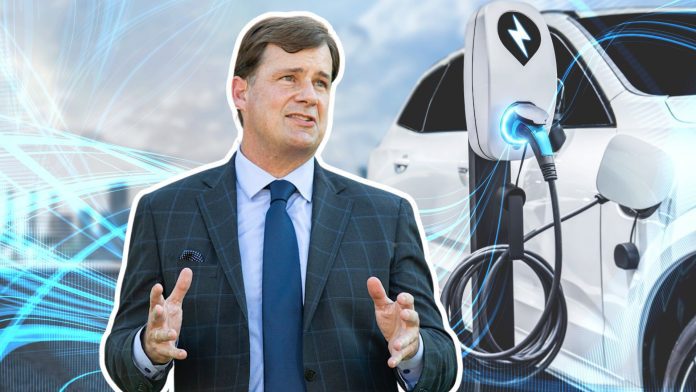
Ford CEO Jim Farley said he expects demand for electric vehicles in the United States to be slashed in half next month as federal tax incentives expire.
Speaking Tuesday at the company’s Ford Pro Accelerate event in Detroit, Farley said EV sales could fall from a record 10% to 12% market share this month to about 5% in October, following the end of the $7,500 federal credit under the Trump administration’s One Big Beautiful Bill Act. The legislation removed the old EV purchase incentives but added some perks for U.S.-assembled vehicles regardless of powertrain.
While Cox Automotive has forecast third-quarter EV sales to reach 410,000 units, a 21% increase from last year and the highest quarterly total ever recorded in the U.S., analysts expect several buyers to move up their purchases before the incentives expire.
Farley noted the abrupt policy change will require automakers to adjust battery plant investments and production capacity. He emphasized that while the EV industry will remain active, the market is expected to be smaller than previously anticipated in the near term.
The Ford chief added that hybrids are proving to be an easier entry point for consumers, while expensive all-electric models, such as the F-150 Lightning, which can cost up to $90,000, and the Mustang Mach-E, remain a tougher sell. Customers view EVs as fast and efficient, but they are often seen as too costly, particularly at higher price points.
Additionally, Farley pointed to tariffs as a $2 billion headwind limiting Ford’s future investment flexibility. Despite the challenges, he maintained that the EV industry will remain “vibrant” but smaller than previously expected in the near term.
The comments come as automakers across the industry reassess electrification strategies under the new policy environment and shifting consumer demand.