On Monday, General Motors along with POSCO Chemical announced a venture with the governments of Canada and Quebec to establish a $400 million facility to “produce cathode active material (CAM) for GM’s Ultium batteries”. Construction will be underway immediately with opportunities for expansion in the future as GM grows its portfolio of electrified vehicles.
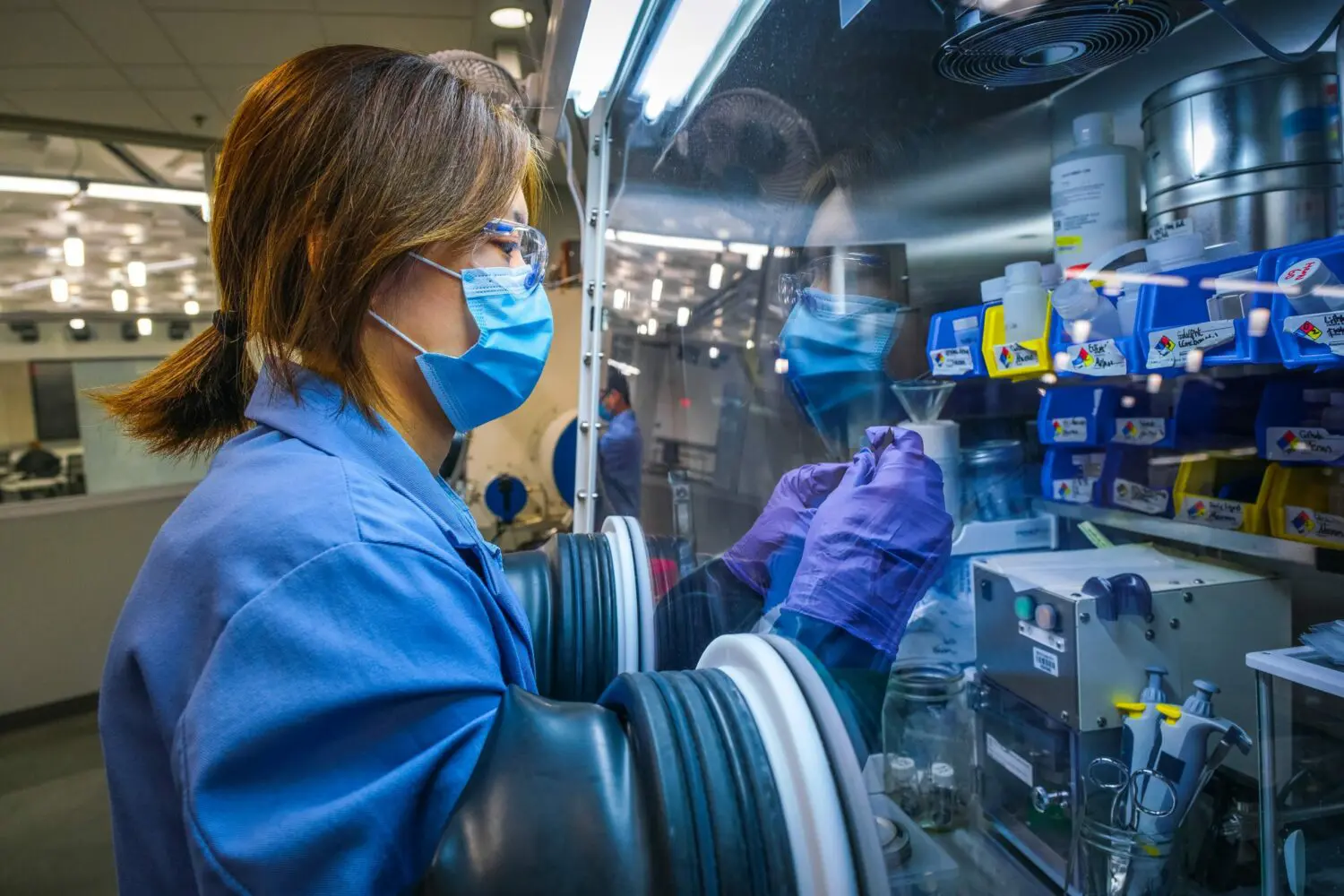
Cathode active material is composed of lithium and one of several metals, the choice of which affects a battery’s characteristics. Some CAM includes nickel for high-capacity while an aluminum blend increases the power. Both manganese and cobalt are safety-centric in their use within CAM. In all cases, it’s the main differentiator for positive electrode composition in battery cells.
To this point, the American automotive industry has been heavily reliant on Asian markets for CAM, and the Quebec facility will swing the supply chain into GM’s favor.
GM executive vice president of Global Production, Development, Purchasing, and Supply Chain, Dough Parks, said, “GM and our supplier partners are creating a new, more secure and more sustainable ecosystem for EVs, built on a foundation of North American resources, technology and manufacturing expertise. Canada is playing an important role in our all-electric future, and we are grateful for the strong support we have received from local, provincial and national officials to grow a North American-focused EV value chain.”
Though a relatively small joint venture in GM’s grand scheme, it’s a linchpin to self-sustained manufacturing for EVs as General Motors races toward building and delivering one million electric cars, SUVs, and trucks. While POSCO Chemical is headquartered in South Korea, the domestic plant in Quebec places battery material production on home soil, just hours from Detroit’s factories rather than days or weeks away over the ocean. And since Canada is the most valuable trade partner for the US and positive relations are all but guaranteed for life, it’s as secure an investment into the EV supply chain as GM can make.
POSCO Chemical CEO Min Kyung-Zoon said, “POSCO Chemical is set to expand battery material supplying capability across North America through establishing a cathode material plant in Canada. We will lead the successful transition to the EV era by further strengthening the strategic partnership with GM and securing a production line with world-class technological competitiveness.”
Lithium production also secured
The CAM partnership with POSCO Chemical in Quebec, Canada wouldn’t mean nearly as much if GM’s reliance remained squarely on international lithium supply. In July, General Motors formed a strategic investment with Controlled Thermal Resources, or CTR, to secure lithium from the Salton Sea in California. The closed-loop mining will draw lithium from geothermal brine in a relatively environmentally friendly process.
At the time, GM’s Parks said, “Lithium is critical to battery production today and will only become more important as consumer adoption of EVs increases, and we accelerate towards our all-electric future. By securing and localizing the lithium supply chain in the US, we’re helping ensure our ability to make powerful, affordable, high mileage EVs while also helping to mitigate environmental impact and bring more low-cost lithium to the market as a whole. GM looks forward to working with CTR, in addition to state and local leaders, in achieving these goals.”
Reliance on foreign markets for EV battery materials is poised to be the biggest hindrance to manufacturing and adoption, and these investments help secure the future for General Motors in the transition to electrification.
Did you enjoy this article from Jason Unrau? Read other articles on CBT News here. Please share your thoughts, comments, or questions regarding this topic by submitting a letter to the editor here, or connect with us at newsroom@cbtnews.com.
Be sure to follow us on Facebook and Twitter to stay up to date or catch up on all of our podcasts on demand.
While you’re here, don’t forget to subscribe to our email newsletter for all the latest auto industry news from CBT News.