
The auto industry doesn’t run on politics—but it’s increasingly being driven by it. And the latest legal battle over emissions rules is a perfect example of how Washington’s back-and-forth is creating confusion, uncertainty, and real consequences for automakers and consumers alike.
Michigan has now joined a coalition of 24 states suing over the rollback of the EPA’s 2009 endangerment finding, a decision that for years has been used to justify federal regulation of vehicle emissions. This isn’t just another environmental policy dispute. It’s a direct challenge to the legal foundation behind how the federal government regulates what Americans drive.
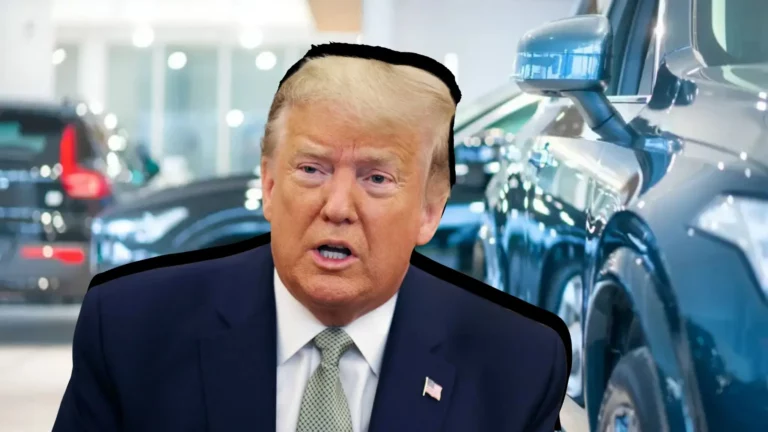
The Trump administration’s move to rescind the finding effectively strips away the EPA’s ability to regulate greenhouse gas emissions from vehicles under the Clean Air Act. Supporters argue this is long overdue, pointing to recent Supreme Court rulings that rein in federal agencies from stretching their authority beyond what Congress clearly authorized.
That matters. Because for years, emissions rules have been used not just to regulate pollutants, but to steer the entire auto market toward electrification—whether consumers were ready or not.
Michigan Attorney General Dana Nessel and the coalition argue the rollback is unlawful and ignores prior legal precedent. But what’s often left out of that argument is how unstable the regulatory environment has become for the very industry these policies are supposed to guide.
Automakers aren’t debating theory—they’re making billion-dollar decisions. And right now, they’re being forced to adjust on the fly.
The so-called Detroit Three have already started shifting resources back toward internal combustion engines. Not because they’ve abandoned EVs, but because the market hasn’t kept pace with political expectations. Consumers are still weighing cost, charging infrastructure, and practicality—and many are choosing to stick with gas-powered vehicles.
That reality is colliding head-on with aggressive policy goals that assumed a faster transition.
What this lawsuit really highlights is a bigger issue: regulatory whiplash. One administration pushes strict emissions standards and EV adoption. The next pulls back, citing legal limits and economic concerns. Then it all ends up in court.
That’s not a strategy. That’s instability.
The EPA is now arguing that the Clean Air Act was never designed to regulate global climate policy through vehicle emissions. That position leans on recent Supreme Court decisions emphasizing that major policy shifts require clear direction from Congress—not unelected agencies.
On the other side, states claim the authority has already been settled and should remain in place. But regardless of which side wins, the damage from constant reversals is already being felt.
Automakers need consistency. Product development cycles span years, sometimes decades. You don’t redesign an entire fleet based on policies that could disappear after the next election.
And yet, that’s exactly what’s been happening.
This legal fight won’t change what’s on dealer lots tomorrow. But it will shape the rules that determine what gets built five to ten years from now. And right now, those rules are anything but clear.
Michigan’s role in this case is especially telling. As the center of American auto manufacturing, the state has a vested interest in both regulatory clarity and economic stability. But those priorities are increasingly at odds when policy becomes unpredictable.
For consumers, the impact is quieter but just as real. Regulatory uncertainty drives up costs, limits choices, and slows down meaningful innovation. Instead of a steady evolution of technology based on demand, the market is being pulled in different directions by shifting political agendas.
There’s nothing wrong with improving efficiency or reducing emissions. The industry has been doing that for decades. But forcing rapid change through unstable policy frameworks is a different story—and one that carries real risks.
This lawsuit is about more than emissions. It’s about who controls the direction of the auto industry—and whether that direction is based on market reality or political cycles.
Until there’s a consistent, legally sound framework in place, the industry will remain stuck in a loop of uncertainty. And that’s bad for manufacturers, bad for consumers, and ultimately bad for the future of American mobility.
Check out my full commentary on this story: https://youtu.be/IjjfEOWB8gs
Looking for more automotive news? https://www.CarCoachReports.