On the Dash:
- Slotkin and Moreno postponed a fast-track Senate vote after failing to secure unanimous consent, with the sponsors planning to seek support for passage next week.
- The Connected Vehicle Security Act would restrict the import, manufacture and sale of connected vehicles and related software and hardware linked to China and other foreign adversaries, with provisions phased in beginning in 2027.
- The legislation has received support from major automakers, labor unions and supplier groups, while the White House has separately expressed openness to Chinese automakers building U.S. plants.
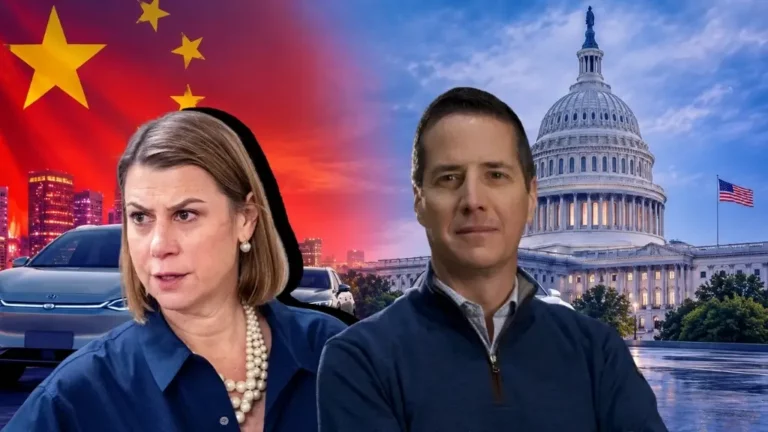
During Thursday’s Senate hearing, Senators Slotkin and Moreno worked to advance their bill through unanimous consent, but fell short when Kentucky Senator Rand Paul objected. Now the pair plan to work throughout the weekend to gather more support and aim for passage next week.
The Connected Vehicle Security Act of 2026, as CBT News previously reported, seeks to restrict connected vehicles, software, and hardware linked to China. The legislation will address issues related to manufacturing, imports, and sales, with vehicle and software restrictions set to commence in 2027, followed by hardware restrictions in 2030.
While Slotkin has expressed concerns that connected vehicles could collect data from U.S. roads and transmit it to foreign governments, Moreno has highlighted the state support that China’s automotive industry receives and its potential effects on U.S. manufacturing. These points are the sponsors’ stated reasons for the legislation, rather than independent findings presented in the article.
The bill has garnered support from automakers, labor unions, and supplier organizations, including:
- the United Auto Workers (UAW)
- Teamsters
- The International Association of Machinists and Aerospace Workers
- The United Steelworkers
- The Motor & Equipment Manufacturers Association (MEMA)
Additionally, an automaker trade group has urged Congress to implement the restrictions before the end of the year.
It’s important to note that existing federal regulations already limit some Chinese connected-vehicle technologies. In January 2025, the Commerce Department’s Bureau of Industry and Security finalized a rule restricting certain vehicle connectivity systems hardware, as well as connected-vehicle and automated-driving software with significant links to China or Russia. This rule also limits the sale of completed connected vehicles by entities connected to those countries.
Although a House version of the bill still needs to advance, the House and Senate must reconcile differences before a final measure can reach the president. Following the delay on September 24, the Senate sponsors are now targeting another attempt to advance the bill.