On the Dash:
- Bill would order a Commerce study of automakers’ ties to foreign adversaries
- Review covers ownership, joint ventures, technology transfers and intellectual property impact
- Commerce must report to two congressional committees within two years of enactment
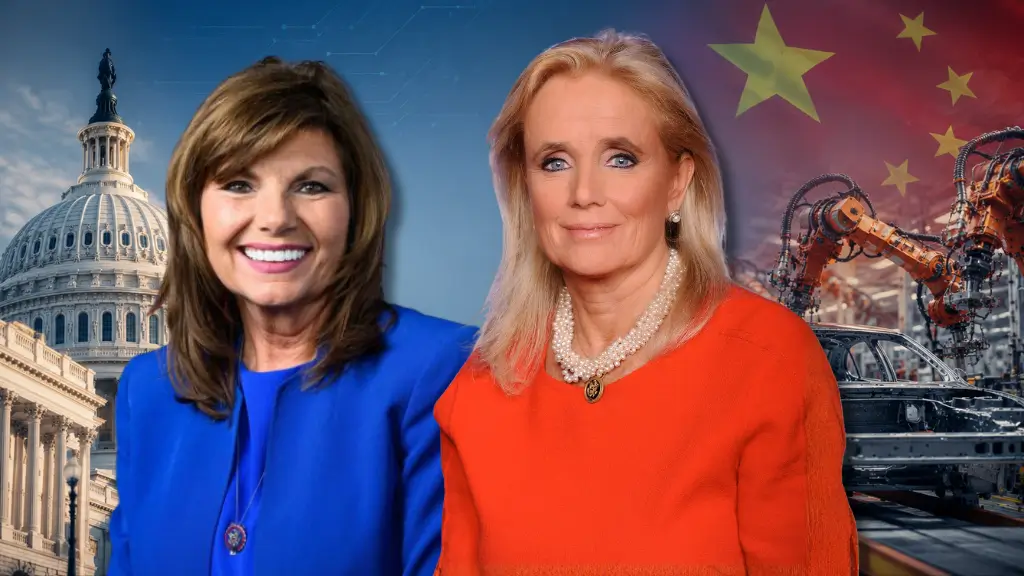
Rep. Diana Harshbarger (R-Tenn.) and Rep. Debbie Dingell (D-Mich.) introduced bipartisan legislation that would require automakers with financial or technical ties to China to undergo a formal federal accounting of those relationships.
The Automotive National and Economic Security Act of 2026 would direct the Secretary of Commerce to study the national and economic security risks posed by foreign adversaries to the U.S. automotive industry. However, the bill stops short of restricting any vehicle or manufacturer and instead builds the factual record lawmakers would need before taking that step.
“China has a playbook, and we’ve watched them run it on critical minerals, shipbuilding, and batteries,” Harshbarger said in a statement released by her office. “Now they’re setting their sights on the global automotive market, building out their industrial base with state subsidies and flooding markets with artificially cheap products to undercut American manufacturers.”
What Commerce would examine
The study would examine four areas:
- Foreign ownership of and state-directed investment in U.S. automakers by foreign military organizations, political parties and state-owned enterprises
- Joint ventures, subsidiaries and commercial partnerships between U.S. manufacturers and foreign adversaries
- Transfers of critical and emerging technologies to foreign adversaries
- Impacts on U.S. national security, economic competitiveness and intellectual property protection
The Bill Text filed on Aug. 26 broadly defines the activity under review. Any direct or indirect ownership interest in a manufacturer counts, as do any contract manufacturing agreement, research and development partnership, or licensing deal.
Connected vehicle technology falls inside the scope
The measure also reaches software-enabled hardware installed in vehicles, electronic systems built into electric vehicle batteries, and the artificial intelligence models and middleware that run connected and automated driving functions.
The findings would be submitted to the House Committee on Energy and Commerce and the Senate Committee on Commerce, Science, and Transportation within two years of enactment. Notably, an unclassified version would be made publicly available, with confidential business information, trade secrets, and national security details excluded.
A second China bill is already moving in the Senate
The measure lands while the Senate works through the Connected Vehicle Security Act of 2026, which would bar companies with more than 15% Chinese ownership from selling connected vehicles in the U.S. Mercedes-Benz sits above that line at roughly 20%, a stake split between state-owned BAIC Motor and Geely Chairman Li Shufu.
Dingell tied her support to the manufacturing base in her home state, stating in a statement, “I will always fight for our auto workers and this critical industry that is the backbone of America’s economy.”