
On the Dash:
- New U.S. tariffs, now at 50% on about $20 billion worth of Canadian goods, could raise costs for vehicles, parts and other products moving across the border.
- Medium- and heavy-duty trucks, including the Ford F-Series and Chevrolet Silverado, built in Ontario remain a key point of disagreement in the stalled negotiations.
- Dealers should prepare for continued uncertainty as Canada’s retaliatory tariffs take effect Sept. 8 and the two countries trade accusations over why talks collapsed.
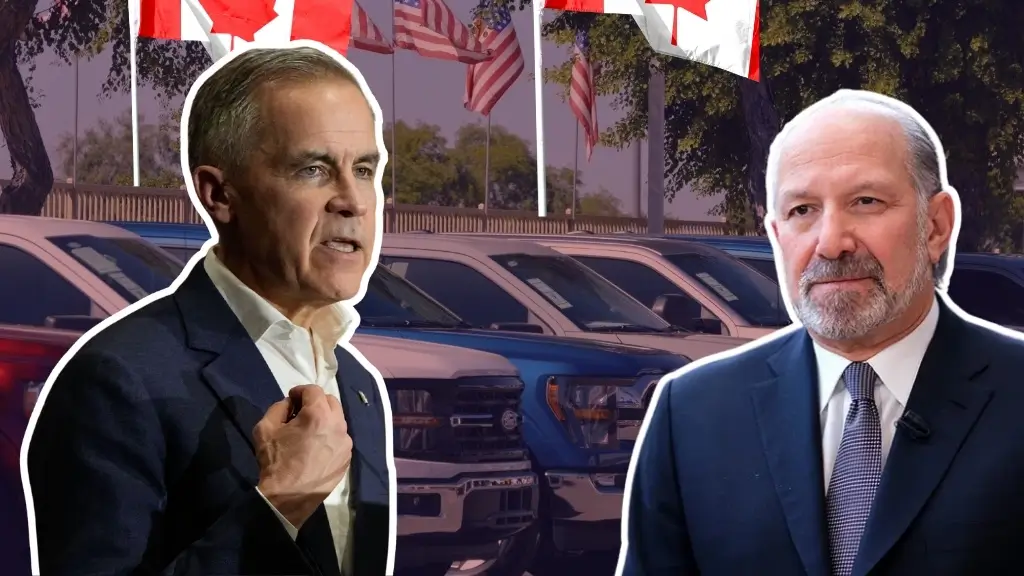
Canadian Prime Minister Mark Carney pushed back Thursday against a claim from U.S. Commerce Secretary Howard Lutnick that Canada abandoned trade talks for political reasons, according to CNBC. Carney said Canada remains willing to negotiate a mutually beneficial agreement with the United States, adding that Canada will resume talks “when the Americans are ready.”
The dispute marks another escalation in an already strained North American trade relationship. Negotiators walked away from the table last month after failing to reach a deal before President Donald Trump’s Aug. 22 deadline, when new 50% tariffs on roughly $20 billion worth of Canadian imports took effect. Canada responded with dollar-for-dollar tariffs on U.S. goods, which are scheduled to take effect Sept. 8.
Both sides dispute what caused the talks to collapse
Lutnick told CNBC’s “Squawk Box” Wednesday that Canada “blew up” a nearly completed deal for political reasons and treated Trump disrespectfully. He said Canadian negotiators raised tariff relief for medium- and heavy-duty trucks only hours before the deadline. Canada’s Chief Negotiator, Janice Charette, disputed that account, telling CBC that Canadian officials raised the truck issue throughout the final week of talks, not just at the last minute.
The truck dispute carries particular weight for dealers and automakers, as medium- and heavy-duty trucks excluded from the proposed tariff relief include Ford’s F-Series and General Motors’ Silverado, both built at Ontario plants, making them among the most valuable vehicles produced across the North American supply chain. However, the uncertainty extends beyond vehicle prices, as higher tariffs can raise costs for parts, components and finished vehicles crossing the border, which in turn affects dealers’ pricing, supply chains and vehicle availability.
Ultimately, Lutnick has also suggested the standoff may not ease soon, telling reporters he expects Canada to soften its position after mid-October, once the country’s upcoming by-elections conclude. Carney, for his part, maintained that Canada’s negotiating team stayed unified and that the door remains open for a future agreement once the two sides are ready to return to the table.