While the monthly payment has become one of the most important numbers in the car-buying process, it may also be emerging as a considerable compliance blind spot for dealers. Joining us on today’s episode of Inside Automotive are Pete MacInnis, Founder and CEO of eLEND Solutions; John Fitzpatrick, CEO of Force Marketing; and Attorney Seth Dobbs of Fox Rothschild to help us break it all down.
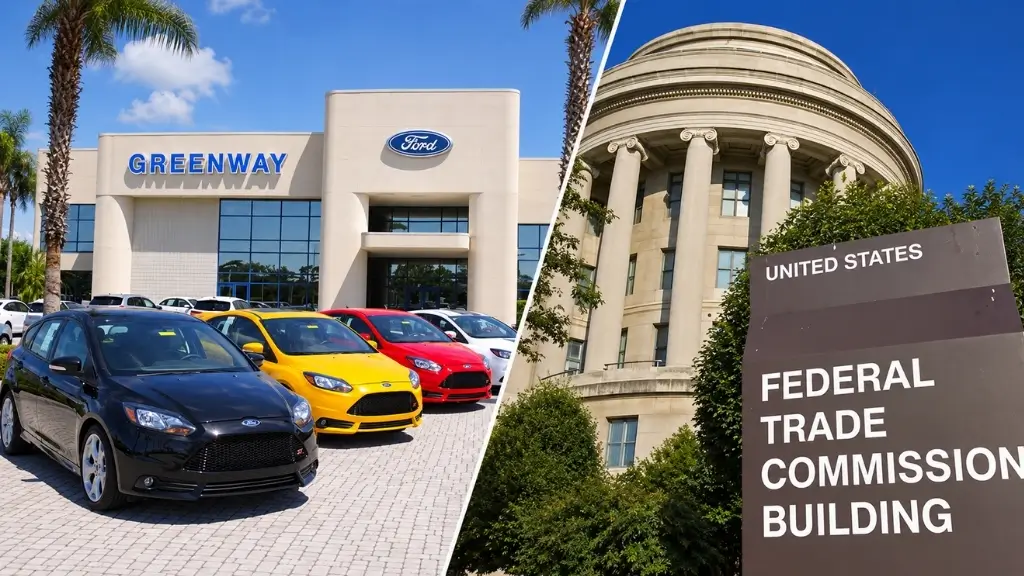
As the Federal Trade Commission (FTC) continues to scrutinize automotive advertising and pricing transparency, dealers have spent much of the conversation focused on advertised vehicle prices, fees, and add-ons. But for the roughly 80% of consumers who finance their vehicles, the payment can be just as influential as the selling price, which creates a problem when the payment a consumer sees online bears little resemblance to the payment ultimately returned by a lender.
MacInnis said his company analyzed thousands of credit applications and more than 100 lender decision responses to understand how often those numbers align. He said the results were striking, as only 1.6% of applications were approved as quoted when the initial payment, down payment and term were held constant. On new-vehicle purchases, the initial payment quote was $32 lower per month on average than the lender’s eventual decision. Over a 70-month loan, that represents more than $2,200 in additional payments.
"Only 1.6% of the applications were approved as is, on the same payment, down payment and term.”– Pete MacInnis
The study also found that the problem is not limited to isolated transactions. 37% of dealers surveyed said the payment gap reflected their own experience. But the size of the gap is not necessarily what creates the compliance issue.
The payment gap isn’t automatically a violation
According to Fox Rothschild attorney Seth Dobbs, dealers need to distinguish between a legitimate change in a customer’s credit profile and an advertisement that was misleading from the outset. The key questions are whether the advertisement was accurate, transparent and available to a qualifying customer.
Since a lender can ultimately approve a customer for a higher payment due to factors the dealer cannot control, the compliance concern arises when the original advertising creates an expectation the dealer cannot legitimately meet. That distinction becomes particularly important as dealers increasingly advertise payments through digital retailing tools, websites and other online channels.
Digital retailing adds another layer
Meanwhile, John Fitzpatrick pointed out how many places a dealer can now display pricing and payment information, such as:
- VDPs
- Website banners
- Digital retailing tools
- Chat
- Search
- Social media
- Video
- CTV
- Email and third-party listing sites can all carry some version of the offer, which creates a synchronization problem.
“Dealers have to have one source of truth when it comes to pricing.”– John Fitzpatrick
Fitzpatrick believes that a dealership might have correct pricing in one channel but outdated or inconsistent prices elsewhere. The more locations a price appears, the tougher it is to keep those updates synchronized in real-time sales. Therefore, he emphasizes that dealers require a trustworthy pricing source that can be seamlessly integrated across all marketing platforms. This problem also extends to payment estimates.
A credit score doesn’t tell the whole story
While many tools allow consumers to enter an estimated credit score and then calculate a payment based on that information, lenders increasingly use much more sophisticated models to determine individual loan terms. MacInnis said lenders can consider loan-to-value, debt-to-income, payment-to-income, credit history, revolving utilization, trade lines, prior relationships and other variables. That means two consumers with the same credit score can receive different decisions from lenders.
The result is a fundamental disconnect between the payment estimate presented during the shopping process and the lender’s eventual decision. That doesn’t mean dealers should stop showing payments, but it means they need to be clear about what those payments represent. According to Dobbs, however, dealers should be particularly cautious when a tool presents an estimated payment as though it were a personalized offer. If a customer enters information and reasonably believes the resulting number represents the payment they will actually receive, the dealer could face additional scrutiny when the lender comes back with different terms.
Therefore, dealers need to make clear that payment calculations are estimates and remain subject to lender approval and other qualification requirements. Those disclosures also need to be conspicuous enough that a reasonable consumer understands what they’re seeing.
On the other hand, the discussion also exposed a frustration dealers have raised throughout the FTC’s pricing push, which is OEM advertising. Manufacturer ads may promote a specific payment while including certain assumptions or upfront costs that don’t account for dealer-specific fees. Dobbs said dealers cannot simply assume that an OEM-supplied advertisement shields them from responsibility. Dealers remain accountable for the advertising that appears on their own websites and marketing channels. That has already pushed some OEMs to adjust their dealer-supported advertising, but broader national and regional campaigns can still create questions for dealers.
The old bait-ad strategy
The panel also discussed a longstanding industry practice: using an appealing vehicle or price to draw in traffic, even if the advertised vehicle was never truly available. This highlights the importance of the “bait” concept. While an advertised vehicle can legitimately attract customers, issues arise when the ad is used to lure traffic to a vehicle that wasn’t genuinely accessible to a qualifying customer from the start.
“The payment itself is not necessarily the issue. It’s whether or not that advertisement is accurate and transparent.” – Seth Dobbs
Regulators can review past actions; Dobbs pointed out that state attorneys general have subpoenaed records to verify if dealerships advertised certain vehicles. Dealers should also remember that deleting an advertisement does not wipe out its history.
Compliance and customer experience are converging
The broader message from the conversation is that compliance and customer experience are becoming increasingly difficult to separate. Consumers expect the number they see online to mean something. If a website shows one price or payment and the dealership presents a materially different amount, the customer may view the entire transaction differently, even when the difference stems from legitimate credit qualification.
For dealers, consistency is more than a compliance exercise; it becomes part of the retail experience. As affordability continues to drive consumer behavior, the monthly payment is likely to remain one of the first numbers shoppers consider. Dealers who treat that number with the same discipline as they do advertised vehicle pricing will be better positioned to avoid surprises when the customer moves from online shopping to the showroom.