On the Dash:
- Audi is doubling down on premium SUVs, which now account for more than 80% of the U.S. luxury market.
- The Q9 gives dealers a flagship product to compete with the Mercedes-Benz GLS and BMW X7.
- Tariffs and Audi’s lack of U.S. manufacturing remain key challenges despite an expanded SUV lineup.
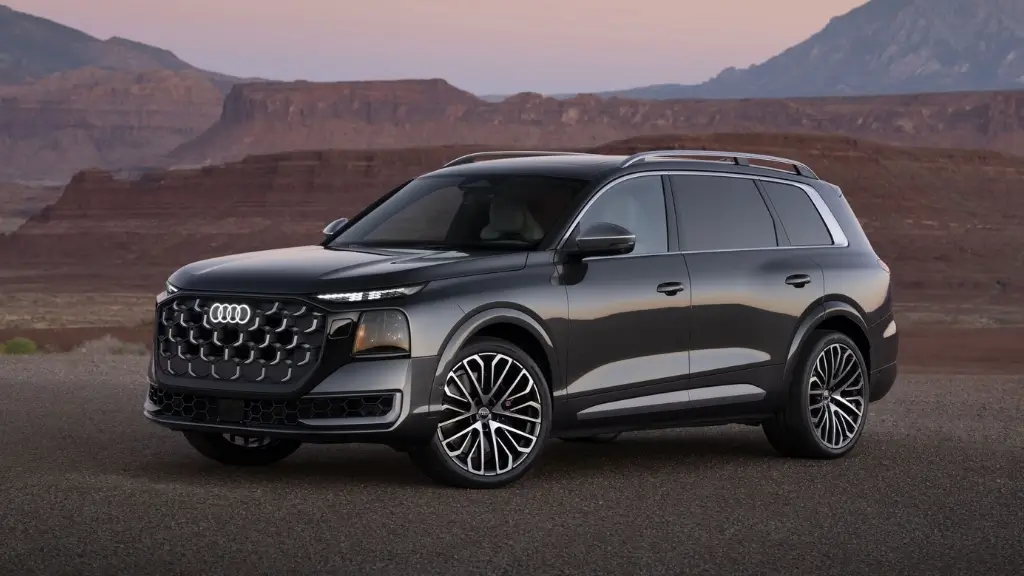
Audi unveiled the all-new three-row Q9 and the performance-oriented SQ9 as its flagship SUVs, as part of a broader SUV strategy that also includes the redesigned Q3 and Q7 models.
Executives said Audi developed the Q9 specifically with U.S. buyers in mind, emphasizing space, power and advanced technology. The Q9 starts at $89,095, while the SQ9 begins at $119,395. Both models compete directly with the Mercedes-Benz GLS and BMW X7.
According to the automaker, SUVs now account for more than 80% of the premium vehicle market, making the segment crucial for future growth. The new models prioritize performance and technology, pairing a 429-horsepower V6 in the Q9 with a 591-horsepower V8 in the SQ9.
The models introduce several new technology features, including:
- Matrix adaptive beam headlights
- A ChatGPT-powered voice assistant
- Hands-free driver assistance
- Audi’s largest panoramic moonroof to date
Audi has positioned these vehicles as its most luxurious SUVs for the U.S. market. The company aims to reverse its declining U.S. sales, which fell 16% in 2025 and dropped another 17% in the first half of 2026. Executives cited tariffs and the expiration of federal EV incentives as significant challenges.
Hurdles remain
Analysts believe the expanded SUV lineup could boost showroom traffic and profitability. Unlike BMW and Mercedes-Benz, Audi imports all vehicles it sells in the U.S., leaving it more exposed to tariffs, while its competitors benefit from domestic manufacturing that reduces their tariff exposure. Audi is reportedly exploring future U.S. production opportunities through Volkswagen Group’s manufacturing network.
The Q9’s success will depend on whether demand for premium SUVs can offset the pricing pressure tariffs create. The launch also reflects a broader industry shift away from electric-vehicle-first strategies and back toward high-demand SUVs and traditional powertrains.