
On the Dash:
- Vehicle quality is improving, giving dealers stronger messaging about quality and reliability to new-car shoppers.
- Connectivity issues involving Apple CarPlay and Android Auto remain common customer pain points that sales and service teams should proactively address.
- Simplicity matters: customers continue to value technology that is intuitive, reliable and easy to operate.
New vehicle quality increased considerably in 2026 in accordance with the JD Power U.S. Initial Quality Study (IQS), which marks the most robust year-over-year improvement since 1997.
The report revealed that the industry reduced reported problems to 175 problems per 100 vehicles (PP100), down from 192 PP100 a year ago. As a side note, a lower PP100 score reflects a higher vehicle quality.
Meanwhile, connectivity issues tied to Apple CarPlay and Android Auto remain the industry’s biggest obstacle to further gains.
Quality improvement
Nine out of ten categories evaluated by JD Power showed year-over-year improvements, with premium brands averaging 169 PP100 and mass-market brands at 177 PP100. The 2026 results are the fourth-best in the study’s 40-year history, with JD Power attributing many of these gains to simpler technology and more user-friendly features.
Frank Hanley, Senior Director of Auto Benchmarking at JD Power, stated in the company’s media release, “The biggest gains in quality come from features that are easy to use—simple controls, less-intrusive driver assistance and software that works the way customers expect. When technology becomes too complicated, the likelihood of customers experiencing a problem rises considerably.”
The biggest area of concern
Conversely, infotainment was the sole category to decline compared to the previous year. Connectivity issues with Apple CarPlay and Android Auto primarily caused this rise, contributing an additional 1.4 PP100 to reported problems and representing the main factor behind the category’s overall decrease.
It’s important to note that infotainment generated 44.4 PP100 among mass-market vehicles and 38.3 PP100 among premium vehicles. The agency found that complex technology creates customer frustration when systems fail to operate as expected. Notably, among owners who reported a distracted-driving problem, 46% identified infotainment or touchscreen interfaces as the sole source, with 18% citing driver-assistance alerts.
Moreover, the findings suggest automakers continue to balance technology adoption with usability and safety.
Other areas show meaningful progress
The study also found that cupholder design generated the largest single improvement in customer satisfaction, accompanied by more accessible placement and the capacity to fit a wider range of cup and bottle sizes.
Owners also reported fewer issues involving:
- Driving assistance alerts
- Electric vehicle range
- Road noise
- Body panel fit and finish
These improvements contributed to the sharp increase in overall vehicle quality scores.
Lead brand rankings
Among premium brands:
- Porsche: 138 PP100
- Genesis: 151 PP100
- Lexus: 156 PP100
Among mass-market brands:
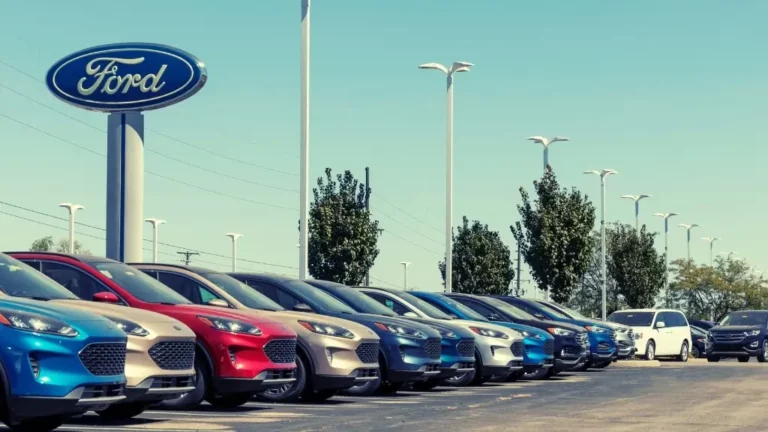
- Ford: 152 PP100
- Nissan: 156 PP100
- Buick: 162 PP100
In terms of overall model-level awards, BMW led with six, followed by Hyundai with five. General Motors received four awards, while Ford’s segment wins included the F-150, Mustang, and Super Duty. Ultimately, the Porsche 911 achieved the highest ranking with 110 PP100.