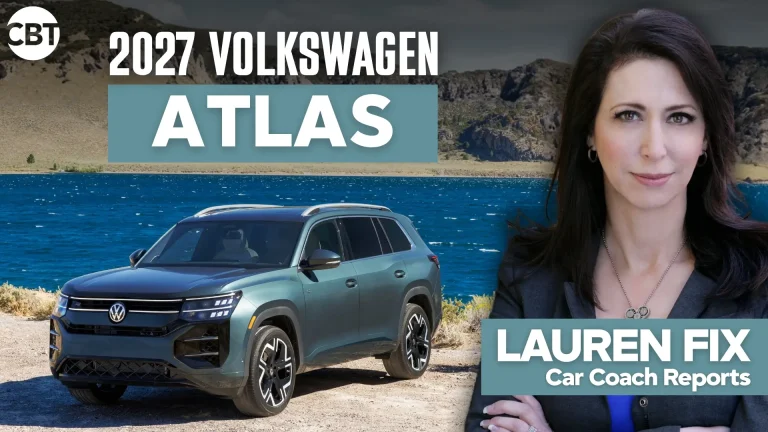
Volkswagen is giving American families more power, technology and comfort with the redesigned 2027 Atlas. The second-generation three-row SUV features refreshed styling, an upgraded interior, improved fuel economy and more standard equipment, while retaining the spaciousness that makes it a practical family vehicle.
SUVs account for approximately 80% of Volkswagen’s U.S. sales, making the Atlas a critical model for the brand. Designed specifically for the American market, it competes in one of the industry’s most crowded segments. A hybrid is planned for a future model year, but the 2027 Atlas remains gasoline-powered.
Under the hood, a 2.0-liter turbocharged four-cylinder produces 282 horsepower and 258 lb-ft of torque, paired with an eight-speed automatic transmission. Front-wheel drive is standard, with 4MOTION all-wheel drive available. Fuel economy is estimated at 25 mpg combined for front-wheel-drive models and 23 mpg combined with AWD. Maximum towing capacity reaches 5,000 pounds when properly equipped.
Despite its size, the Atlas doesn’t feel like a big SUV behind the wheel. It delivers responsive performance and manageable road manners, making it comfortable for everyday driving and long trips. The improved fuel economy is welcome, although buyers seeking maximum efficiency will need to consider hybrid competitors.
The exterior retains the Atlas’s upright, boxy profile but gains sharper body lines, a slimmer grille and redesigned LED lighting. An illuminated Volkswagen badge and full-width LED taillights give it a more modern appearance, including selectable lighting animations as the driver approaches. The vehicle is approximately one inch longer, while its width, height and wheelbase remain essentially unchanged. Eighteen-inch wheels are standard, with 20- and 21-inch options available. New paint colors include Blackberry Metallic, Sacramento Green and Sandstone.
Inside, Volkswagen has upgraded the materials and redesigned the dashboard, adding available real wood trim for a more premium feel. The Atlas seats seven with its standard second-row bench, while optional $695 captain’s chairs reduce capacity to six. The third row is genuinely usable, and available features include a 12-way power driver’s seat, lumbar and thigh support, massaging seats, heated and ventilated second-row seats, and rear sunshades.
Technology takes a major step forward with a standard 10.3-inch Digital Cockpit Pro instrument display and 12.9-inch touchscreen. A 15-inch head-up display is available, along with wireless Apple CarPlay and Android Auto, two ventilated Qi2 wireless charging pads, USB-C ports and Wi-Fi. The standard nine-speaker audio system can be upgraded to a 14-speaker Harman Kardon system, while higher trims offer 30-color ambient lighting. A steering-column-mounted gear selector frees up center-console space. Air Console gaming and ChatGPT-based AI functionality add further digital features.
Volkswagen’s IQ.DRIVE driver-assistance technology is standard, including automatic emergency braking with pedestrian detection, lane-keeping assistance, blind-spot monitoring, rear cross-traffic alert and parking sensors. An additional center airbag provides protection in certain side-impact collisions. Emergency Assist Plus can intervene if the system detects an unresponsive driver and, under supported conditions, guide the vehicle toward the right side of the road before stopping.
Cargo capacity measures 21 cubic feet behind the third row, 56 cubic feet with the third row folded and 95.4 cubic feet with both rear rows folded. A power tailgate adds convenience, while the Atlas’s spacious cabin makes it well suited to family travel. Built in Chattanooga, Tennessee, the SUV includes four years or 50,000 miles of basic and powertrain coverage, three years or 36,000 miles of roadside assistance, two years or 20,000 miles of complimentary maintenance, and listed corrosion coverage of seven years or 100,000 miles. Buyers should confirm warranty terms with a dealer.
Pricing starts at $41,610 for the front-wheel-drive SE, rising to $43,610 for the SE with 4MOTION, $47,135 for the SE with Technology and $53,635 for the SEL R-Line. The tested SEL Premium R-Line reaches $58,135, before applicable taxes, destination charges and options.
Competitors include the Honda Pilot, Toyota Grand Highlander, Hyundai Palisade, Kia Telluride, Chevrolet Traverse, GMC Acadia, Ford Explorer and Mazda CX-90.
The Bottom Line: The 2027 Volkswagen Atlas delivers more horsepower, improved fuel economy, upgraded technology and a more upscale cabin without sacrificing family-friendly space. Pricing has increased, and the absence of a hybrid powertrain may push efficiency-minded buyers toward rivals. For those seeking a powerful, comfortable and capable gasoline-powered three-row SUV, the redesigned Atlas deserves serious consideration.
Lauren Fix, The Car Coach®, is a nationally recognized automotive expert, analyst, and consumer advocate. You’ve seen her on television, radio, and across digital platforms, breaking down the latest in automotive news and reviews. For more updates and expert insight, follow Lauren at The Car Coach Reports.
Listen to The Drive Car Show – https://www.youtube.com/@thedrivecarshow