TSLA380.840-10.22%
GM76.070-1.65%
F14.2150.025%
RIVN17.4550.365%
CYD43.900-0.815%
HMC28.160-0.61%
TM177.610-2.15%
CVNA67.360-3.3%
PAG202.660-2.08%
LAD335.280-3.88%
AN205.720-3.28%
GPI326.060-5.56%
ABG220.360-6.3%
SAH100.420-2.3%
TSLA380.840-10.22%
GM76.070-1.65%
F14.2150.025%
RIVN17.4550.365%
CYD43.900-0.815%
HMC28.160-0.61%
TM177.610-2.15%
CVNA67.360-3.3%
PAG202.660-2.08%
LAD335.280-3.88%
AN205.720-3.28%
GPI326.060-5.56%
ABG220.360-6.3%
SAH100.420-2.3%
TSLA380.840-10.22%
GM76.070-1.65%
F14.2150.025%
RIVN17.4550.365%
CYD43.900-0.815%
HMC28.160-0.61%
TM177.610-2.15%
CVNA67.360-3.3%
PAG202.660-2.08%
LAD335.280-3.88%
AN205.720-3.28%
GPI326.060-5.56%
ABG220.360-6.3%
SAH100.420-2.3%


Why leaders should be thermostats, not thermometers

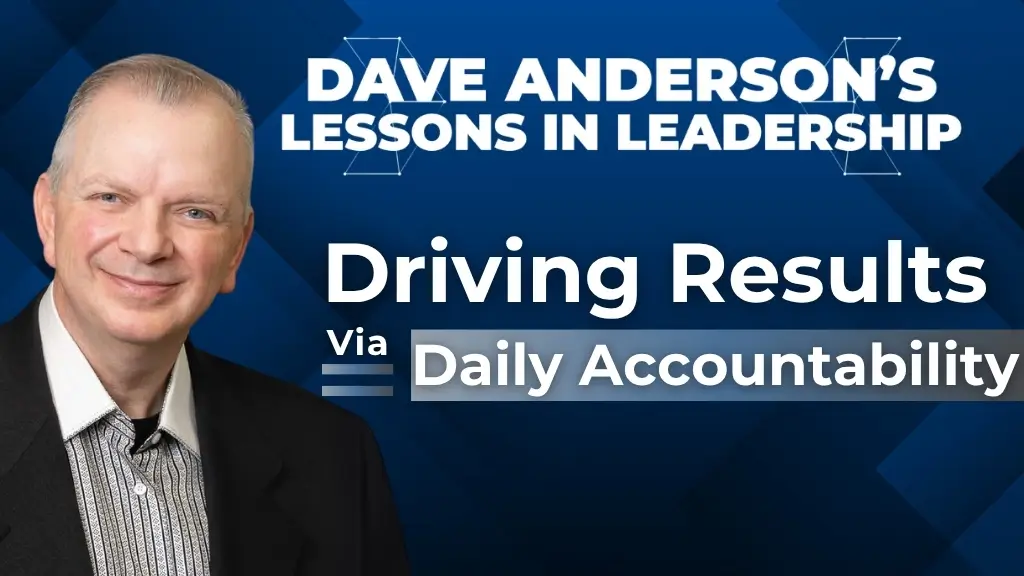
Dave Anderson explains why leaders must act as thermostats in their organizations, actively setting cultural standards rather than simply reacting to the conditions around them.

Leadership expert Dave Anderson says culture doesn’t develop on its own; it takes the temperature of whoever is leading it.

On the latest episode of Lessons in Leadership, Anderson outlines the second commandment from his “15 Commandments for Organizational Peak Performance” series. Anderson says leaders must actively set the standard in their organizations rather than simply react to what’s already happening around them.

"Be a thermostat, not a thermometer."

Anderson explains that while everyone contributes to workplace culture, no one shapes it more than the person at the top. “Thermostats,” he says, set the conditions while “thermometers” simply record them. He also argues that too many leaders fall into thermometer behavior without realizing it. They stay in their offices, rely on emails and voicemails, and attempt to build a team by remote control.

Sign up for CBT News’ daily newsletter and get the latest industry stories delivered straight to your inbox.

According to Anderson, a disengaged leader produces a disengaged culture. If a department feels sluggish or complacent, he says that’s a reflection of the leader, not the team.

"If it's sleepy, it's probably because you are."

The same logic applies in reverse. Leaders who bring urgency, high standards and consistent presence create cultures that mirror those qualities. Anderson urges leaders to stop allowing culture to drift and instead take ownership of the temperature they’re setting, or failing to set.

“Make sure you’re not just letting your culture develop its own temperature, but you’re being that thermostat rather than responding to what’s happening in your absence,” he said.

The distinction comes down to intention, Anderson asserts. Culture will develop with or without a leader’s involvement. The only question is whether that leader is shaping it or inheriting it.


More from Lessons in Leadership
How the masterpiece of today fuels long-term success

How today’s masterpiece fuels long-term success

- July 15, 2026
"There are no redos, and today is not a dress rehearsal." That's the message from Leadership Expert Dave Anderson on the latest episode of Lessons in Leadership, where he breaks down the sixth...
The leadership mistake holding dealerships back

The leadership mistake holding dealerships back

- July 8, 2026
Experienced leaders don't simply manage operations. They develop people. Leadership Expert Dave Anderson explains that leaders must continually develop themselves if they expect their organization and employees to reach peak...
Traits

The 5 traits that determine whether a candidate is worth the investment

- July 1, 2026
When it comes to hiring, Leadership Expert and President of LearnToLead, Dave Anderson, says the strongest people already arrive with most of what matters. Anderson joins the latest episode of Lessons...
Why training is a dealer’s best weapon 

Why training is a dealer’s best weapon 

- June 24, 2026
When it comes to training, Leadership Expert and President of LearnToLead, Dave Anderson, believes “The more you sweat, the less you bleed in battle.” Anderson joins us on the latest episode...
CBT News
Privacy Overview

This website uses cookies so that we can provide you with the best user experience possible. Cookie information is stored in your browser and performs functions such as recognising you when you return to our website and helping our team to understand which sections of the website you find most interesting and useful.