
On the Dash:
- Model year 2025 inventory dropped 36% month-over-month; 93% of lots are now model year 2026 vehicles.
- Dodge carries 142 days of supply; Toyota sits tight at just 36 days.
- Incentive spending fell to 6.9% of ATP, signaling disciplined pricing across the market.
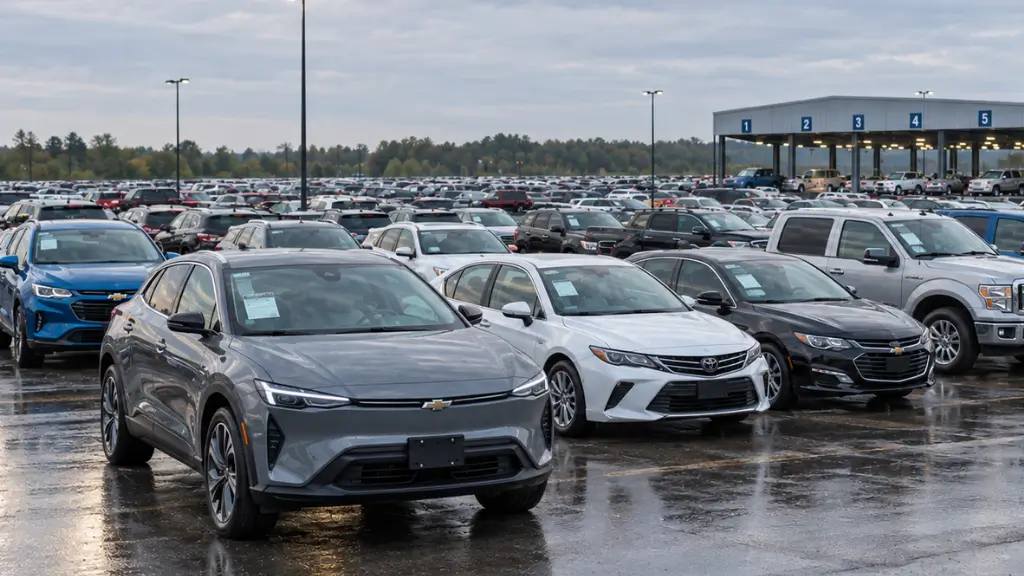
U.S. new-vehicle inventory held mostly stable in April, as automakers worked to clear out model year 2025 (MY2025) stock from dealer lots. Total new-vehicle inventory slipped to 2.86 million units, down 1.1% from March, according to Cox Automotive’s vAuto Live Market View.
Days’ supply fell to 78 in April, down 2.4% from March and well below the 95 days recorded in January and February. MY2025 inventory dropped 36% month-over-month. By the end of April, nearly 93% of the total inventory was model year 2026 vehicles.
April 2026 days’ supply ran 15.5% higher than April 2025, but analysts say that number is misleading. Last spring, automakers and dealers saw an abnormal spike in sales as customers rushed to make purchases ahead of tariff increases.
Domestic brands, including Ford, GM, and Stellantis, held new-vehicle stock well above the 78-day national average. Dodge led all brands at 142 days, followed by Chrysler and Ram at 135 each and Jeep at 128. Ford carried 98 days of supply. Those brands are actively working to move out their remaining MY2025 stock.
On the import side, Toyota led all brands with just 36 days of supply, followed by Lexus at 38 and Honda at 48. Import sedans showed softer demand, a sign that budget-conscious buyers are pulling back.
Overall, automakers are using targeted incentives to move MY2025 vehicles rather than cutting prices. Incentive spending fell to 6.9% of the average transaction price in April, down from 7.2% in March. Meanwhile, the average transaction price for a new vehicle ticked up to $49,461 in April, a 1.8% increase from last year, according to Kelley Blue Book.
The numbers show that dealers are nearly done selling off last year’s models. Almost all new-vehicle inventory on lots is now this year’s product. The challenge for automakers and dealers in the second quarter will be to balance inventory and pricing to keep customers coming back to showrooms.