On the Dash
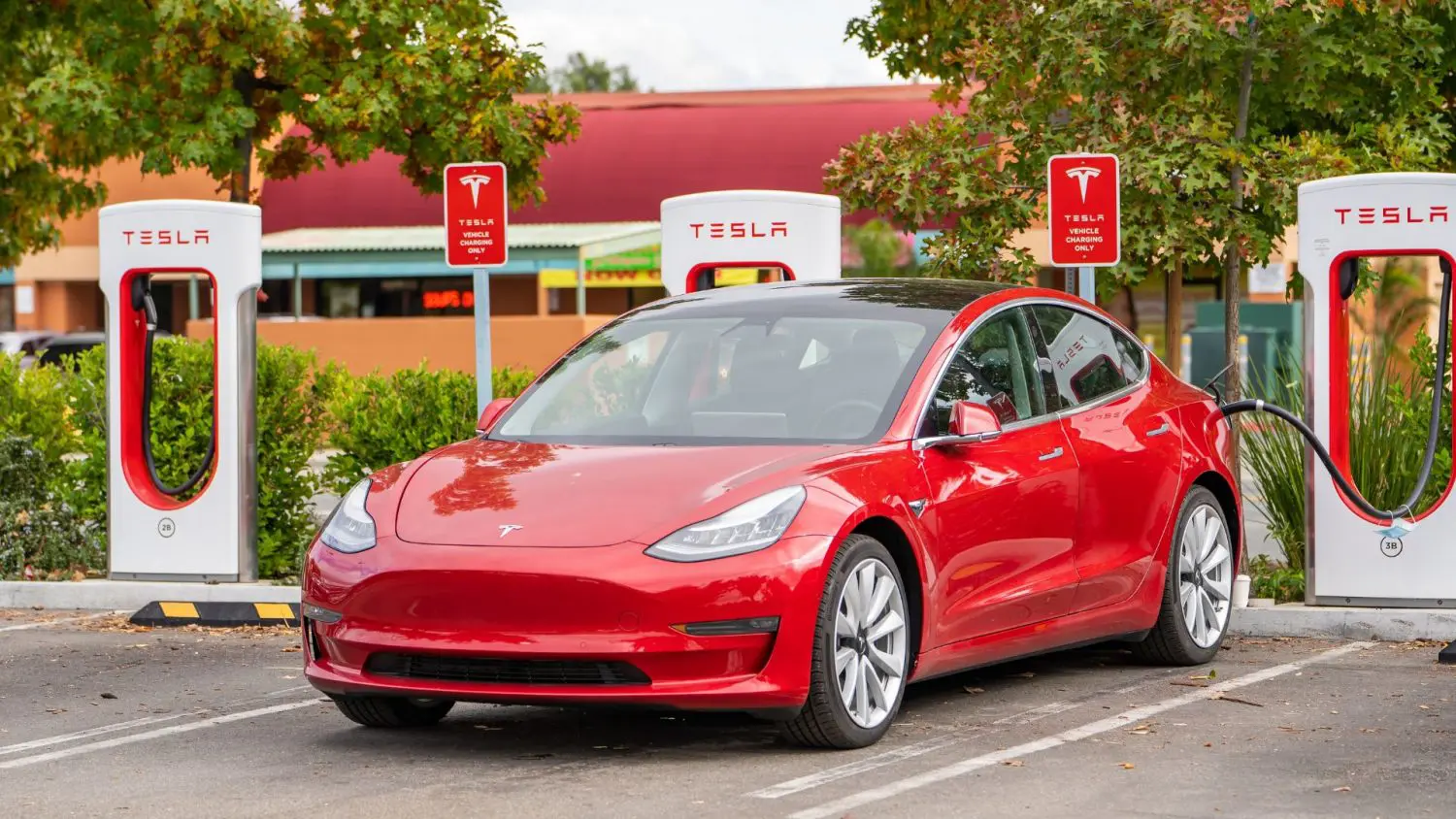
- Tesla ranks highest in U.S. public EV charging satisfaction for both Level 2 (661) and DC fast charging (709) in J.D. Power’s 2025 EVX Public Charging Study.
- Competitors are closing the gap, with Red E scoring 668 for DC fast charging and ChargePoint earning 628 for Level 2; Ford, Mercedes-Benz, and Rivian matched Tesla’s DC fast-charging score but lack sufficient market presence for official rankings.
- Despite reliability gains, overall satisfaction scores fell due to rising charging costs and payment issues, especially for non-Tesla owners using Tesla Superchargers.
Tesla continues to lead U.S. public EV charging satisfaction, even as overall scores decline due to rising costs and payment frustrations, according to the 2025 J.D. Power U.S. Electric Vehicle Experience (EVX) Public Charging Study. The report shows reliability is improving, with failed charging visits at their lowest level since the survey began in 2021, despite ongoing uncertainty around federal NEVI funding.
Tesla ranked highest for both Level 2 and DC fast-charging networks, scoring 661 and 709 points, respectively, on a 1,000-point scale. While Tesla remains ahead, competitors are gaining ground. Red E placed second for DC fast charging with a score of 668, and ChargePoint ranked second for Level 2 with 628. Behind the scenes, Ford Charge, Mercedes-Benz Charging Network, and Rivian Adventure Network each matched Tesla’s 709 DC fast-charging score but lacked sufficient market presence to be included in official rankings. Third-party DC fast-charging providers averaged a lower satisfaction score of 591.
The study, based on responses from 7,428 EV and plug-in hybrid owners fielded from January through June 2025, showed just 14% of charging visits failed this year, down from 20% in prior years, signaling better reliability. The Pacific region had the highest failed charge rate at 21% and 12% reporting wait times, while the East South Central region had the lowest at 7% and 5%, respectively. Among major cities, Seattle (25%) and Los Angeles (24%) saw the highest failed charge rates, while San Francisco (18%) and Denver (14%) reported the most wait times. The top reason for failed charges was chargers being out of service or not working correctly, cited in 60% of incidents.
Despite reliability gains, satisfaction scores declined from 664 to 654 for DC fast charging and from 614 to 607 for Level 2 charging. Satisfaction with the cost of charging dropped sharply to 430 (-16) for DC fast chargers and 459 (-16) for Level 2 chargers, making cost the least satisfying factor overall. Non-Tesla drivers using Tesla Superchargers reported lower cost satisfaction than Tesla owners. J.D. Power attributes the decline to the end of free charging incentives, rising electricity rates, and higher prices as networks move toward profitability.
First-time EV owners were more satisfied than experienced owners, scoring 610 vs. 592 for Level 2 chargers, and 654 vs. 648 for DC fast charging. J.D. Power suggests veteran owners have higher expectations for charging technology that aren’t being met.
Now in its fifth year, the EVX Public Charging Study measures satisfaction across 10 factors, including ease and speed of charging, station condition, charger availability, convenience, amenities, safety, location, cost, and payment.