TSLA418.117-5.5827%
GM83.4851.785%
F15.430-0.28%
RIVN18.245-0.025%
CYD58.3400.67%
HMC28.1250.415%
TM179.640-0.58%
CVNA66.0952.445%
PAG171.025-0.855%
LAD288.140-2.53%
AN188.925-1.325%
GPI304.090-1.66%
ABG189.7002.78%
SAH83.7050.415%
TSLA418.117-5.5827%
GM83.4851.785%
F15.430-0.28%
RIVN18.245-0.025%
CYD58.3400.67%
HMC28.1250.415%
TM179.640-0.58%
CVNA66.0952.445%
PAG171.025-0.855%
LAD288.140-2.53%
AN188.925-1.325%
GPI304.090-1.66%
ABG189.7002.78%
SAH83.7050.415%
TSLA418.117-5.5827%
GM83.4851.785%
F15.430-0.28%
RIVN18.245-0.025%
CYD58.3400.67%
HMC28.1250.415%
TM179.640-0.58%
CVNA66.0952.445%
PAG171.025-0.855%
LAD288.140-2.53%
AN188.925-1.325%
GPI304.090-1.66%
ABG189.7002.78%
SAH83.7050.415%

Ford sees uptick in pickup, electric vehicle sales thanks to improved supply

Ford saw increased sales in the second quarter thanks to improved electric vehicle inventory and increased pickup demand in the U.S.

Ford saw increased sales in the second quarter thanks to improved electric vehicle inventory and increased pickup demand in the U.S.

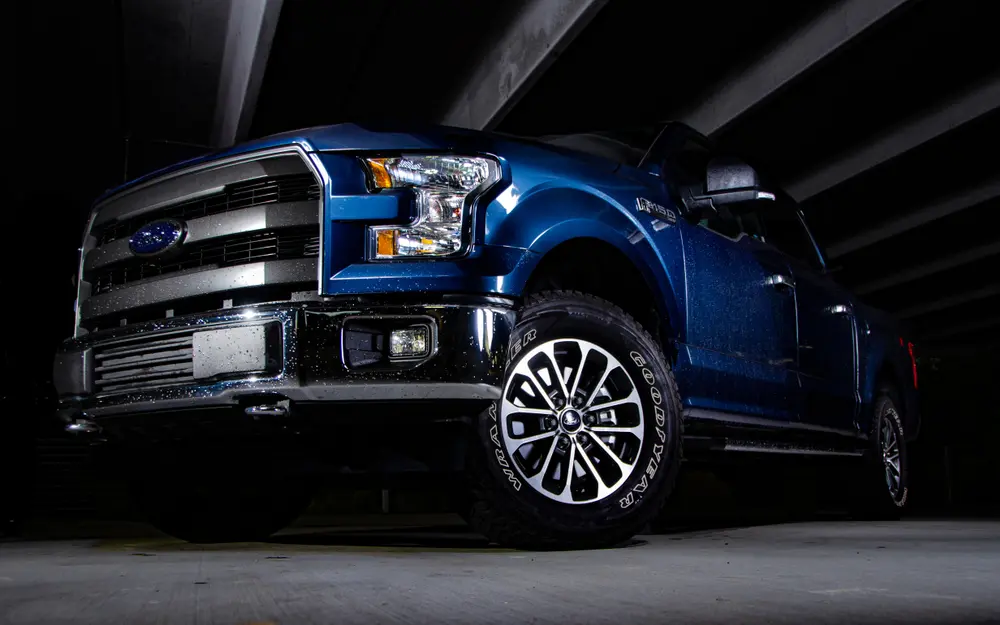
From April through June, the automaker sold 531,662 vehicles across its segments, achieving a 10% gain over the previous quarter. Sales of Ford trucks rose 26.2%, boosted by demand for the brand’s F-series, whose deliveries increased 34%. The car manufacturer’s electric vehicle segment also saw an admirable increase in volume, rising 11.9% year-to-date and 35.5% in June alone.

Earlier this year, Ford restructured its business model into three segments: Ford Blue (ICE vehicles), Ford Model e (electric vehicles) and Ford Pro (fleet). While the brand’s gas-powered cars continued to be the primary driver of sales, the growth in EV demand is a positive sign for the company’s efforts to compete with Tesla. However, this increase is also partially due to a simple increase in supply. During Q1, the car manufacturer suspended production at the F-150 Lightning and Mustang Mach-E factories, limiting early-year sales. Ford’s vice president of sales distribution and trucks noted the latter vehicle’s sales numbers directly benefited from the reopening of its facility after Q1: “Improved Mustang Mach-E inventory flow began to hit at the end of Q2 following the retooling of our plant earlier this year, which helped Mustang Mach-E sales climb 110 percent in June.”

Overall, the second quarter brought little change to the brand’s status in the U.S. car market. What will be more interesting to see is the automaker’s financials. Since the start of the year, Ford has looked for ways to reduce expenses after struggling to manage costs in 2022. But these efforts may be limited by the company’s investments in electric vehicles, which continue to lose money despite their increasing popularity.

Read More
More from Articles
Hyundai expands dealer reach with mobile service vans

Hyundai expands dealer reach with mobile service vans

- June 4, 2026
On the Dash: Hyundai is targeting 150 dealer-operated mobile service units nationwide by the end of 2026. Factory-trained technicians perform approved repairs and maintenance at customers' homes or workplaces. Mobile...
Ford U.S. sales fall 14% in May as EV, hybrid, truck demand softens

Ford U.S. sales fall 14% in May as EV, hybrid, truck demand softens

- June 4, 2026
On the Dash: Ford's EV sales slowdown continues, with Mustang Mach-E and F-150 Lightning posting steep year-over-year declines. Hybrid sales also fell, signaling broader softness beyond battery-electric vehicles. Explorer, Maverick...
Automakers back EPA emissions delay, urge swift rewrite of vehicle rules

Automakers back emissions delay as dealers navigate EV uncertainty

- June 4, 2026
On the Dash: Automakers support delaying stricter emissions standards until 2029, citing market conditions and slower-than-expected EV adoption. Regulatory changes could give manufacturers greater flexibility to prioritize gas-powered and hybrid...
Auto industry warns AI chip demand could disrupt manufacturing

Auto industry warns AI chip demand could disrupt manufacturing

- June 4, 2026
On the Dash: AI-driven demand for memory chips could increase vehicle production costs and create new supply chain disruptions. Industry groups warn that rising chip prices may eventually translate into...