On the Dash:
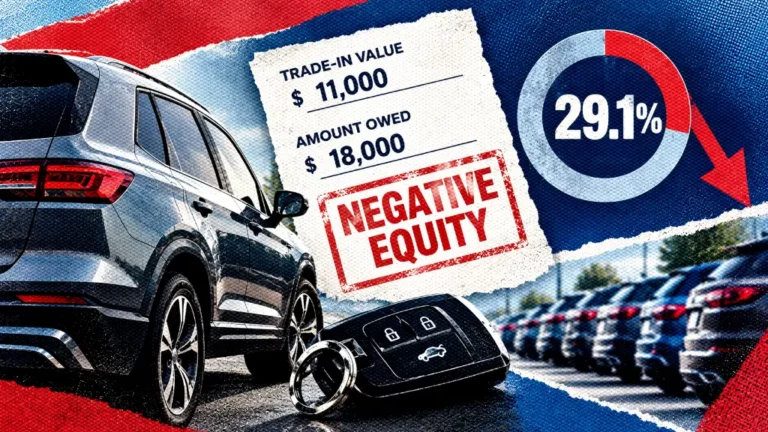
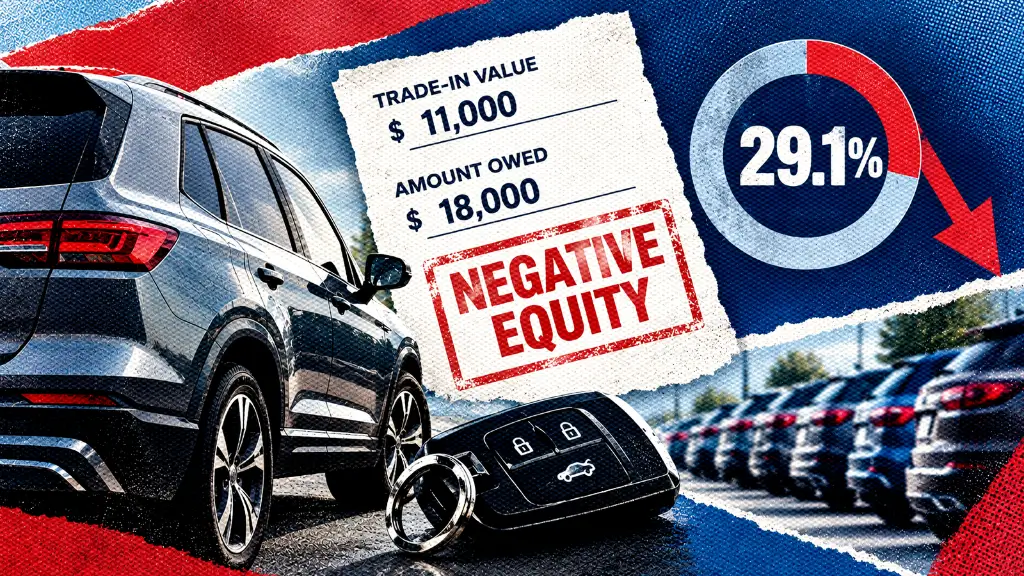
- Negative equity now affects 29.1% of financed trade-ins, and average debt hit $7,107.
- Edmunds reports that rollover buyers financed $57,235 on average and pay $952 monthly.
- Dealers should discuss trade-in payoff early, as 91.2% of rollover buyers take 72-plus-month loans.
According to a recently released Edmunds report, nearly 3 in 10 financed trade-ins toward new vehicles were underwater in the third quarter, and the average amount owed is the highest for a third quarter in at least a decade.
In Q3, 29.1% of those trade-ins carried negative equity, up from 28.1% a year ago. Those buyers owed an average of $7,107 more than their vehicles were worth.
Rollover loans push balances to new highs
Buyers who rolled negative equity into a new loan financed an average of $57,235, up 44.1% from $39,732 in Q3 2019. Their monthly payment rose 47.4%, from $646 to $952.
At an average APR of 8.1%, they are on track to pay an estimated $16,610 in interest over the life of their loans. That is up nearly 83% from $9,093 in Q3 2019. Of these buyers, 91.2% financed for 72 months or longer, which raises the risk of staying underwater.
Rollover buyers carry far more debt
Compared with the average new-vehicle buyer, they financed roughly $12,600 more, paid $165 more per month and face nearly $6,700 more in lifetime interest.
The share of underwater trade-ins has eased from 30.9% at the start of 2026 but has risen year over year for four straight years. The deficit has grown more than the share. From 2016 to 2019, the average deficit typically ran between $5,000 and $5,500. Today’s average is more than $1,800 above pre-pandemic levels.
Buyers who paid above sticker price or financed over extended terms face the greatest risk. Elevated vehicle prices, higher borrowing costs and longer loan terms make it hard for buyers to escape negative equity without bringing cash to the deal, Edmunds said.
Average negative equity above $7,000 could tighten lender approvals and push more buyers toward used vehicles.