
On the Dash:
- The new bridge could improve cross-border freight movement and reduce congestion for automotive supply chains.
- The crossing provides an alternative to the Ambassador Bridge, a critical route for vehicle and parts shipments.
- Ongoing trade and tariff tensions continue to create uncertainty around U.S.-Canada commerce despite the project’s completion.
U.S. and Canadian officials are preparing to celebrate the completion of the Gordie Howe International Bridge, a C$6.4 billion ($4.6 billion) crossing connecting Michigan and Ontario. A ribbon-cutting ceremony is expected in the coming days, with the bridge scheduled to open to traffic June 15.
The project represents one of the largest infrastructure investments supporting North American trade and automotive manufacturing.
New crossing adds critical trade capacity
Construction on the bridge began in 2018 and has now reached completion. The span crosses the Detroit River and establishes a new transportation link between the United States and Canada.
Officials designed the project to ease congestion and improve freight movement in one of North America’s busiest trade corridors. Canada agreed to fund construction to establish a second major international crossing in the region, and Canada and Michigan will share ownership of the bridge under a longstanding agreement. The two sides will split toll revenues after Canada recovers its construction costs.
Auto industry stands to benefit
The Detroit-Windsor region serves as a key gateway for vehicle production and parts movement. The bridge gives shippers an alternative to the privately owned Ambassador Bridge, which currently handles a considerable share of cross-border automotive traffic.
Industry stakeholders expect the additional capacity to strengthen supply-chain resilience and improve logistics efficiency across the corridor.
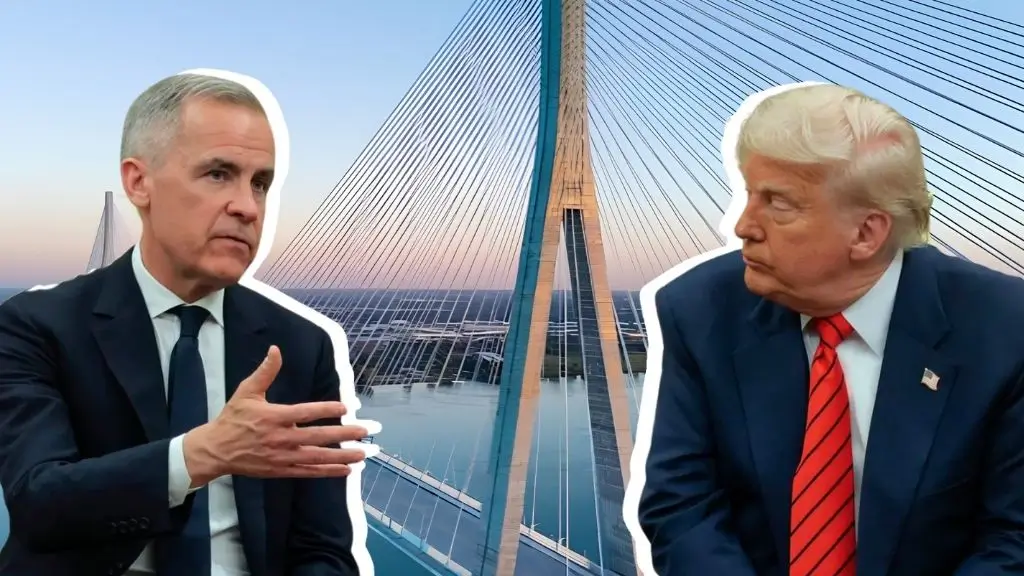
However, political uncertainty has shadowed the project’s final stretch. President Donald Trump threatened in February to block the bridge’s opening unless the United States received what he described as fair compensation from Canada. The administration has not publicly indicated whether those concerns have been resolved, and the White House has not provided updated guidance on its position.
Questions about future bridge revenues have also emerged amid lower-than-expected border traffic. Some Canadian travelers have reduced trips to the United States amid growing political tensions and tariff disputes. Bridge officials continue to describe the crossing as a vital economic link between the two countries despite those concerns.
Automotive manufacturers, suppliers and logistics providers will closely watch whether the new crossing improves freight efficiency and eases congestion across the Detroit-Windsor corridor when it opens later this month.