The autonomous vehicle industry has spent the last decade racing to solve one problem: replacing the human behind the wheel. Billions of dollars have gone into sensors, simulations, and AI models that can navigate city streets and interstate highways.
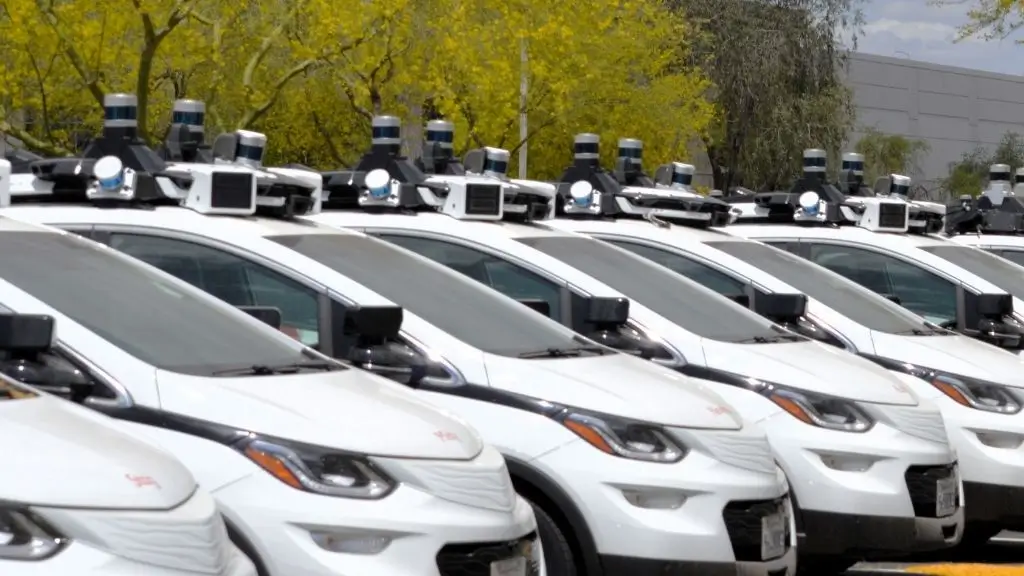
That investment is paying off. Waymo is operating commercial robotaxi services in multiple U.S. cities. Aurora is running autonomous trucks between Dallas and Houston. Tesla, Zoox, and others are scaling fast.
But here is what nobody is talking about at the industry conferences: the vehicle that can drive itself still can’t charge itself, inspect itself, clean itself, reposition itself between depots, or get itself onto a flatbed when something goes wrong. And those tasks, the physical ones that happen before and after every autonomous mile, are where fleet economics actually break.
The revenue equation that governs every fleet
Whether you run 50 vehicles or 50,000, the economics are the same:
Revenue = Uptime x Utilization x Yield
Utilization is about matching supply to demand. Yield is about pricing. Those two get plenty of attention. But the first variable, uptime, is the one that gates everything. If a robotaxi sits in a depot with a dead battery, utilization and yield are both zero. If a truck misses its pre-trip inspection window, that lane goes empty.
Uptime is the physical work. It is the operator who plugs in the charger at 2 a.m., the contractor who runs a DOT-compliant inspection before a truck’s first autonomous run of the day, the recovery team that dispatches a flatbed when a steeringless Zoox vehicle throws a fault code on the side of the road.
At Draiver, we call this the upstream gate. No amount of AI sophistication downstream can compensate for a vehicle that is not physically ready to operate.
Autonomy doesn’t eliminate jobs. It creates different ones
There is a common assumption that as vehicles get smarter, the need for human intervention disappears. History tells a different story.
A landmark MIT study led by economist David Autor found that roughly 60% of jobs that exist today did not exist in 1940. Over 85% of employment growth in the past eight decades was driven by technology creating entirely new types of work. The pattern is consistent: new technology does not just replace tasks. It generates categories of work that did not previously exist.
Autonomous vehicles are following the same pattern. The role of someone sitting behind the wheel on a long-haul route may shrink. But the roles being created around that vehicle are multiplying: AV fleet readiness operators who run pre-trip inspections and compliance checks before an autonomous truck departs a terminal. EV charging recovery specialists who dispatch to low-battery robotaxis across a city. Decommissioning coordinators who manage the logistics of cycling thousands of vehicles through remarketing. Remote operations monitors. Field compliance auditors. Terminal staging coordinators.
These are not hypothetical job titles. They are the work already happening across Draiver’s network of over 140,000 independent contractor operators. The difference is that platforms like ours make this work accessible, flexible, and scalable. An operator in Fort Worth can pick up a CDL-certified truck inspection at 6 a.m. and a vehicle repositioning job at noon, all through a single app, with built-in insurance, compliance, and real-time tracking. That is the kind of infrastructure that turns a technology shift into an employment opportunity rather than a displacement event.
And the economics reinforce it. Today, 80-90% of non-revenue fleet movements still require a human physically present. Charging plug-ins. Maintenance transport. Inter-depot repositioning. Cleaning staging. Decommissioning runs to auction. Even at projected AV maturity around 2030, that number only drops to 50-70%. Certain categories, like disabled vehicle recovery, inter-city transport, and new-market launch support, will resist automation for a decade or more.
The reason is structural. Autonomous driving solves the A-to-B problem. But fleet operations is A to Z: inspections, fueling, charging, storage, title and registration, damage documentation, lot staging, towing, and remarketing. Every vehicle added to an autonomous fleet needs this physical infrastructure on day one. And every one of those tasks is a job that a platform like Draiver can dispatch, track, and pay for, improving the ROI profile of the entire fleet by protecting the uptime variable that makes all other revenue possible.
What this means for dealership and fleet operations
If you operate a dealership group, a fleet management company, or a rental operation, you already know this problem. Getting vehicles where they need to be, in the condition they need to be in, on time, is the daily grind that determines profitability.
The autonomous era does not eliminate this challenge. It intensifies it. A dealer group that services OEM fleets will eventually service mixed fleets: human-driven vehicles alongside autonomous ones. Rental companies partnering with AV operators (Avis is already working with Waymo in Dallas) need the operational backbone to keep those vehicles revenue-ready. Fleet management companies that want to stay relevant in a world of robotaxis and autonomous trucks need to think about the physical operations layer now.
The winners will not be the companies that wait for autonomy to arrive and then figure out operations. They will be the ones building operational capability today, on conventional fleets, that transfers directly to autonomous ones.
Why we built Draiver for this exact problem
Draiver operates one of the largest vehicle operations networks in North America: more than 140,000 independent contractor operators across all 50 U.S. states, coordinating over 1.7 million vehicle movements per year. We serve the full automotive lifecycle, from OEMs and rental companies to commercial trucking fleets and remarketing operations.
We built this as an asset-light marketplace. No fixed teams in every city. No heavy infrastructure. When a fleet needs a vehicle repositioned, inspected, charged, or recovered, we dispatch a qualified operator from a nationwide network. A CDL-certified contractor for a Class 8 truck inspection in Fort Worth. An EV-certified operator for a charging recovery in Phoenix. Same-day, on-demand.
That model was designed for today’s conventional fleets. It turns out it is exactly what autonomous fleets need.
We are already in conversations with autonomous trucking companies about terminal operations on their most active corridors. We built an AV Assist tool, a co-branded portal where AV fleet teams can enter a VIN, select a service, and dispatch an operator in real time. Pre-trip inspections, fueling, roadside recovery, yard operations, compliance documentation, contractor dispatch. Six service categories, all delivered through the same platform that already moves 1.7 million vehicles a year.
The proof points come from conventional fleet work, and they transfer directly. We reduced cycle time from 195 hours to 17 hours for a 1.5-million-vehicle fleet. We raised operator utilization from 57% to 90% for a 450,000-truck operation. We completed full third-party API integration in one week.
The bridge is being built right now
The transition from human-driven to autonomous fleets will not happen overnight. It will happen vehicle by vehicle, corridor by corridor, city by city. And at every stage of that transition, someone needs to handle the physical work that keeps each vehicle generating revenue.
Dealerships and fleet operators who build relationships with the operational layer now, who understand how vehicle movements, inspections, and physical logistics work at scale, will have a structural advantage when autonomous deployments accelerate in their markets.
The companies that win in autonomous mobility will not just have the best AI. They will be the ones capable of operating fleets in the real world, every day, at scale.
That is the problem Draiver was built to solve.