On the Dash:
- Rivian posts its second-quarter gross profit, aided by its partnership with Volkswagen and software and services revenue.
- Q3 revenue rises 78% year-over-year to $1.56 billion, though automotive operations remain loss-making.
- Production of the R2 midsize EV is on track for early next year, with strong liquidity positioning Rivian for launch despite industrywide supply-chain and tariff challenges.
Rivian Automotive surpassed Wall Street expectations in the third quarter, reporting its second quarterly gross profit this year, driven by a joint venture with Volkswagen and strong performance from its software and services business. The EV maker posted $24 million in gross profit, beating analysts’ consensus estimate of a $38.6 million loss.
Revenue for the quarter rose 78% year-over-year to $1.56 billion, exceeding the $1.5 billion analysts expected. Adjusted loss per share came in at 65 cents, better than the anticipated 72 cents, while net losses attributable to common stockholders slightly widened to $1.17 billion from $1.1 billion a year earlier. Automotive operations posted a $130 million loss, improving $249 million from the same period last year, offset by $154 million in gains from the Volkswagen joint venture and Rivian’s software and services segment.
Despite the positive results, Rivian maintained its previously lowered 2025 guidance, projecting an adjusted earnings loss of $2 billion to $2.25 billion, capital expenditures of $1.8 billion to $1.9 billion, vehicle deliveries between 41,500 and 43,500 units, and gross profit around breakeven.
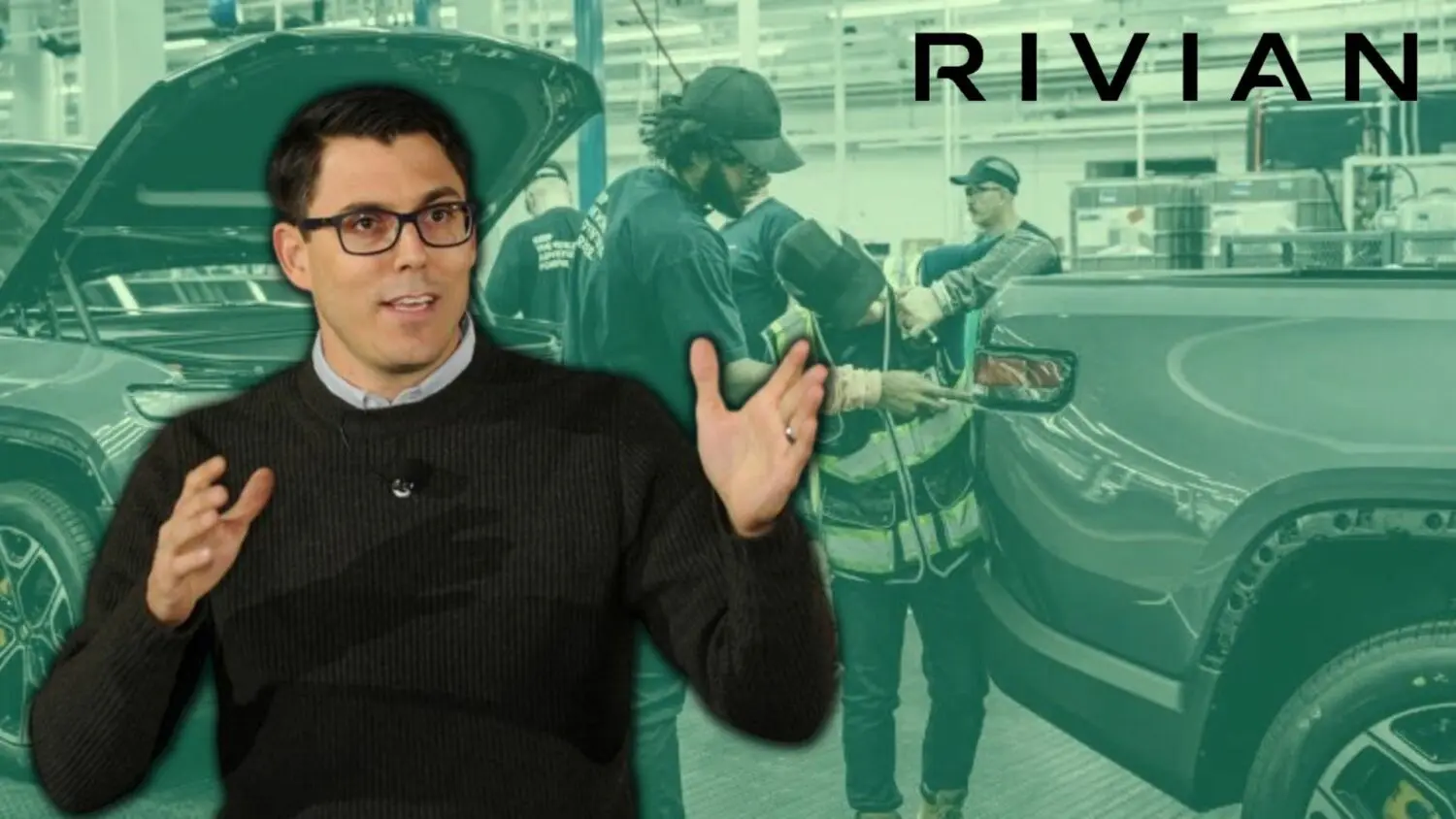
In Tuesday’s shareholders’ letter, CEO RJ Scaringe confirmed that the company will begin producing the new R2 midsize vehicle at its Illinois plant in the first half of next year. He also assured that concerns about rare-earth minerals or Nexperia chips will not delay the R2 launch, given the supply chain’s readiness.
Rivian’s stock rose more than 3% in after-hours trading, following a 5.2% decline during regular sessions, though shares remain roughly 6% lower for the year. Investors continue to watch the company closely as EV manufacturers face rising costs from tariffs, slowing sales forecasts, and regulatory changes, including the expiration of federal consumer incentives.
Notably, the EV maker has reduced its expected tariff impact on new vehicles from “a couple thousand dollars per unit” to hundreds of dollars per unit following adjustments to offsets for American-made vehicles.
Nevertheless, the company ended the quarter with $7.7 billion in total liquidity, including nearly $7.1 billion in cash, cash equivalents, and short-term investments, which Scaringe said positions Rivian well for its upcoming R2 launch.