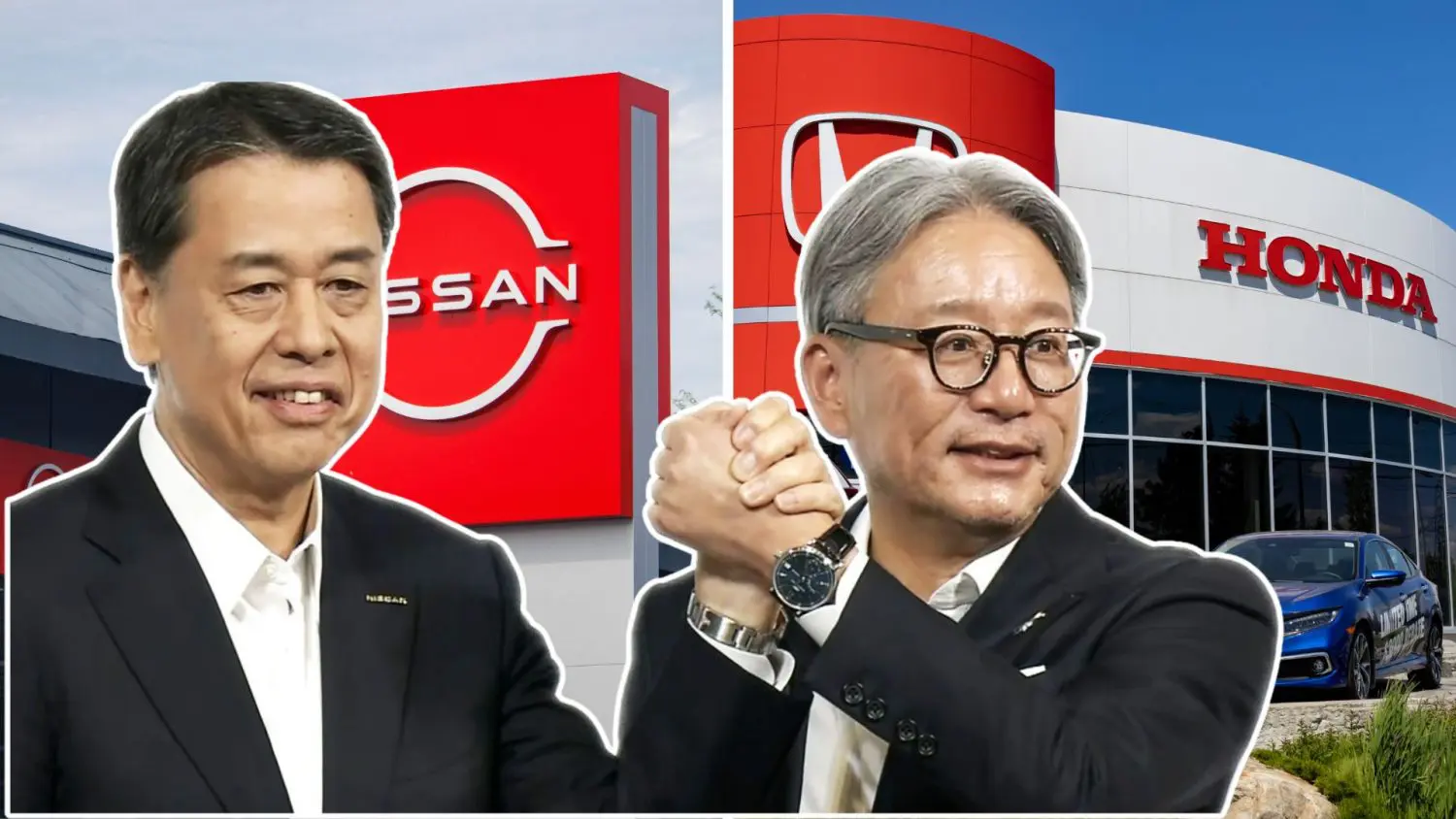
Honda and Nissan are in talks to strengthen their collaboration, including the possibility of a full merger, in response to increasing pressures from electric vehicle (EV) makers like Tesla and BYD.
This potential merger would create a $54 billion company with an annual output of 7.4 million vehicles, making it the third-largest auto group in the world, behind Toyota and Volkswagen.
Experts see the talks as a sign that both companies are struggling to keep pace with the rapidly changing automotive landscape. For instance, Nissan has been facing significant financial difficulties, including an 85% drop in its second-quarter profits due to slumping sales in key markets like China and the U.S. In response, the automaker has announced a $2.6 billion cost-saving plan that includes cutting 9,000 jobs and 20% of its global production capacity. Honda, while not in dire straits, is also facing its own challenges, including a decline in cash flow and disappointing sales of its EVs. Analysts predict that Honda’s financial situation could worsen next year if significant changes are not made.
Several analysts have weighed in on the potential collaboration:
- Koji Endo, Senior Analyst at SBI Securities, suggests that a holding company structure, rather than a full merger, could minimize risks while offering benefits of integration. He also raises questions about what would happen to Renault’s 15% stake in Nissan if a merger proceeds, as Renault may seek to divest its shares.
- Sanshiro Fukao, Executive Fellow at Itochu Research Institute, believes the collaboration may be a way to rescue Nissan but warns that Honda must also drastically change to stay competitive. He points out that Honda needs to re-establish a solid financial base and potentially spin off its motorcycle business to accelerate its shift to electrification.
- Tang Jin, Senior Researcher at Mizuho Bank, highlights that Honda’s technology-centric culture, particularly its strength in powertrains, could create internal resistance to a merger with Nissan, which is facing its own set of challenges. He notes that the two companies may struggle to keep up with the pace of innovation if they cannot unify their decisions and strategies.
- Seiji Sugiura, Senior Analyst at Tokai Tokyo Intelligence Laboratory, views the deal as beneficial for the broader Japanese auto industry, suggesting that a stronger rivalry with Toyota could provide a much-needed counterbalance to the dominance of Chinese automakers and Tesla.
The proposed merger or deeper partnership comes as the global automotive market undergoes rapid transformation, driven by the push for EVs and increasing competition from Chinese companies. Despite some strategic partnerships already in place—such as Honda and Nissan’s March agreement to collaborate on EV development—this new round of discussions could lead to more significant structural changes.
While the talks are still in the early stages, any merger would face significant challenges, including integrating different corporate cultures. Analysts also point to the lengthy process required to realize synergies from such a merger. S&P Global Ratings notes that even if a merger happens, it would take time to realize positive impacts on creditworthiness. The firm also points out that there have been few instances where mergers in the automotive industry have produced significant long-term benefits.
The timing of these talks also comes amid growing pressure from competitors in the EV market. Both Honda and Nissan are looking for ways to streamline operations, reduce costs, and accelerate the development of electric vehicles to stay competitive. As both companies battle against the rapid growth of BYD and the dominance of Tesla, this potential merger could help them pool resources to tackle the evolving automotive industry landscape.
However, the collaboration between Honda and Nissan is not a done deal. The companies have confirmed that no agreement has been reached, and Renault, Nissan’s largest shareholder, would need to review the implications of any merger. Additionally, integrating different corporate cultures could pose significant challenges to a successful partnership.
Despite the complexities, this potential tie-up between Honda and Nissan could signal a critical shift in Japan’s automotive industry. With the rise of electric vehicles and increasing competition from both traditional rivals and new players, it remains to be seen whether this merger will provide the necessary competitive edge in the evolving global market.