
TSLA399.810-3.49%
GM87.4001.68%
F12.225-0.135%
RIVN12.1600.71%
CYD22.450-0.81%
HMC33.9600.07%
TM195.710-0.92%
CVNA68.290-0.02%
PAG212.120-0.22%
LAD299.7202.66%
AN179.64010.3%
GPI260.8000.83%
ABG198.030-1.24%
SAH63.230-0.38%
TSLA399.810-3.49%
GM87.4001.68%
F12.225-0.135%
RIVN12.1600.71%
CYD22.450-0.81%
HMC33.9600.07%
TM195.710-0.92%
CVNA68.290-0.02%
PAG212.120-0.22%
LAD299.7202.66%
AN179.64010.3%
GPI260.8000.83%
ABG198.030-1.24%
SAH63.230-0.38%
TSLA399.810-3.49%
GM87.4001.68%
F12.225-0.135%
RIVN12.1600.71%
CYD22.450-0.81%
HMC33.9600.07%
TM195.710-0.92%
CVNA68.290-0.02%
PAG212.120-0.22%
LAD299.7202.66%
AN179.64010.3%
GPI260.8000.83%
ABG198.030-1.24%
SAH63.230-0.38%

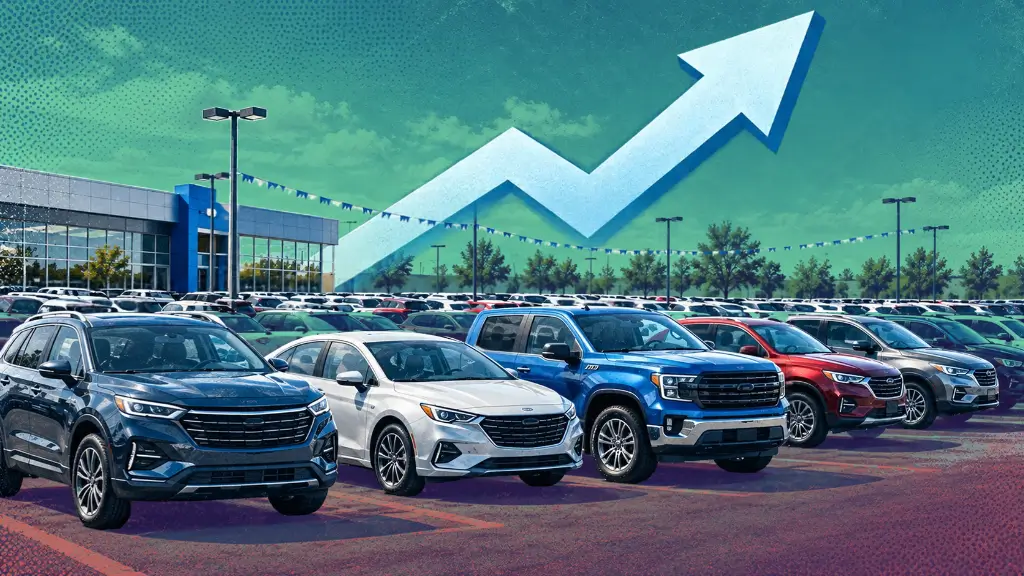
New-vehicle affordability improves 1.2% year over year

August affordability edged lower as higher vehicle prices offset lower loan rates, income growth and smaller year-over-year incentive declines.

New-vehicle affordability improves 1.2% year over year

On the Dash:

  • The average new-vehicle price rose 0.5% in August to $50,090, putting renewed pressure on affordability.
  • The typical payment reached $770, up 0.5% monthly and 2.6% year over year.
  • Affordability remained 1.2% better than a year ago, with buyers needing 35.5 weeks of median income to purchase a new vehicle.

According to the latest Cox Automotive/Moody’s Analytics Vehicle Affordability Index, new-vehicle affordability experienced a slight decline in August. Per Kelley Blue Book, the average price of a new vehicle rose by 0.5% during the month, reaching $50,090. While income growth improved by 0.3% from July, the estimated average auto loan rate decreased by 2 basis points to 9.49%. Unfortunately, these gains were insufficient to offset the increase in vehicle prices.

The typical monthly payment for a new vehicle rose 0.5% in August to $770, up 2.6% from last year. Despite this rise, the average payment remains below the peak of $795 recorded in December 2022. However, dealers are still operating in a market where monthly payments are a key consideration for prospective buyers.

Sign up for CBT News’ daily newsletter and get the latest industry stories delivered straight to your inbox.

Specifically, the median number of weeks of income required to purchase the average new vehicle rose to 35.5 weeks, which is slightly higher than July’s 35.4 weeks. This modest increase also indicates ongoing pressure from rising vehicle prices, even as income and financing conditions improve.

In terms of year-over-year affordability, new-vehicle affordability was 1.2% better than it was a year ago. In August 2025, buyers needed 35.9 weeks of median income to purchase the average vehicle. While vehicle prices were 1.9% higher than the previous year, nearly stable interest rates and higher incomes helped offset some of that rise. Additionally, incentives offered were 7.3% lower than a year ago, which limited another potential source of affordability relief.

What dealers should watch

Nonetheless, August’s data illustrates that lower interest rates alone may not significantly enhance affordability if transaction prices continue to rise. The interplay between vehicle pricing, financing costs, income growth, and incentives will continue to influence buyers’ purchasing power. It’s important to note that Cox Automotive and Moody’s Analytics will release the next update of the Vehicle Affordability Index on October 15.


More from Market Reports
Hyundai and Kia post higher operating profit as strikes and war-linked costs weigh on outlooks

Hyundai and Kia post higher Q3 operating profit, but outlooks weaken

- October 30, 2026
On the Dash: Hyundai and Kia posted higher Q3 operating profit, but Hyundai cut targets and Kia missed estimates. Strikes hurt Hyundai’s production, and war-linked costs cut about $450 million...
Rivian beats Q3 estimates as R2 becomes its best-selling model

Rivian beats Q3 estimates as R2 becomes its best-selling model

- October 30, 2026
On the Dash: Rivian Q3 earnings beat estimates, with revenue of $2.155 billion and record deliveries. R2 became Rivian’s best-selling vehicle, outselling both the R1 and the delivery van. Rivian...
October new-vehicle sales to rise 7.2% from last year, Cox Automotive says

Cox Automotive expects October new-vehicle sales to rise 7.2% from last year

- October 28, 2026
On the Dash: October new-vehicle sales should reach 1.38 million units, up 7.2% from last year. SAAR is forecast near 16.1 million, up from 16 million in September. Subcompact SUVs...
U.S. economy grew 2.2% in Q2, consumer spending up

U.S. economy grew 2.2% in Q2, consumer spending up

- October 26, 2026
On the Dash: U.S. economy grew 2.2% in the second quarter, topping the earlier estimate of 1.5%. Consumer spending rose 3.8%, and Cox Automotive raised its 2026 new-vehicle sales forecast...

Add us as a preferred source on Google

CBT News
Privacy Overview

This website uses cookies so that we can provide you with the best user experience possible. Cookie information is stored in your browser and performs functions such as recognising you when you return to our website and helping our team to understand which sections of the website you find most interesting and useful.