On the Dash:
- Mobile service customers report higher satisfaction, and 40% are willing to pay a premium for on-site service.
- Speed and convenience are driving demand, with routine maintenance emerging as the strongest fit.
- Online reviews and clear communication play a larger role in mobile service than traditional dealership service.
While mobile service is gaining traction across fixed operations, new research indicates that customer satisfaction is higher, with consumers willing to pay more for convenience, despite limited adoption among dealerships.
Findings from the CDK Service Shopper 5.0 Study show that customers who use mobile service report higher satisfaction than those who rely on traditional dealership service. The study also found that 40% of customers said they would pay extra to have a technician come to their home or workplace, emphasizing the value consumers place on time savings and convenience.
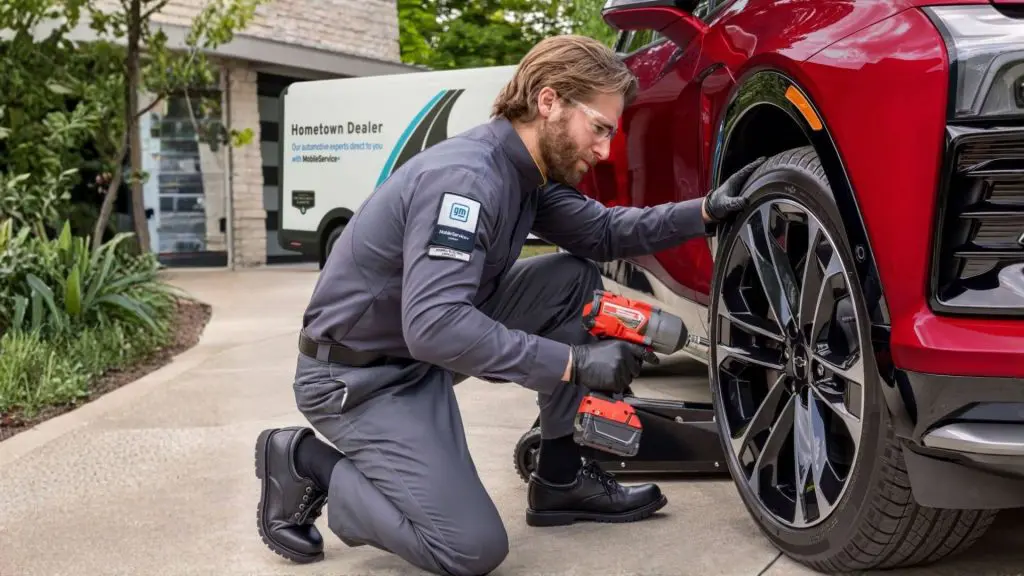
In dealership operations, mobile service refers to technicians traveling to a customer’s location rather than requiring a visit to the store. The model is increasingly viewed as a way for dealers to expand their fixed operations radius and keep customers engaged, particularly those who may be less willing to spend time at a dealership for routine service.
Additionally, speed emerged as the top reason customers chose a mobile service provider this year, moving up from second place in the prior study. This differs from dealership service, where customers continue to prioritize existing relationships and staff expertise.
According to CDK, the top five reasons customers chose mobile service were:
- Quick service (42%)
- Good reputation (33%)
- Easy scheduling (31%)
- Recommendations from friends and family (27%)
- Existing relationship (26%)
Notably, the most commonly offered mobile services are routine and repeatable, such as oil changes, tire rotations, repairs or replacements, brake service, engine tune-ups, and battery replacements. These jobs typically require limited specialized equipment and represent frequent touchpoints for customer retention, making them a natural fit for dealership mobile programs.
Conversely, mobile service also brings heightened scrutiny. While more than half of consumers said online reviews were important when choosing any service provider, that figure rises to 77% when selecting a mobile mechanic. CDK found that this increased emphasis on reviews spans all age groups, reflecting added caution when inviting a technician to one’s home.
Furthermore, clear communication presents another challenge. Mobile service customers have reported confusion regarding their future service needs, the types of services available, and priorities. To address this, dealers offering mobile services are adjusting by hiring technicians who are comfortable engaging directly with customers. These technicians often take on a dual role, serving as both technicians and Advisors.
While mobile service requires investments in staffing, operations, and equipment, industry research and ongoing discussions indicate it will continue to expand. For dealers willing to tackle operational and communication challenges, mobile service could be a promising opportunity for growth in fixed operations.